I met a maybe-new-friend last week, and of course we chatted plants, chickens, and weird ailments. She said something to me along the lines of wishing she could bring herself to just do, and not overthink her garden planning. If she reads this post I hope this will inspire her to trust she can. Or at least feel better knowing some of us have the opposite problem.
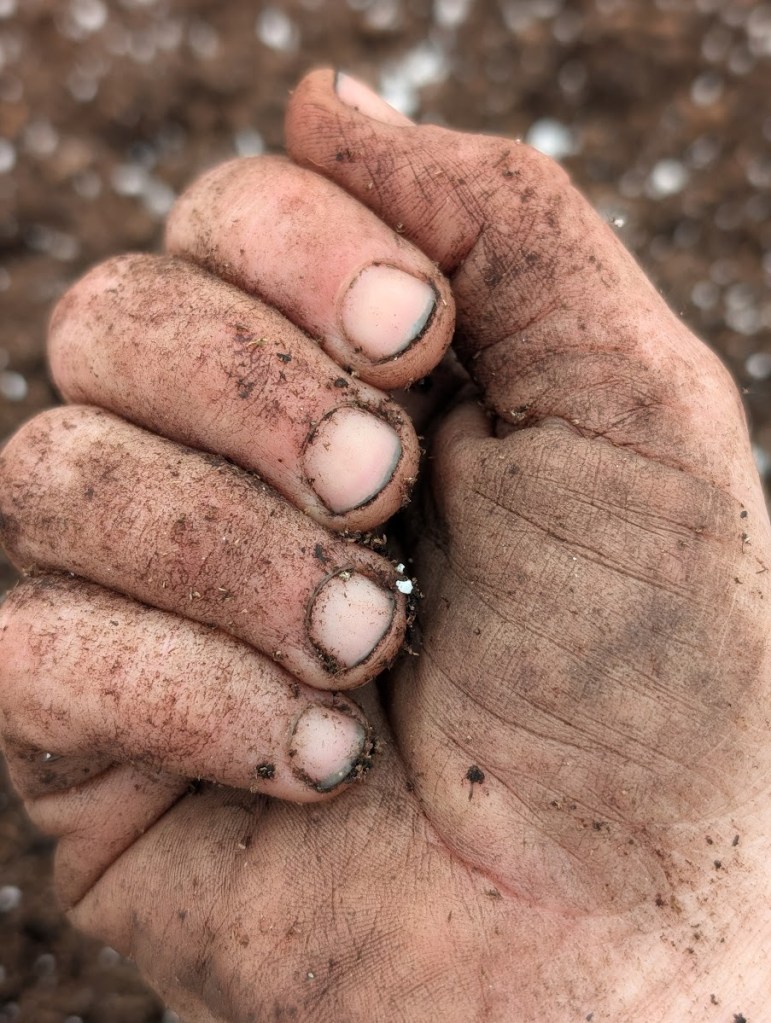
I am impulsive, and don’t often stop to think things through. I also love to disprove phrases like “you shouldn’t…” and “you can’t…”. I was one of those forever asking “why not?” kids, and I drove my parents, and my teachers crazy.
Hearing those phrases fuel me with a cheetah-like need to pounce and disprove customary wisdom. It can be annoying. I accept that. I also know that my people find it endearing, and that I should have explored careers in science or law, where I could channel these impulses in useful ways.
Instead, in my current life, I grow plants.
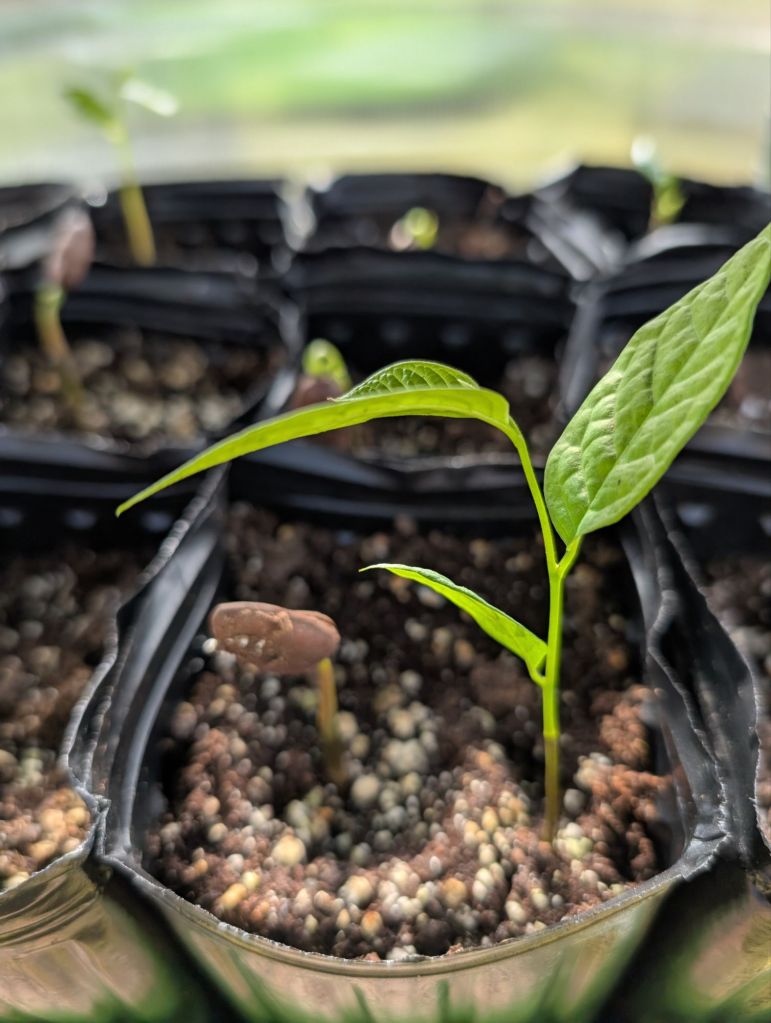
Correction. I grow, and I kill plants. And both happen simultaneously, in unexpected ways, born from accidents, forgetfulness, as well as some deeply rooted need to to answer “what if we just try it this way anyway?”
I have learned this about myself, and I am working on developing certain risk mitigation strategies. It’s actually not too hard with plants. I grow extra seeds, try things multiple ways, and accept that, at times, I kill plants.
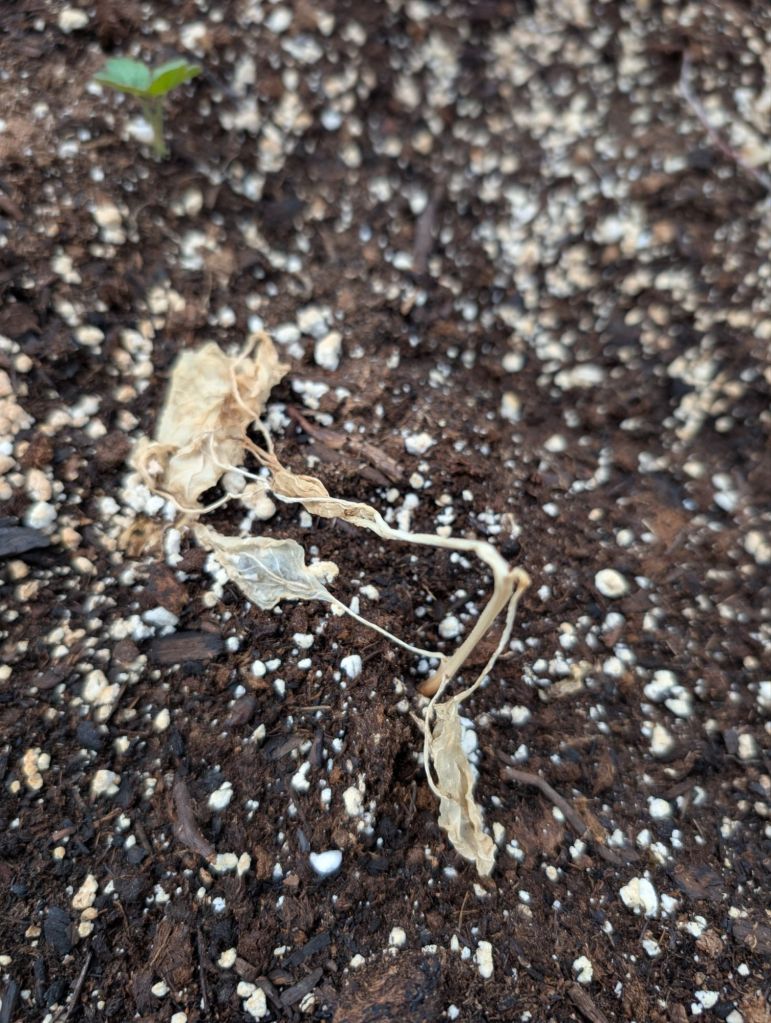
That sounds messed up but I am not a plant murderer, on purpose. Most of my plants casualties die of involuntary manslaughter, or neglect (also involuntary), and some because of failed experiments.
So many live though, and by coming to terms with likely casualties ahead of time, and making some contingency plans (this involves planning.. not my forte, so really I just plant more seeds of everything), I get to experience the joy of learning new things, and watching my plants thrive in situations where the expectation is they shouldn’t, or in ways I didn’t expect.

Neglect, and drought
I spoke of neglect. Here’s a known truth, not often seen in the pretty pictures of Instagram. Plants need water to thrive, or they die. Especially as babies. I have memory problems, and all too often I forget to water them. Or can’t keep up with their demanding needs. Outside of ecological reasons, this is also in part why I love growing native plants, and edible perennials. They just sort themselves out, year after year, most of the time with very little intervention, once a seed finds dirt.
Vegetables, not so much. This is what my pepper trays looked like this morning:
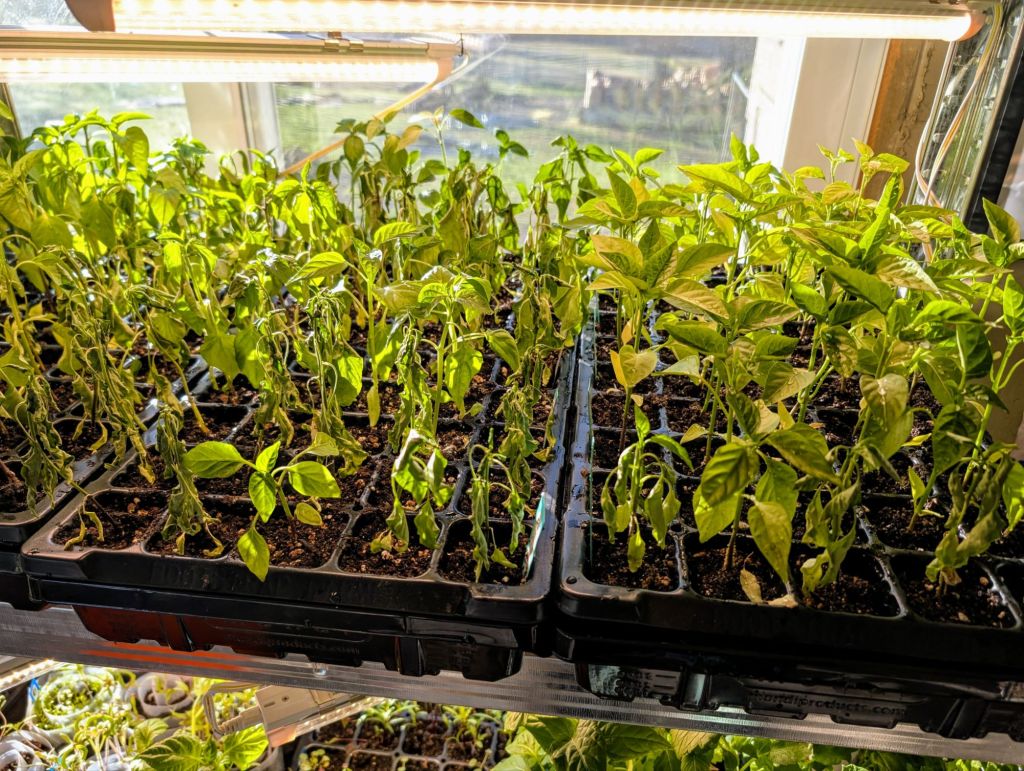

I watered them, and wait for revival. Some just won’t, but the ones that do will come back that much stronger and more resilient.
Here’s my augmented version of this truth: I love plants, love watching them grow, love everything about them, and anyone who knows me knows that they just make me happy. I also neglect plants. Not really on purpose, but I get easily distracted, I’m quite slow moving, and I have a lot of plants, so many get neglected.
The resilient ones find a way to thrive. I accept that I have to water seedlings, but once in the ground I am very much a hands-off, free range plant parent. I hate watering so I don’t, except in cases of severe and prolonged drought, and even then I don’t always think about it.
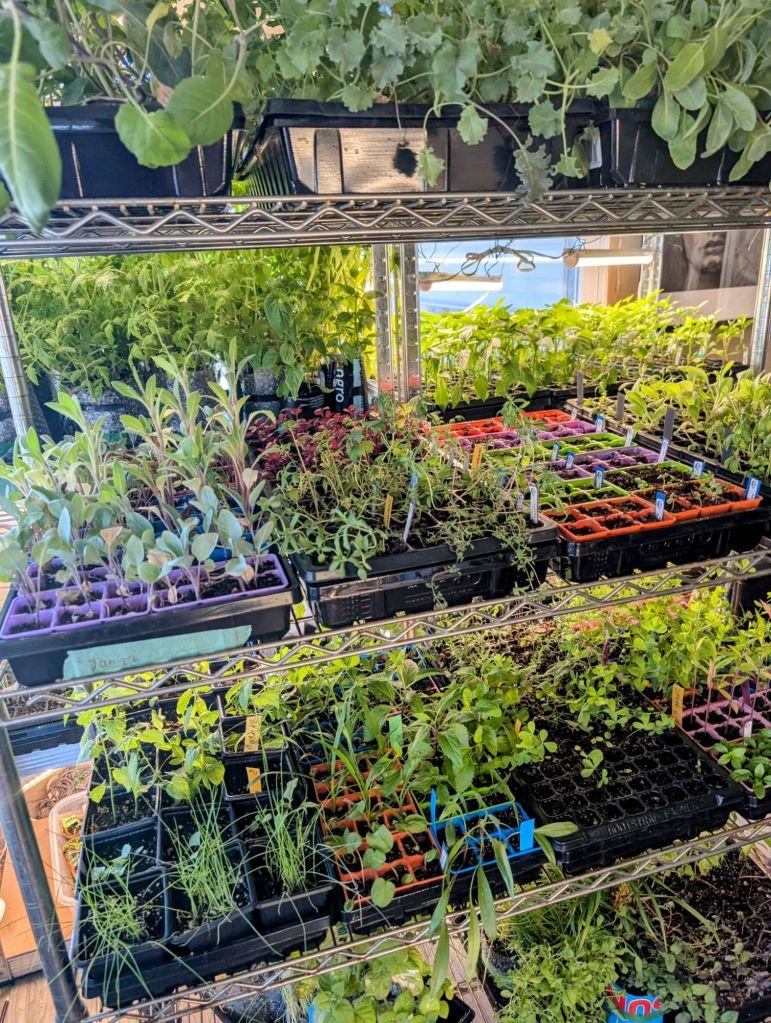
My in-ground vegetables don’t die (ok, honestly, some do, but most actually live), and surprisingly thrive, largely because as much as I hate watering I love experimenting with soil, compost and natural ammendments, and have found some pretty efficient ways to retain moisture where I plant my annuals and vegetables.
I still have no idea what I’m doing when it comes to vegetable gardening, but every year I find myself learning something new, or finding out how to grow at least one new type of vegetable into decent harvest.
This year might be a bit more difficult than usual as we just moved, and we don’t technically yet have anywhere to plant my thousand types of seedlings, though we will. I have big plans. It’s just a slow work in progress.

Some well intentioned OOOps
Fact: I started tomatoes waaay too early this year, because I was convinced that since I have a greenhouse I should move forward all planting dates by a month. My tomato seeds went into soil on February 17th. I’m not sure what I was thinking. They are an intertwined and overwhelming tomato forest now. I’ve had to remove shelves to keep them comfortable with access to light, and I am about to remove a second one.
My thought process was one where if I start them early, I will extend their fruiting season, and can put them in the greenhouse once the weather warms and they grow big.
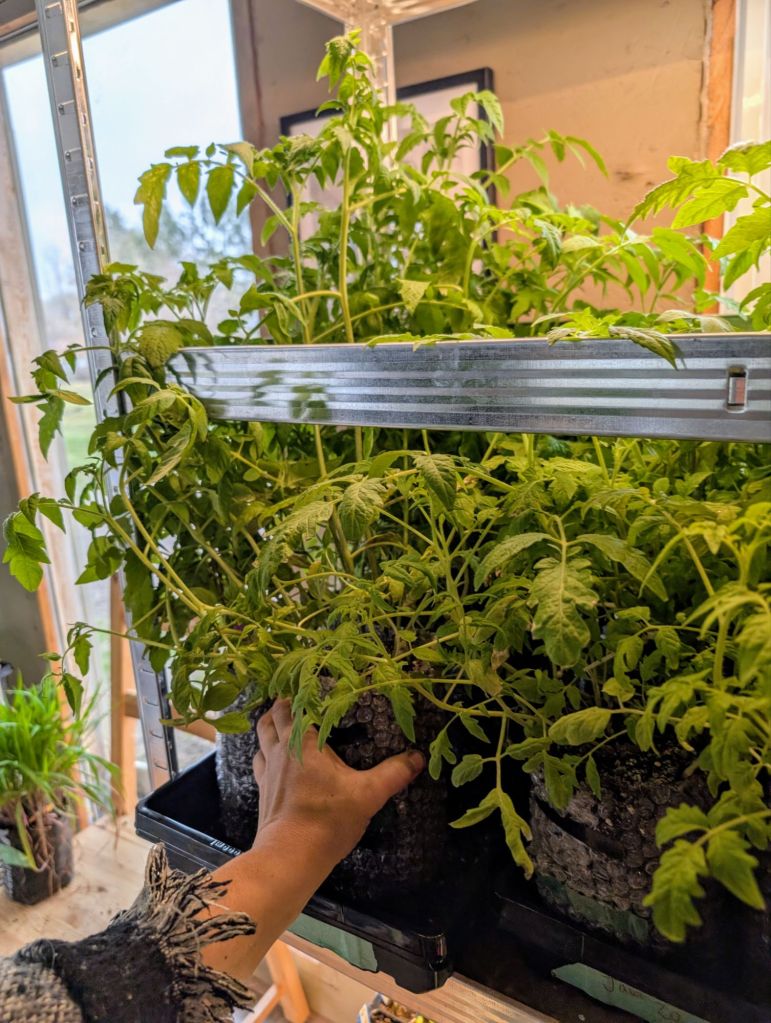
I’ve somehow managed to save them, and keep them alive until now, but it’s been touch and go, and not all have made it. Growing them in soil snails (another ongoing experiment) was very helpful, as I can continue topping up their soil with worm compost as they grow, without disturbing their roots.
I was doing just this to a snail of “Black from Tula” variety, when I accidentally broke off the stem of the largest, sturdiest, thickest-stemmed plant. Crack, OOOps, omg sadness.

I decided to put the top in water, to see what happens. This is the top, in water, 8 days later.
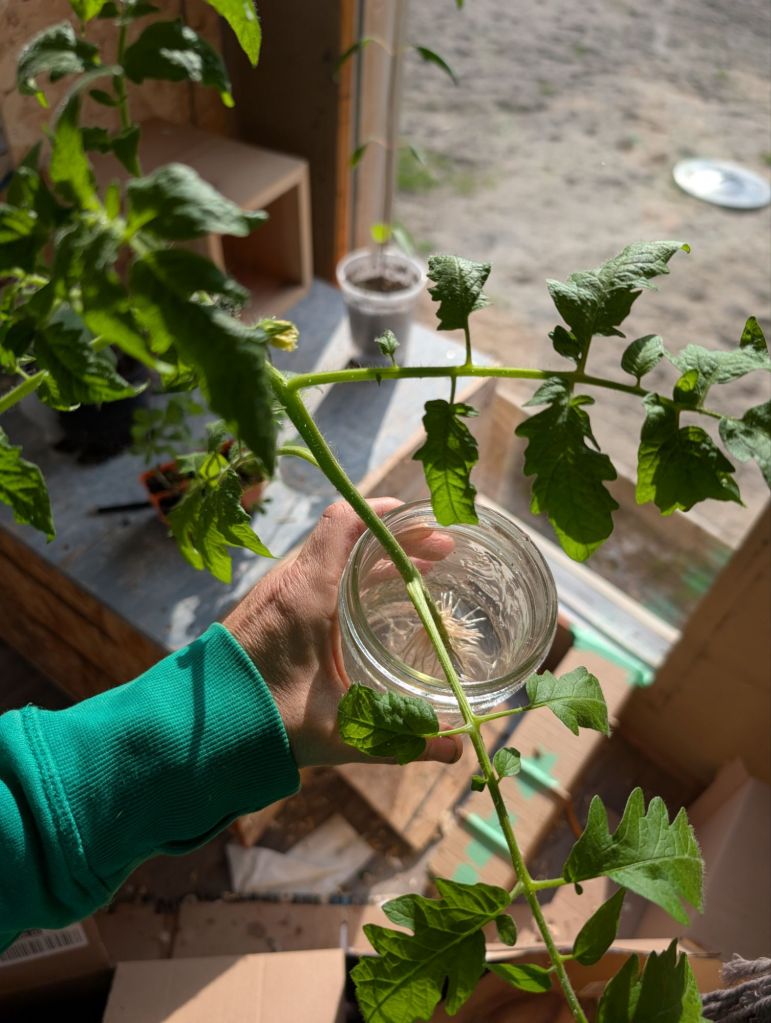
Look at the roots!!! Also, it’s flowering! I will be planting, and babying, and probably naming this one, as I’m so curious to see how it grows. I will likely keep it next to it’s bottom half, out of curiosity, to compare.
I started having second thoughts about my giant tomatoes a few weeks ago, and since I still have many seeds left, decided to start a second batch around the start of April. Now I have waaay too early and slightly too young tomatoes growing, and so many of them, with lots of room for experimentation. I’m growing some of the new ones in soil snails, and others in plugs, curious how they will compare in a few weeks.
I tried the same thing with peppers, and have found that the ones grown in soil snails are significantly taller so far.
Here is the same variety (Hungarian Round, from Semences Nouveau Paysan, planted the same day (January 31st), in the same soil mix. 50 cell tray on the left, homemade soil snail on the right.
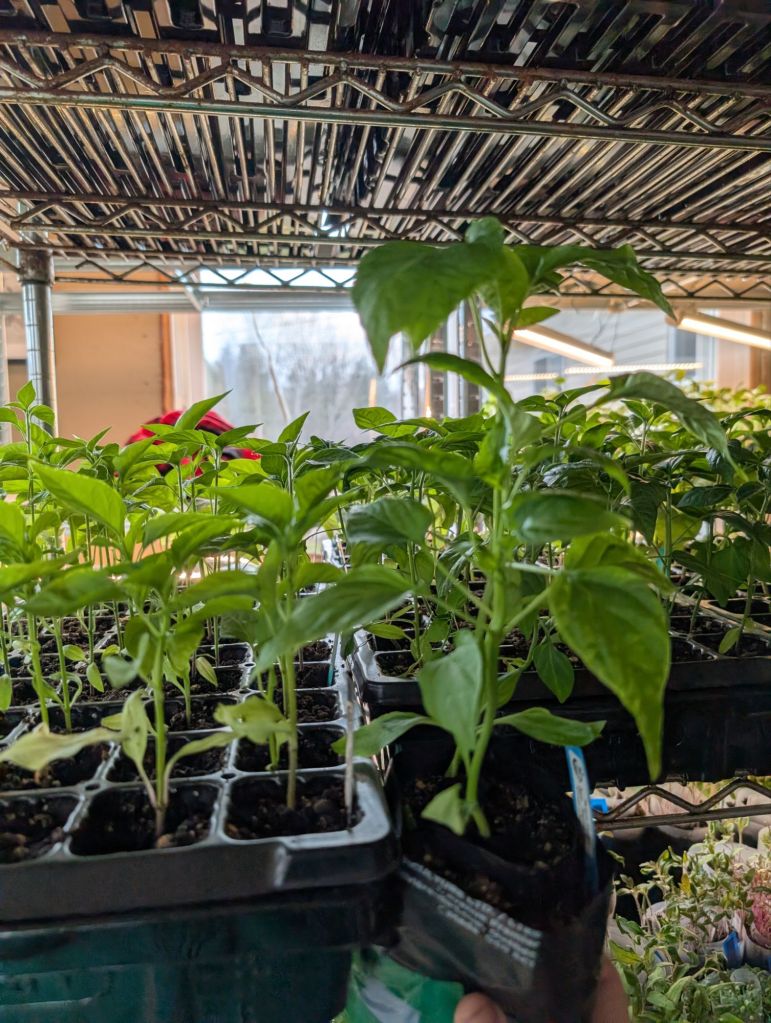
I think I do prefer the snails for growing vegetables from seed, in part because they take up less room, but also because they seem to have a higher germination rate, and never really dry out.
Random grocery store experiments
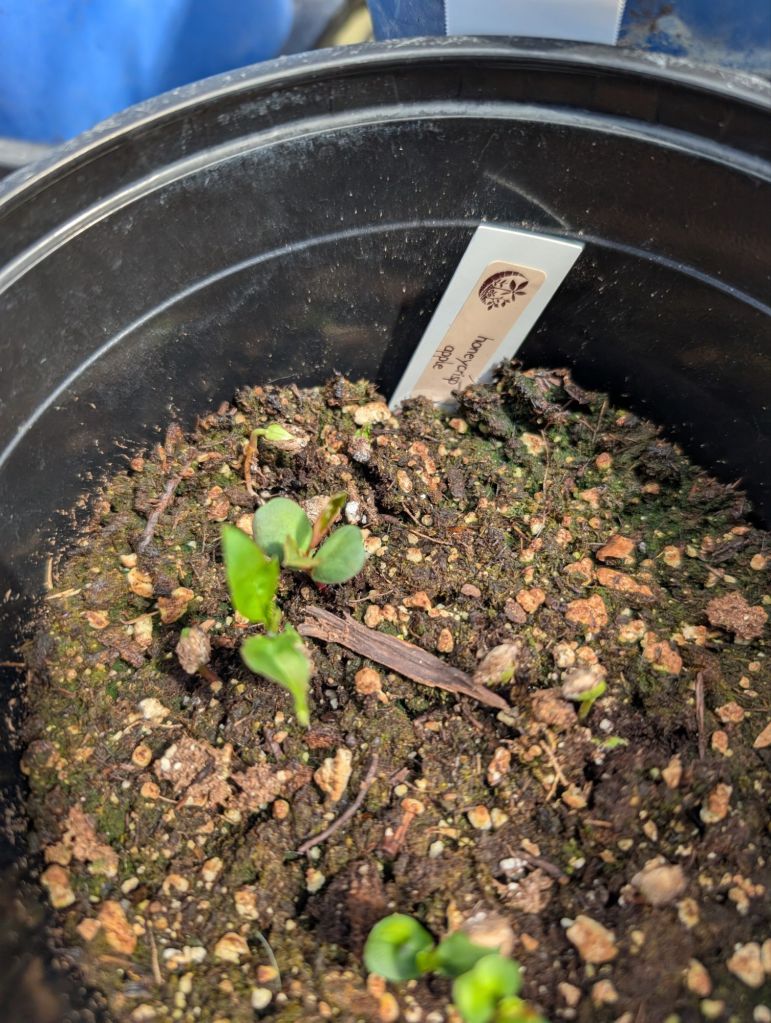
I like to grow things from seed. I think that’s obvious. I also enjoy making things from grocery stores grow, and sometimes they surprise me. They are fun experiments my 5 year old likes to participate in, so we always have some random named pots of hers growing. I think she’s currently trying cherries and apple seeds, which over-wintered in the greenhouse.
I decided this year to try growing my own sweet potatoes, and went to my favourite Asian store to pick up a wide variety. On the same wave I got some tarot root, ginger and other roots I don’t know the name of, curious what would sprout. I lost a lot of sweet potatoes, but they sprouted magically in my worm compost. The ginger and tarot easily took and grew.
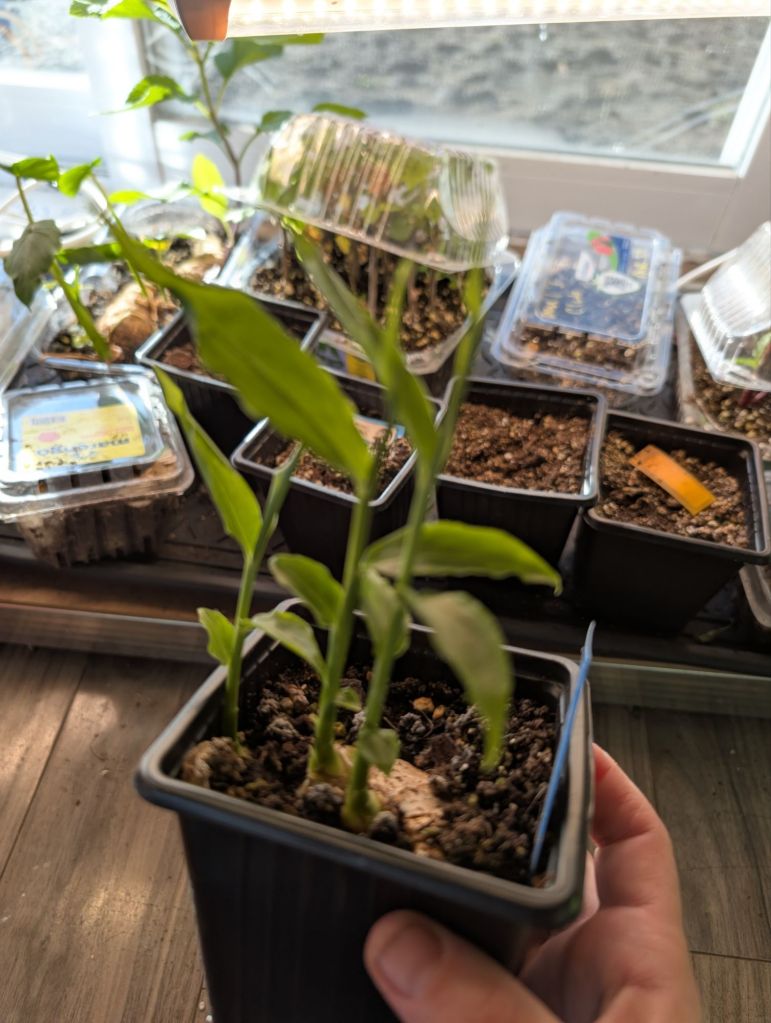
I have no idea what to do with tarot, and find it actually looks like a tropical house plant, but I will likely try planting the ginger root outside to see if it multiplies.
Since those root experiments were so successful, I recently found some tumeric root, as well as horseradish, and will try growing both of those out and seeing if I can’t get a decent yield later in the season.
Impulses and lack of self-control
My impulses come in waves. Once something gets in my head, it’s stuck until I do something about it.
Yesterday was one such day. I miss my garden this spring. I stare at the hundreds of plants I dug up and brought with me, and I can’t wait to find new places for them in this vast expanse of lawn, but right now they live in pots spread throughout the yard and I visit them and check them for growth. There is lots, but it’s not the same as watching them grow in the ground. Next year.
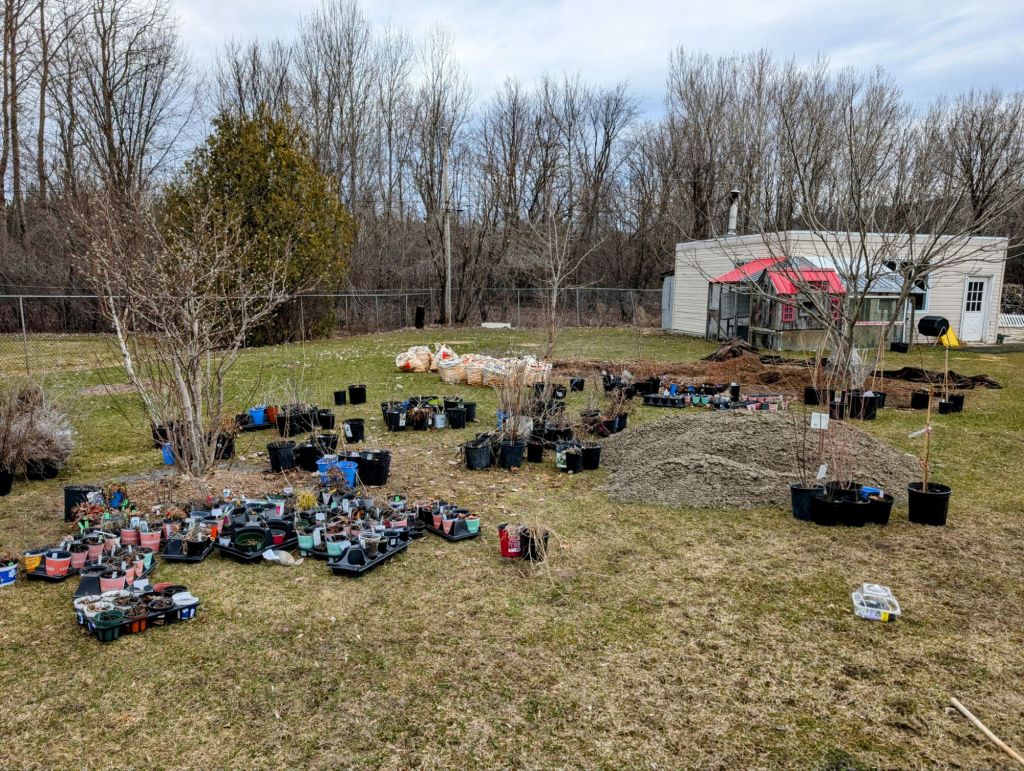
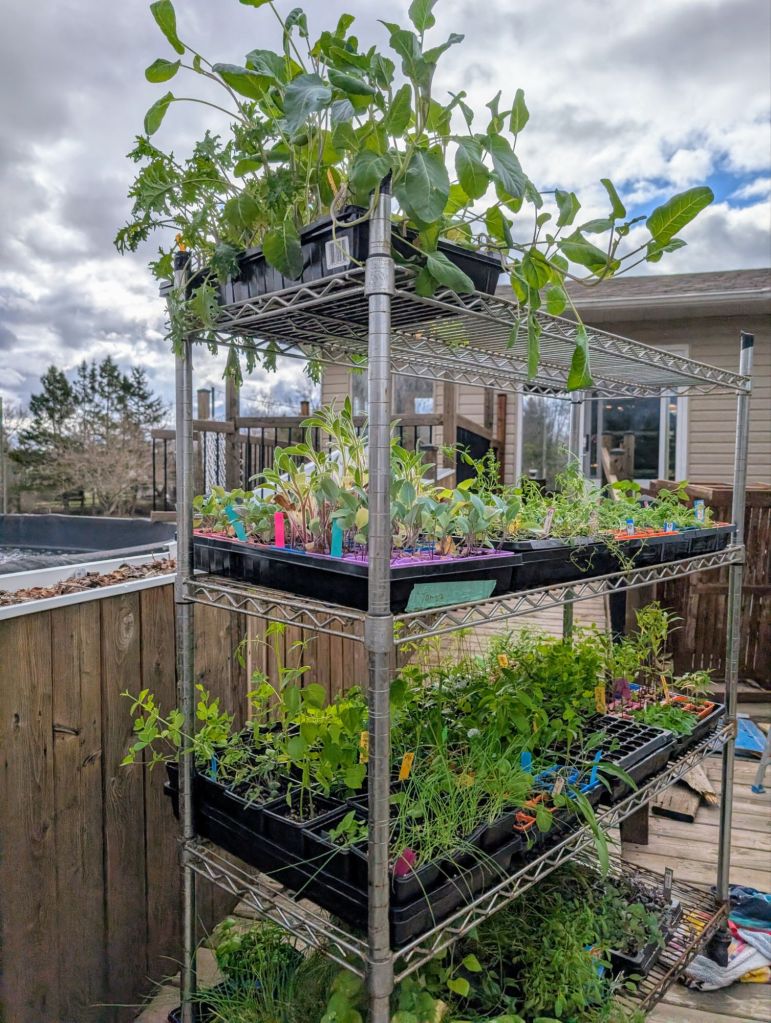
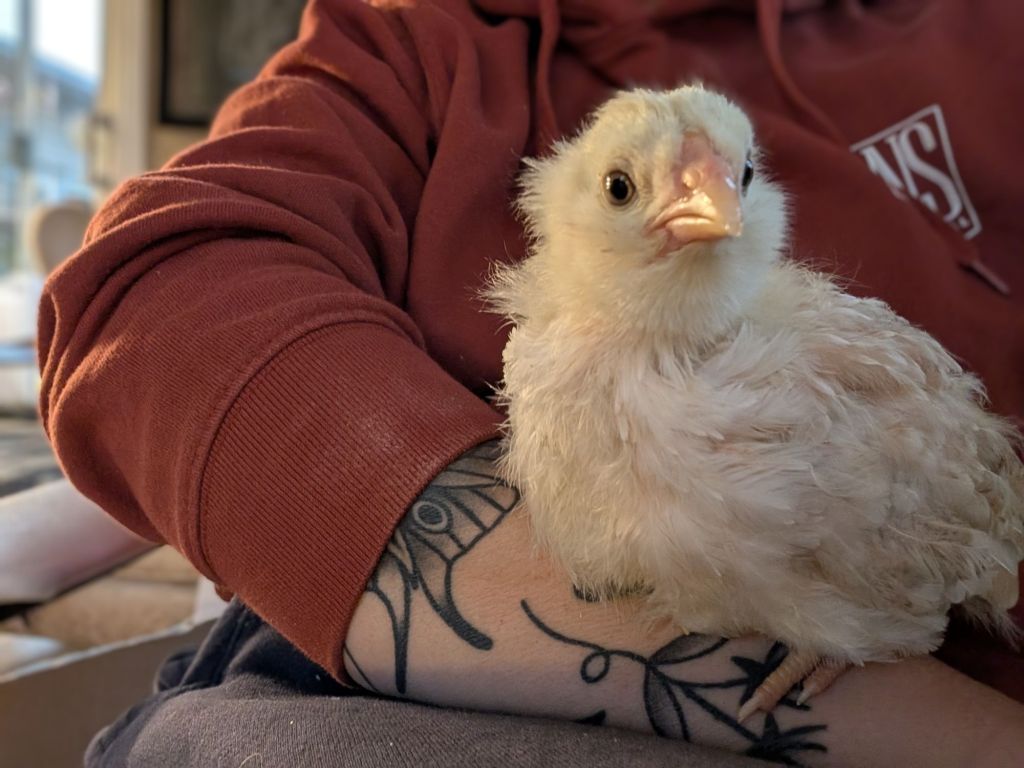
In the meantime, my house has been overrun by racks and racks of plants. Our sun room is filled with them, to the point where I needed to move the ones on wheels to get to the chickens, which have taken over 1/3 of this room, and by the way have grown insanely and they are so cute but so dirty and disgusting and I can’t wait for them to be old enough to go outside.

That’s how the impulse started swirling through my brain. I tried to sit and enjoy a morning coffee in our sun room turned chicken brooder turned grow house and the chickens escaped their enclosure and started pecking at my plants and I just had enough and wanted some space back. I thought about kicking out the chickens which in all truth are currently the grossest part of this room, but they’re still a bit too young to move into their chicken coop outside, so I decided to do the next best thing, which was to move the plants out.
Greenhouse is not everything I imagined
I have a shiny, sparkling new greenhouse. A beautiful ‘little’ 10×20 ft greenhouse which I poured so much of my energy into building in time for spring. I had imagined that by now it would be full of seedlings and plants starting to flower and grow fruit in a tropical like climate months ahead of schedule.
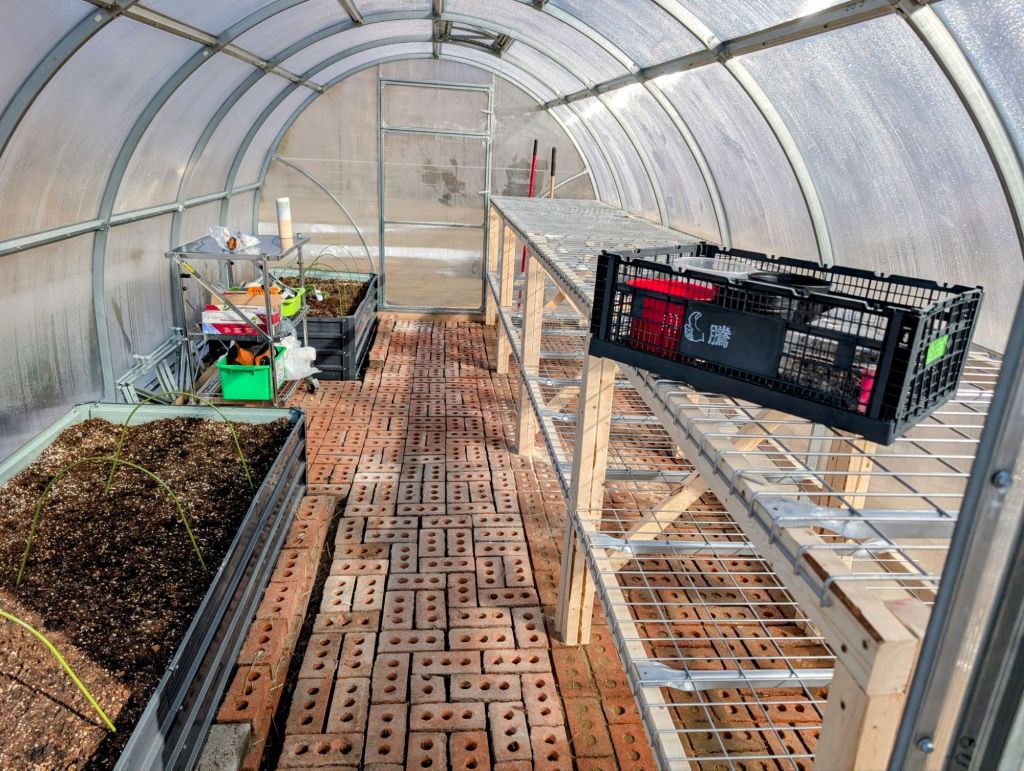
No one tells you some sad facts of backyard greenhouses, so in case you are considering getting one, here is what I have learned since fall:
1. In -20 degree weather outside in winter, if it’s sunny out, the temperature in the greenhouse can reach 15 degrees. T-shirt weather in Canadian winter! Fabulous
2. The moment the sun sets, greenhouse temperature quickly falls to within a degree or two of outside temps. So -25 at night translates to -21, at best. Not so fabulous
3. A greenhouse is VERY expensive to heat. The larger it is, the more expensive and harder heating it becomes.
4. A greenhouse, even one as well built as Planta greenhouses claim to be is NOT sealed. The seams have cracks between them, as do the doors and windows, and hot air quickly escapes after sunset.
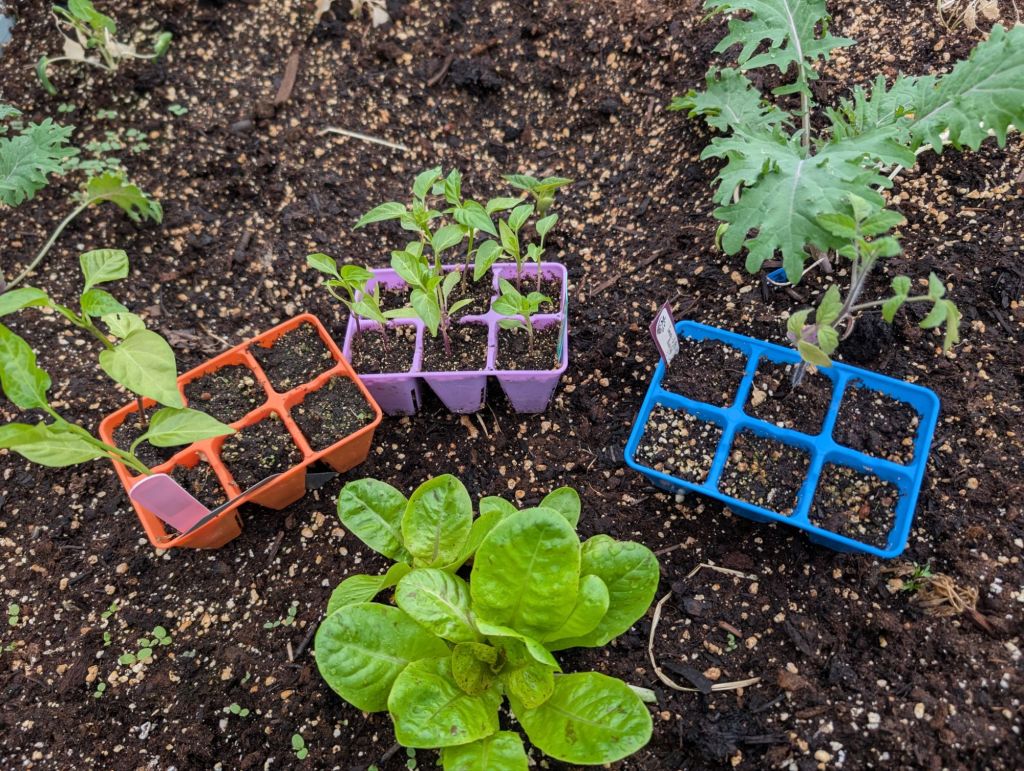
I put some sacrificial plants in the beds in the greenhouse a few weeks ago, when the nighttime temperatures were still well below 0, mostly to see what would survive, and what wouldn’t. First night the tomato, pepper, eggplant and the cauliflower died.
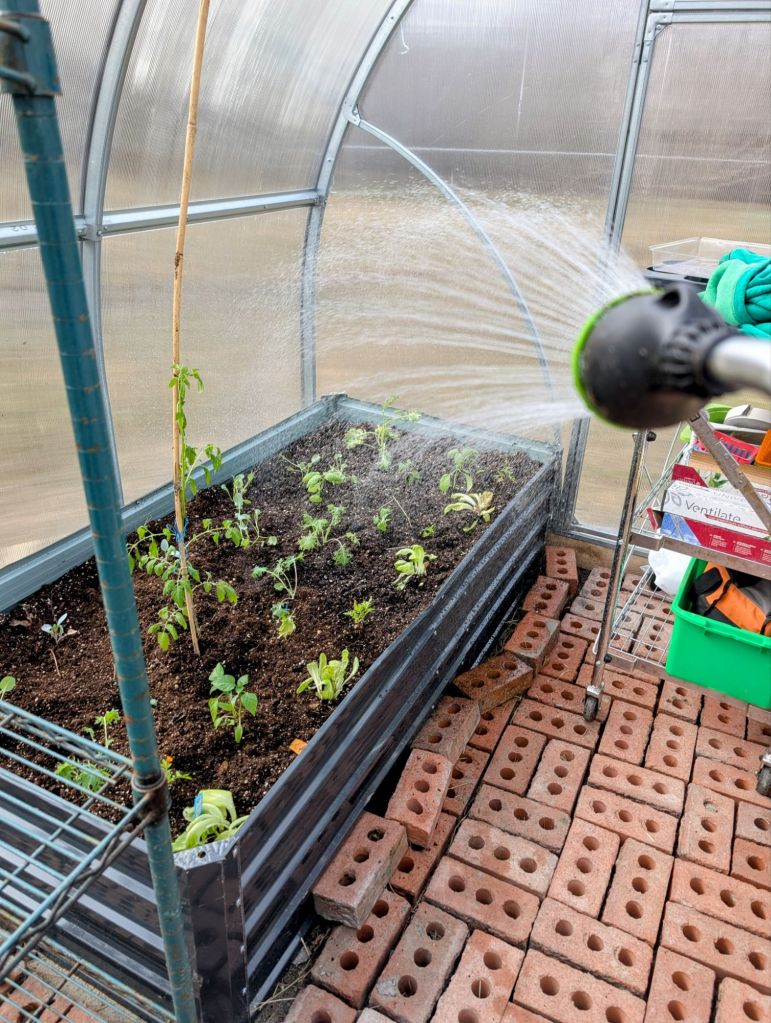
The kale survived, my fancy purple brussel sprouts rebounded, and though the lettuce looked frostbitten and all but lost to me, it bounced back a few days later, and has been growing steadily since. This is what it looks like now:

I’ve largely left the greenhouse waiting since, recognizing that unheated it’s not quite ready to host vegetable seedlings, at least until the overnight temperatures start hovering at 0, not too far below.
Instead I brought some of my winter sown native pots inside the greenhouse, sped up their germination, and I’ve been enjoying watching them pop up their little leaves probably weeks ahead of when they would be doing it outside.
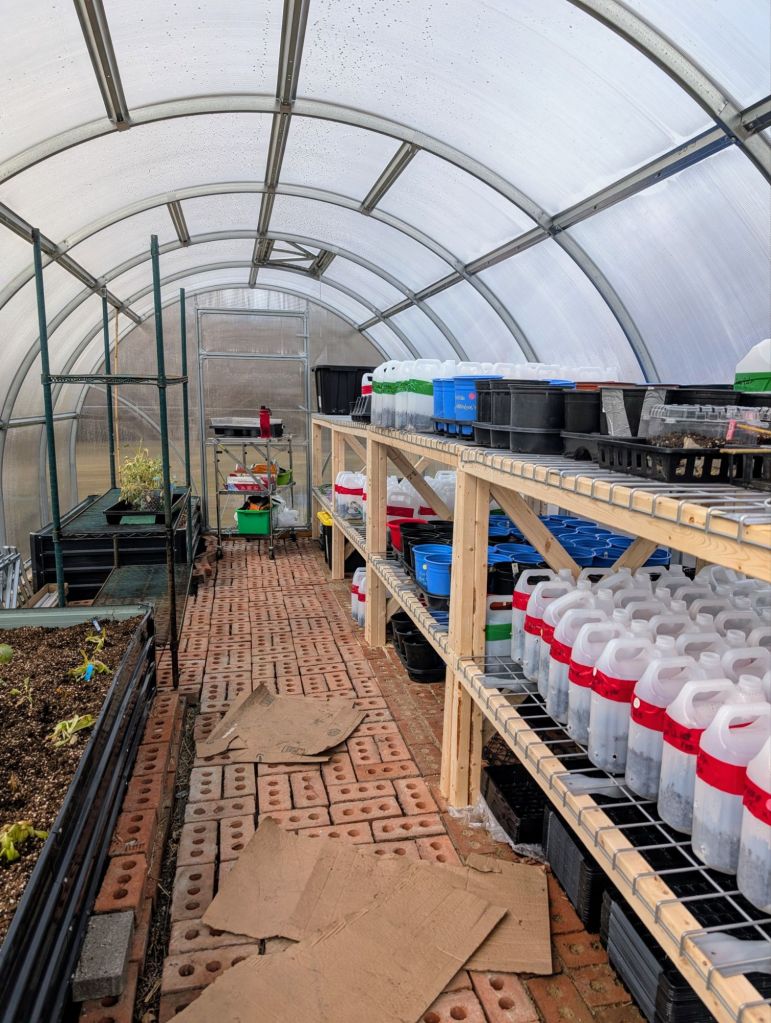
I’ve also found some ways to increase the heat retention in the greenhouse while waiting for this later than usual spring to arrive. It’s not pretty (yet), but insulating foam in the seams seems to have raised the inside temperature at night by a few degrees, to 5 degrees higher than outside.

With temperatures currently hovering just around the frost mark, I figured it was just as good a time as any to bring some plants in, so the winter sown jugs had to move back out.
Back to the tender vegetable seedlings
I have been hardening off the trays on wheels, somewhat, over the last few weeks. When I remember, I roll them outside, leave them in the sun for a bit, then bring them back inside. I have forgotten them outside and some have burned a little. I have also taken them out on cold, windy days, and they have fluttered wildly, got a little bit of frostbite but most survived. Then I forgot to bring them outside for a few days, and remembered again. Yesterday was sun scorching day but the combination of wild teenage chickens and too many plants got to me and I decided trays were moving to the greenhouse. It took a while to arrange, rearrange them and then change their trays to ones that water can drain through, but 1/2 my indoor trays are now in the greenhouse.
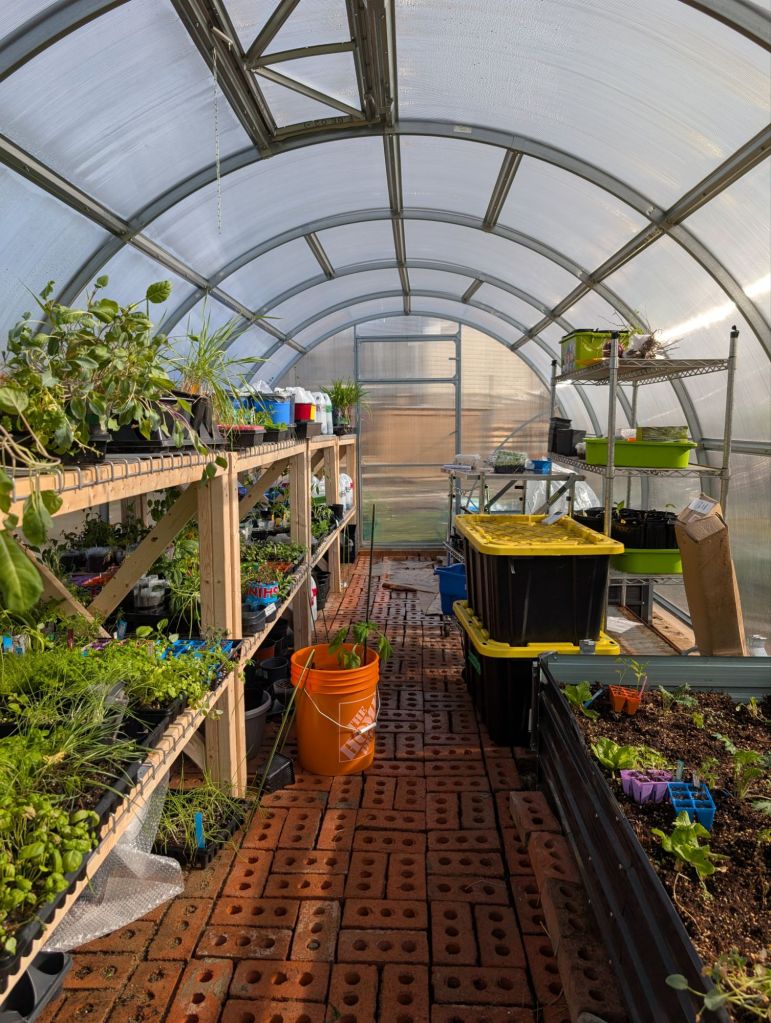
I have kept the more tender ones inside for the time being, like my giant tomatoes, peppers, and recently sprouted squashes and cucumbers, but most everything else is now outside, and my rolling trays can now start hardening off the more precocious seedlings.
I left a couple of peppers, tomatoes and basil plants among the greenhouse plants, just to see if they’re able to adapt. My hopes for them are lower than the other plants, but I hope to be pleasantly surprised by some, at least. They survived last night uncovered.
I think that’s the end of today’s rant. I’m finding writing is getting easier, as I force myself to sit down and do it, though it is exhausting for my eyes and brain, it takes a huge toll on my concentration, and typically results in a need for a long, long nap. Regardless, it feels good to start writing again.
I am so grateful to have the time to sit with coffee, plants and (so $&*!!$ dirty) chickens, with an idea in mind, and let my writing take it over, without trying to edit myself. I’m slowly getting over the fear of revealing personal details of the inner workings of my brain for public consumption.
My brain is impacted by this strange and rare disease, and there is so little information there about it. Maybe my blog just leaves behind a trace of a slice of a brain impacted by Neuro-Behcets, and someday someone stumbles up on it, gains some form of comfort from it, and starts growing plants.
For those of you with less impaired brain functions, and for my maybe-new-friend, if you’re thinking about doing something impulsive, I challenge you to take a chance. So many times things don’t work the way we plan them, but finding ways to accept that, deal with the fallout and try something new makes successes that much more exciting.

Discover more from LocaLeaf
Subscribe to get the latest posts sent to your email.

 LocaLeaf