I’ve been meaning to write this, but fall is a very busy time for an ‘almost nursery’, as I’m learning. The incredible people of Pollinate / Polliniser Aylmer, who made this happen, already know about it, so it’s been waiting patiently on the back of my mind, behind some last minute planting projects, and life. Now that it’s pouring out I can sit by a window, enjoy my steaming coffee, and pour this out too.
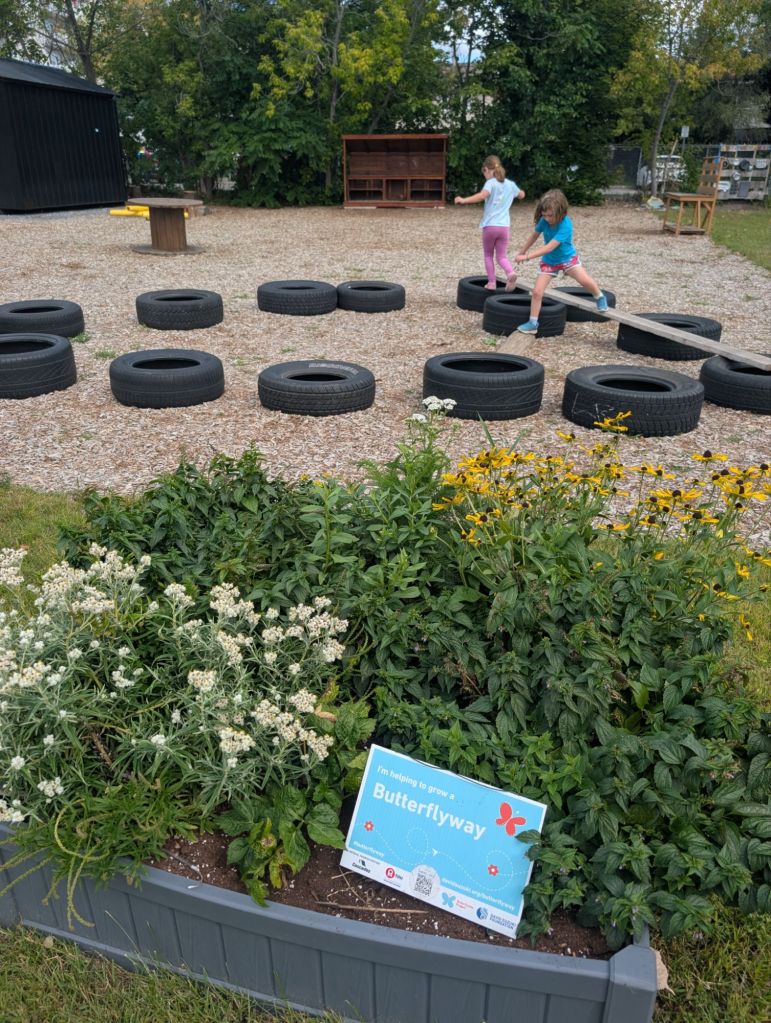
🦋 We did a thing!!! 🦋 We built a Butterflyway Way, right here in Aylmer!
Our little community, Pollinate / Polliniser Aylmer, which didn’t exist or know each other 6 months ago, came together, and kept coming out, time after time, spring, summer and fall, to build a network of public native pollinator gardens in Aylmer.
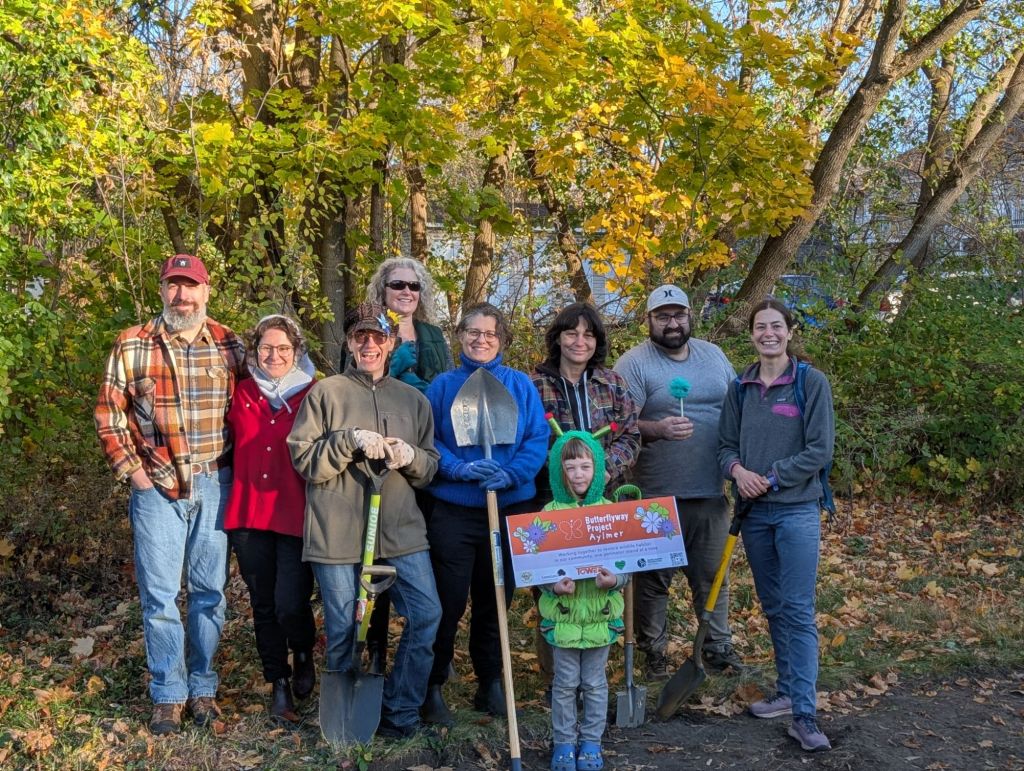
Each of these gardens is a Butterflyway stop. Once we have 12 such stops, in reasonable proximity, the David Suzuki Foundation’s Butterflyway Project considers us an official Butterflyway. We never expected to complete the first 12 this year, but momentum and community carried us forward, we didn’t stop, and we achieved our goal. As such, the Butterflyway Aylmer is officially born, and on the official Butterflyway map. We have no plans for stopping. For us this was the start, and we want to see the Aylmer Butterflyway continue to grow, and expand for years to come.
Before I highlight each of the stops we built this year, and because I know most people don’t have the patience to read an entire blog post, especially the way I write, I want to take a minute to thank the community that made this phase happen, and each of our incredible volunteers. You know who you are 😉
If you’re interested in getting involved in our project, or learning more about planting for pollinators, and making a positive impact in our community, join our Facebook group and introduce yourself. We’d love to have you, with 0 prior knowledge required.
Aylmer Butterflyway 2025: the first 12 stops
Stop #1: Eardley Elementary
Our first pollinator gardens were at Eardley Elementary, and technically these are 2 stops, as we planted in two different and separate areas of the school.
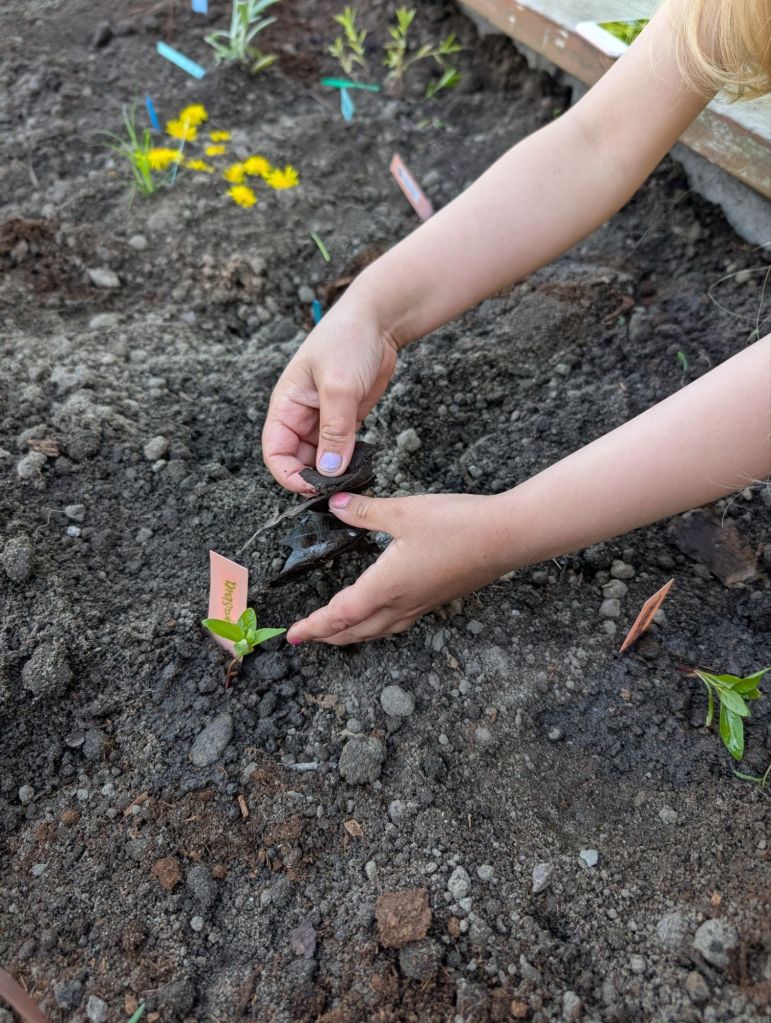
We created an entire lesson plan for this planting and delivered that lesson plan across 2 days in multiple sessions to most of the kids at Eardley Elementary, as an outdoor lesson in their amazing outdoor classroom.
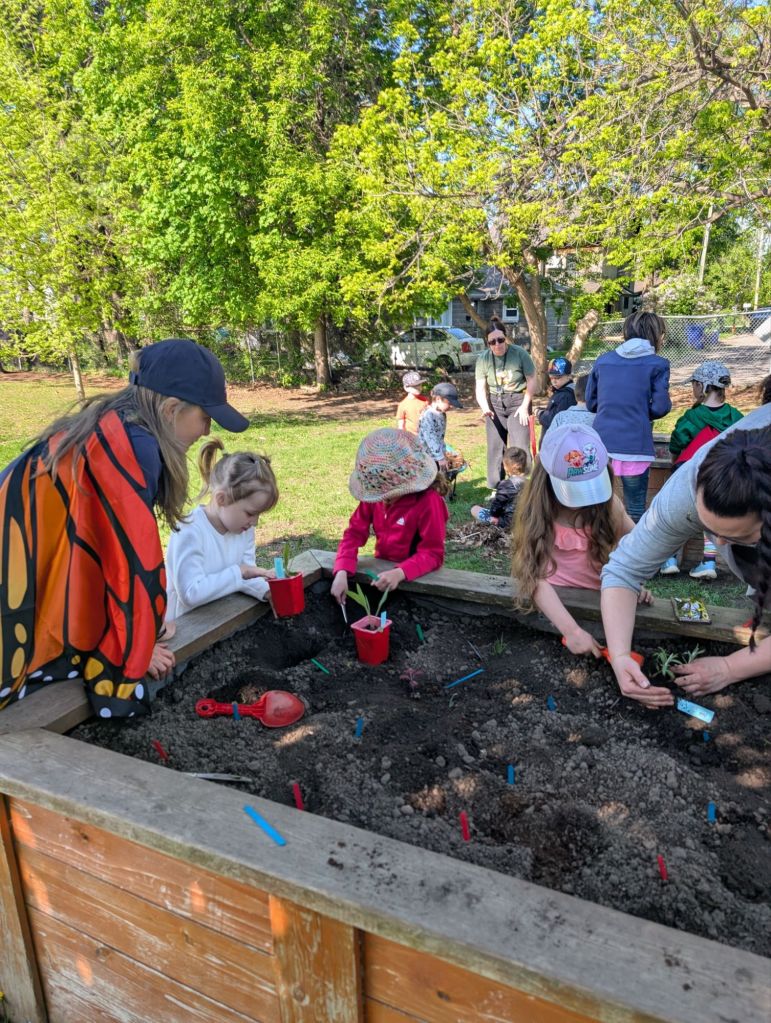
This made us think on our feet as we ended up delivering the same lesson concepts to kindergarten and k4s as we did to grade six students. It gave us an opportunity to adapt the lesson to a wide audience, and the lesson plan and teacher script we used is now freely available here for anyone wanting to adapt it for their needs.
Stop #2: Jardin Collectif North
Jardin Collectif North, an inspiring collective garden located next to Eardley Elementary made space for us to come plant a Butterflyway stop right near the entrance of their garden.

We felt so grateful to be invited to do this during their open house, and meet so many of the members of the collective, while also being treated to some live music and homemade treats during our planting. Their members were eager to learn more about what we were doing, the plants we selected, and taught us about of their medicinal properties, and helped us plant.
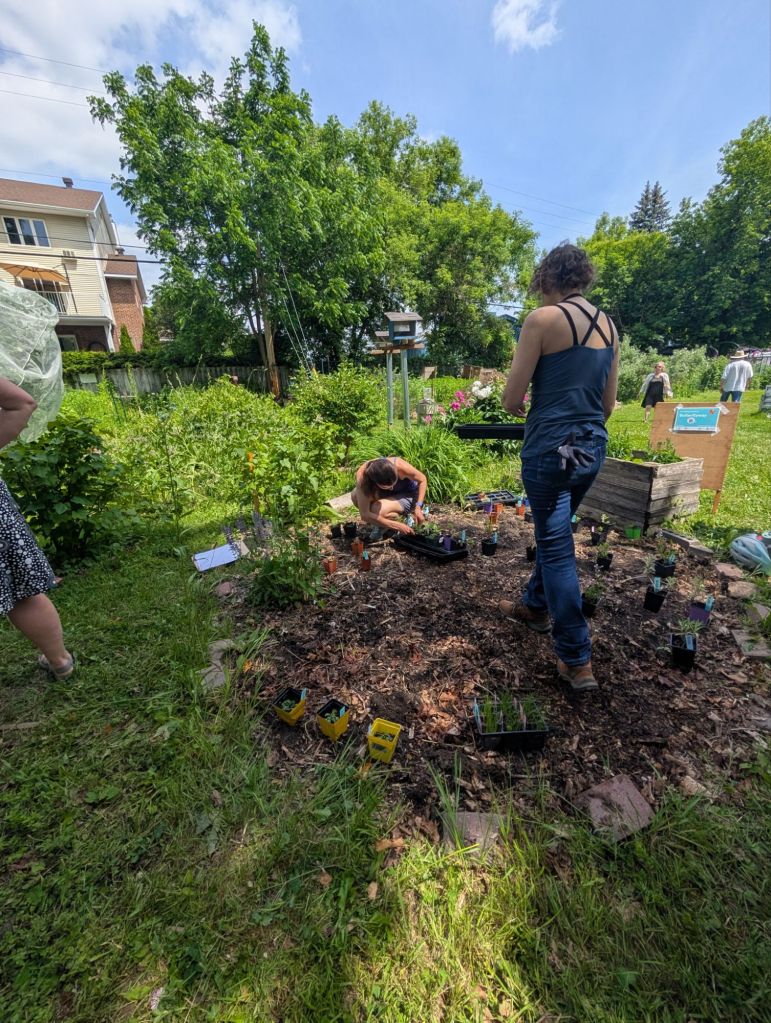
The group has been managing these gardens for many years and it was so inspiring walking through and seeing some of the innovative and frugal techniques they have used to grow so much food and perennial food crops in this urban space.
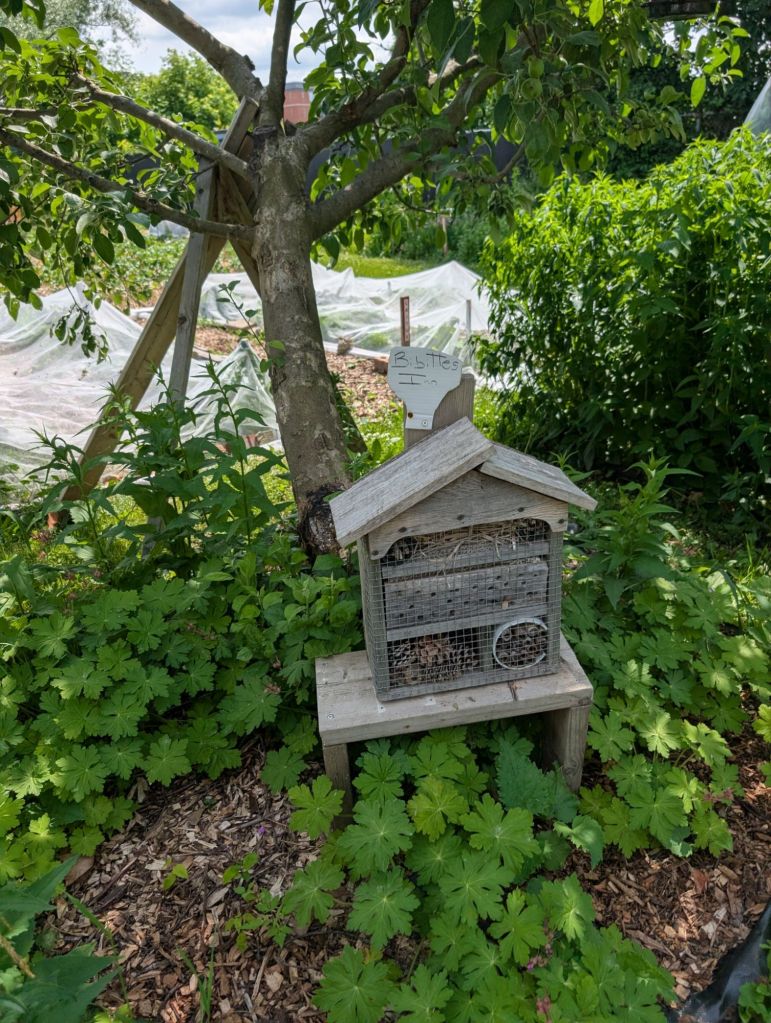
We were also so inspired by their creative ‘bibit houses’, and one of our members has been using them as inspiration as she aims to create a prototype for our future Butterflyway stops.
The North gardens are probably one of the most self-sufficient of all the Butterflyway stops we created, as they have so many avid, passionate and knowledgeable gardeners part of their collective, and were able to take on management of the garden after we left. While I still hope we can come back next year and bring even more native pollinator plants to add to various corners of their spaces, it’s so nice to see them tend to this Butterflyway stop with the same care they give to the rest of their garden.
Stop #3: Lord Aylmer Elementary
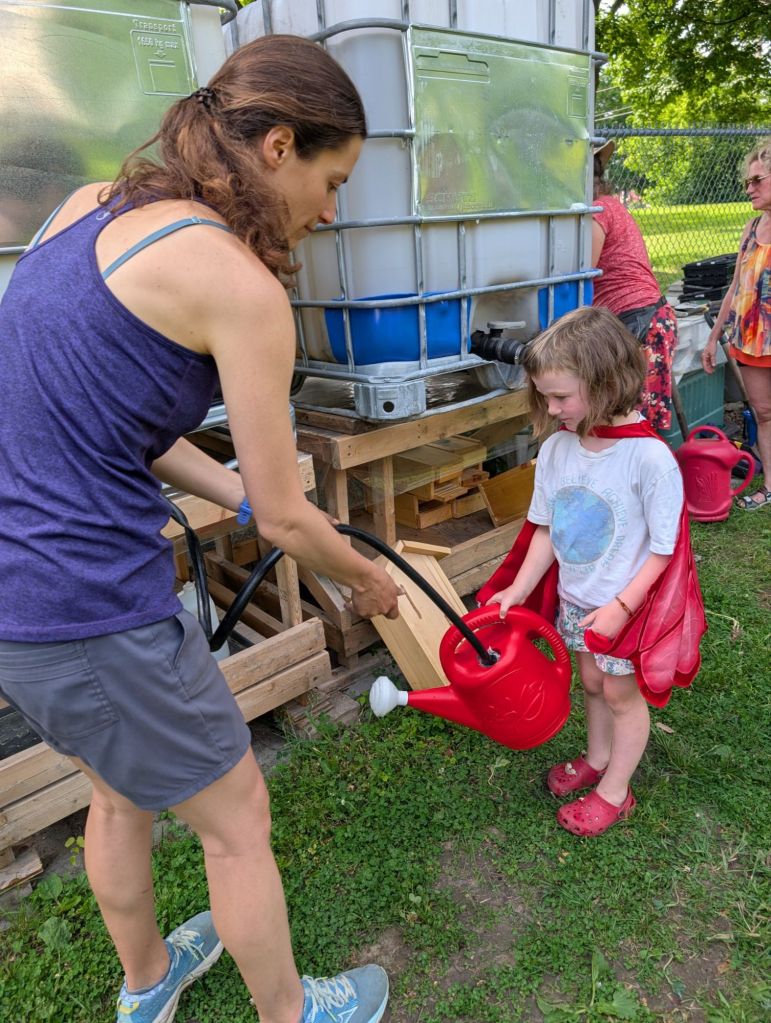
For our third garden, we engaged with a pilot Outdoor Education kindergarten group of 2 classes at Lord Aylmer Junior Campus.
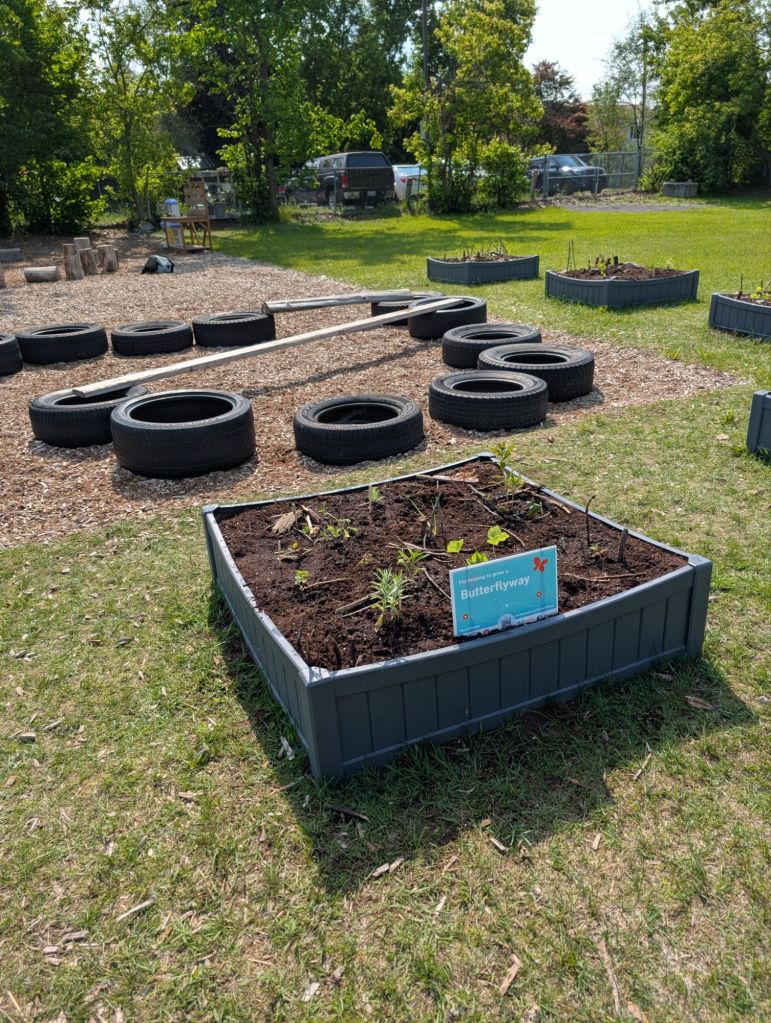
In their new outdoor adventure playground, the school had prepared 6 raised garden beds, and once again we delivered our lesson plan to two classes. This planting was lots of fun as we had many Pollinate Aylmer volunteers join us, and one of our talented volunteers created this amazing video from our planting that day, which she has given me permission to share (thanks Jardins Meg)
Incidentally, there must have been something magical in the soil at Lord Aylmer, as the plants (and the weeds) here grew so much faster than I would typically expect to see in one season, and are already overflowing their containers.
We know this because our group recognized early on that our school gardens would need some help over the summer. There are no teachers, no volunteers, and no students on school grounds during the summer, so our Pollinate Aylmer group stepped in.

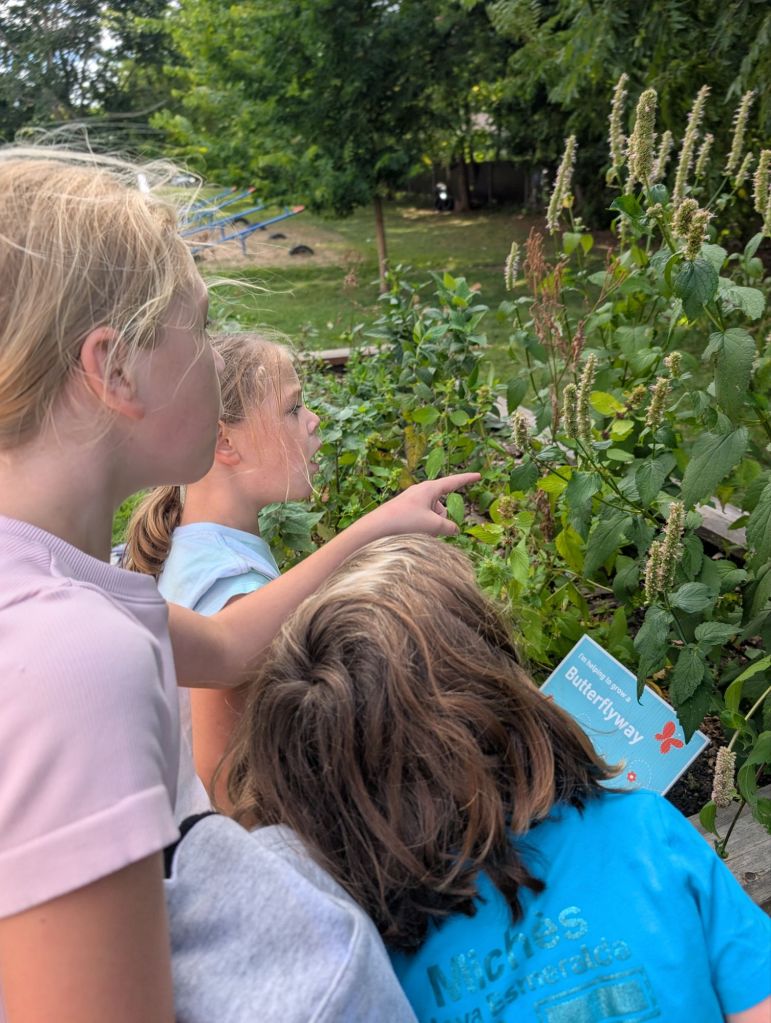
We took turns visiting the schoolyards, weeding each of the garden beds, and eventually mulching them with natural cedar left over from some of our other planting projects. I especially enjoyed going back there with our 5-year-old, and sometimes even her friends, who took the time to marvel at the pollinators huddled around some of the plants.
Stop #4: Aylmer Heritage Association
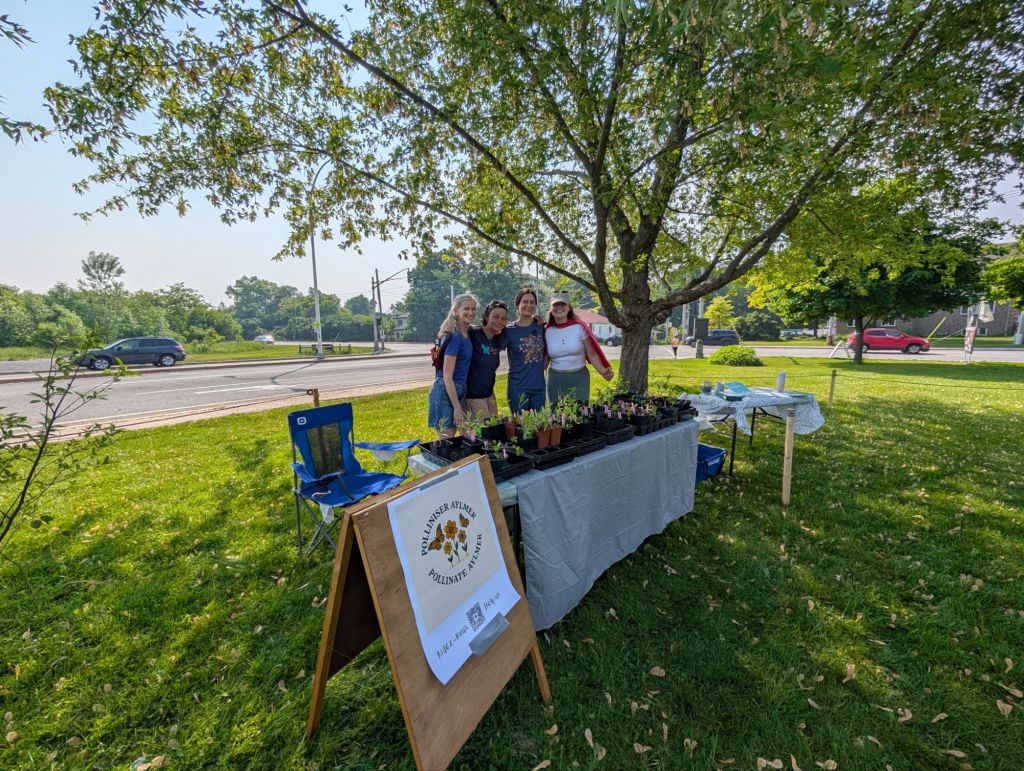
Our fourth butterfly garden was a bit impromptu. Our group set up a table at the annual Aylmer Heritage Association plant sale, and brought some Localeaf native plants with us, which we donated to the association. We found we had a lot of interest from the community in learning about native plants, and also did our best to swap people away from some of the invasive plants that were unfortunately available for sale, and we were delighted to find so many people very receptive to learning how to think about gardening from a slightly different perspective.
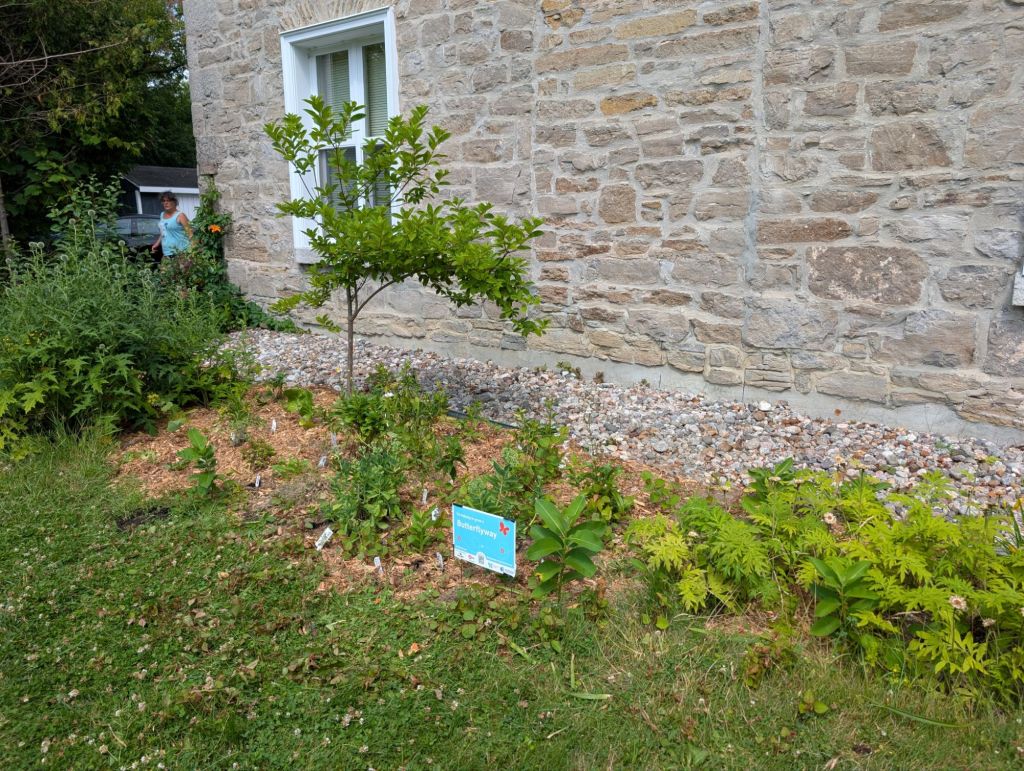
At the end of the plant sale, we ended up carving a space in the association’s existing garden and creating our fourth pollinator stop there, on the spot.
Sadly, this stop was decommissioned later in the summer when patches of Japanese Knotweed was discovered on the site. The city of Gatineau came, removed all the plants, and began a mitigation strategy for the Japanese Knotweed, which I don’t have further insight into.
I’m not an expert at invasive plants and particularly Japanese Knotweed is something that I can’t fully wrap my mind around, other than to say that this plant is outside the scope of my knowledge or ability to deal with, and if ever you find yourself faced with a patch of Japanese Knotweed, please, please seek professional help, as it needs extremely special care to control. Incidentally, our group has a couple of members who are very knowledgeable and passionate about invasive species management, so if you face yourself facing something you need help tackling, please reach out.
Regardless of the outcome, it was a great learning lesson for all of us and a reminder of the importance of properly removing invasive plants from a site prior to converting a space into a pollinator garden.
Stop #5: (collab) Centre Communitaire Entre- Nous / Les Partenaires du Secteur Aylmer
This stop came about as a result of a long-standing relationship I have with Centre Communitaire Entre-Nous (CCEN) which is personal, but if you’re so inclined, you can read more about here.
The community center is currently undergoing some major renovations and have moved in with Partnenaires du Secteur Aylmer (PSA), temporarily, at their beautiful location next to the remains of the old Church on chemin Eardley.
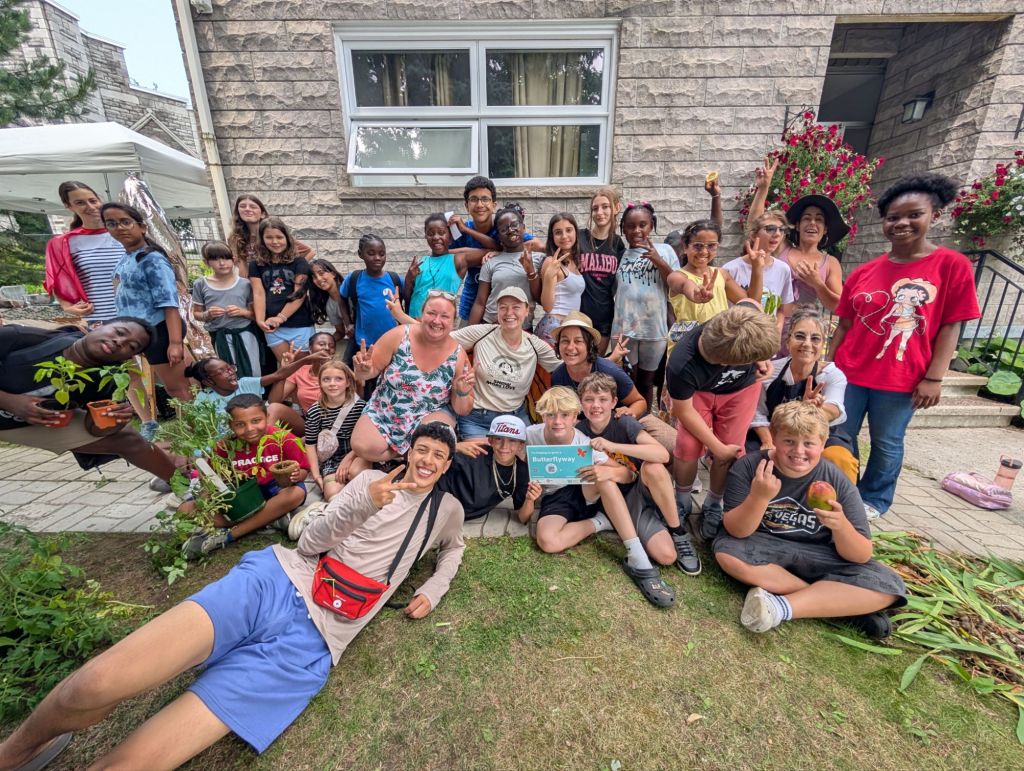
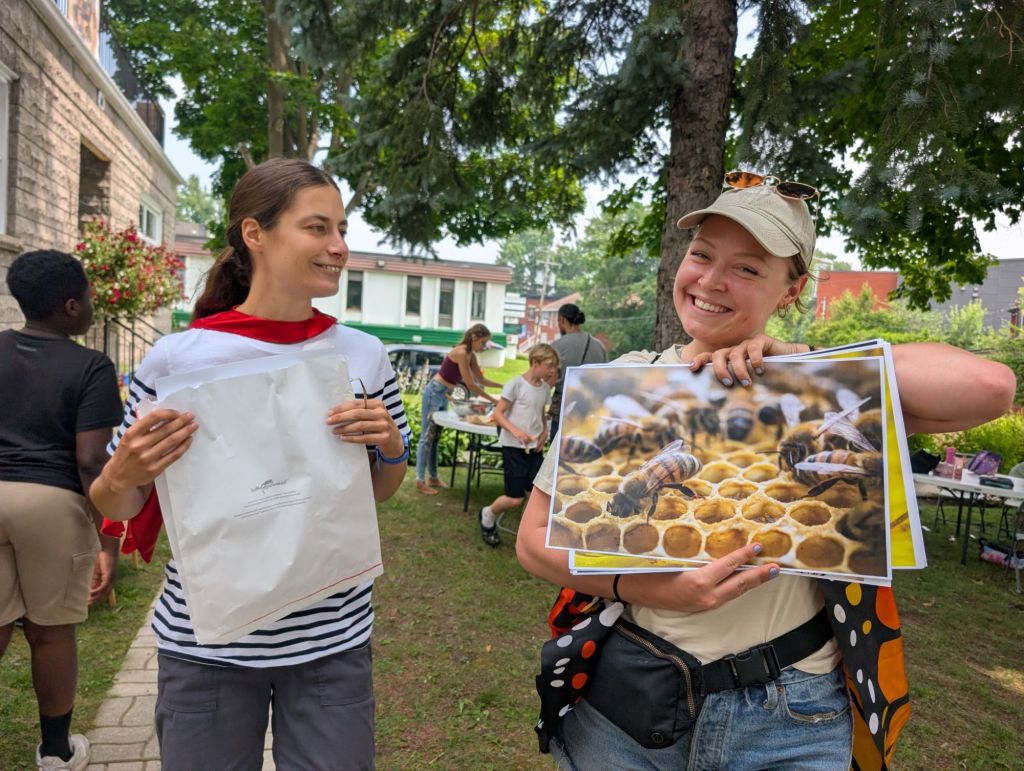
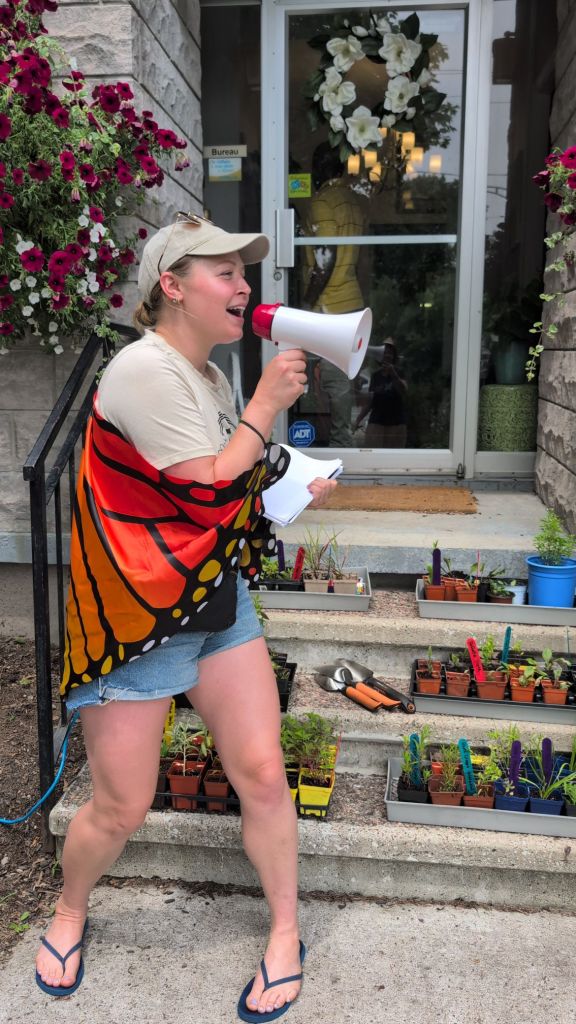
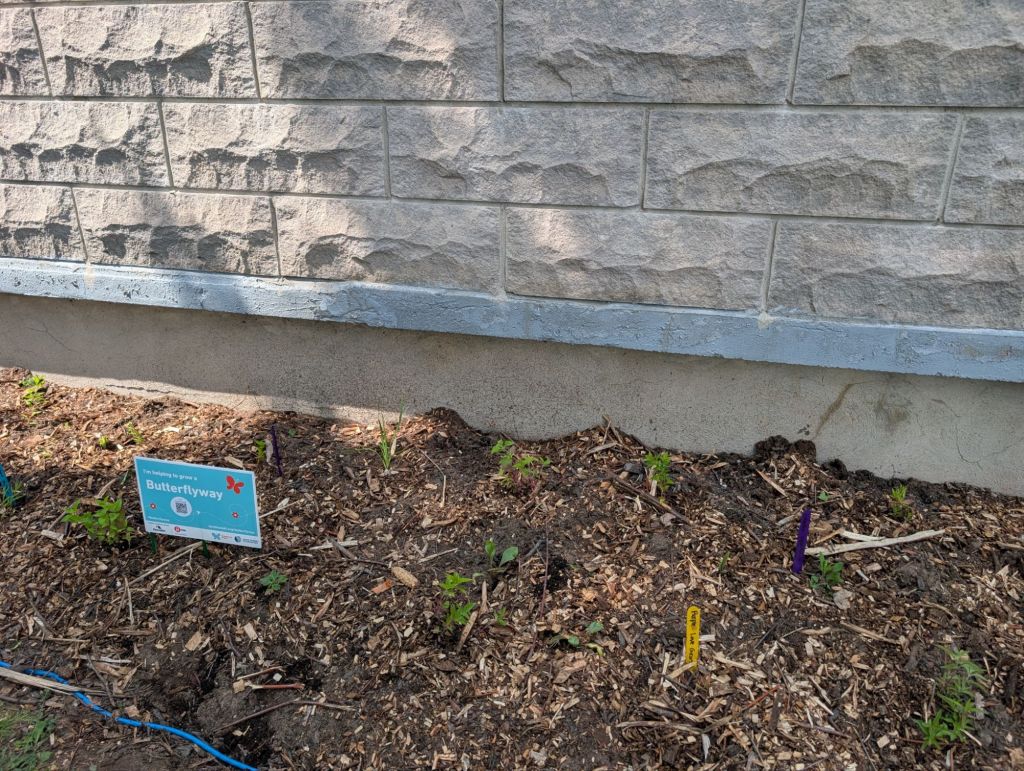
This butterfly garden was a really cool collaboration between all of us. The gardens that we planted are at the front of the PSA building as well as at the side. The planting itself happened as part of CCEN’s Day camp programming, as kids aged 5 to 12 helped us build this Butterflyway stop, while also learning about the importance of native pollinators and native plants, through an adapted version of our lesson plan.
This planting occured in July was the last one on our summer series, as the weather got too hot to trust that the young plants would survive and thrive in new gardens, without access to water. We couldn’t have known this summer could be as dry as it turned out to be, yet all of the gardens that we had planted so far survived this period of drought, with minimal or very little access to supplementary water.
There are two main reasons for this. First the plants are native and adapted to conditions here, meant to grow in their native habitat, having spent thousands of years adapting to our growing conditions and surviving.
Second, and a less obvious reason why the plants performed so well in these new gardens, unestablished during such tough conditions, is due to their size. We did not plant 1 gallon or 2 gallon plants in these gardens.
Many people think they should buy the largest size plant they can afford to place in their garden. My experience has taught me nothing is further from the truth.
The younger the plant and the younger the tree planted in a new site. The easier time they’re going to have adapting and growing into their new space.
Stop #6: O So Natural Clinic & Boutique
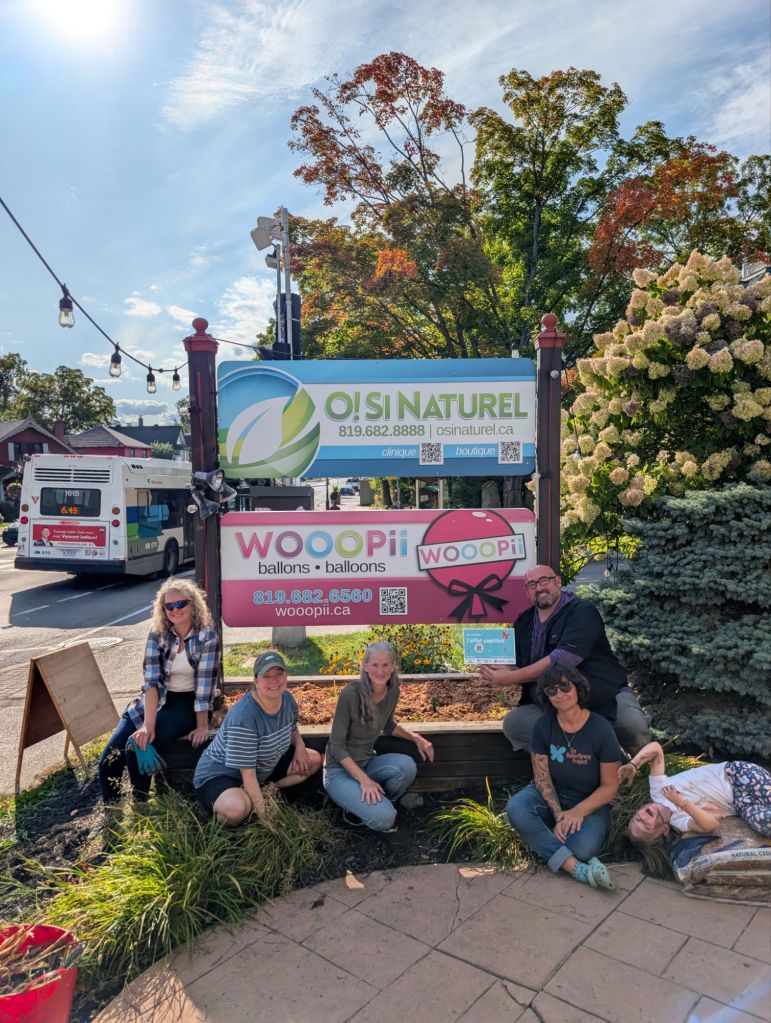
At the bustling central intersection of rue Principale and Frank-Robinson, we were lured by the wonderful smells of natural products from O So Natural Clinic & Boutique, and noticed that they had two reasonably sized outdoor planting beds in their gardens with absolutely nothing growing out of them.
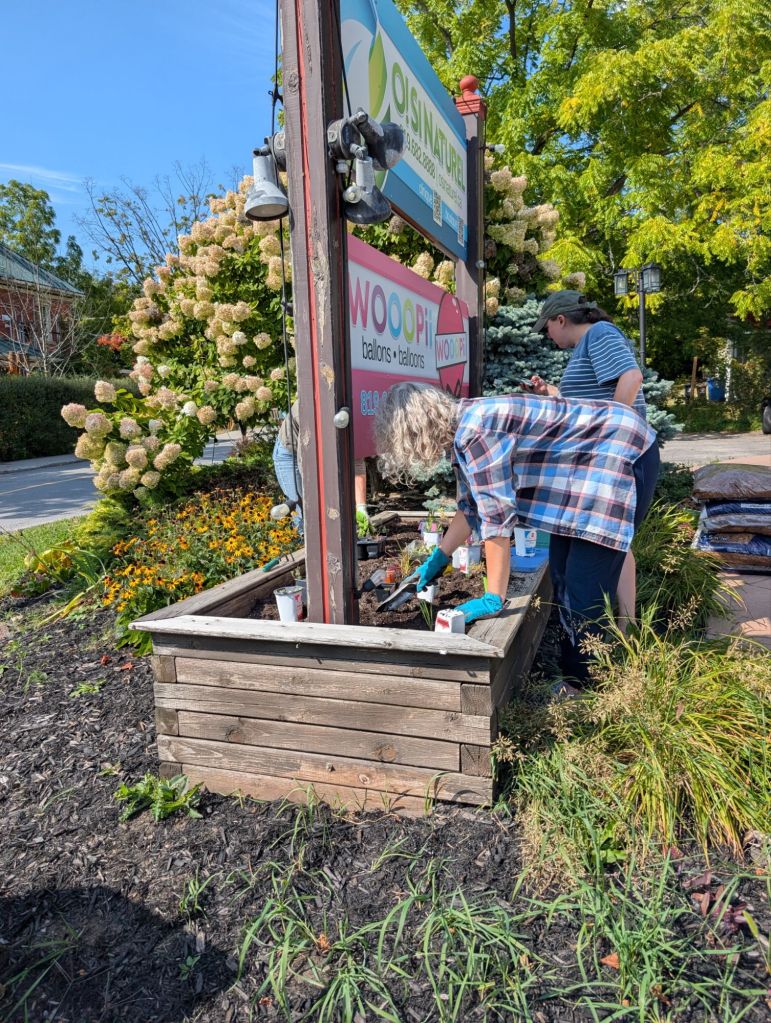
We approached them, explained our project, and asked how they felt about us planting a small butterflyway in those garden beds. The owners were extremely receptive, and their one ask was to ensure that the beds don’t look unruly, and that we stick with shorter plants, so as to avoid obstructing the view of the sign.

Our group was definitely up to this challenge and we even went one step further and planted with smells in mind, as a way to incorporate an homage to the natural products that the boutique sells. This was our first fall planting and I can’t wait to see the space come into its own next spring.
Stop #7: Rose Pizza
Yes we love Rose Pizza, but we didn’t just plant this stop to get access to their incredible autumn pizza special.

Rose Pizza is located in a strip mall in front of which there is a very long strip of grass. Our original vision was converting that entire strip to a pollinator garden, and this is still something we hope to work toward next year.
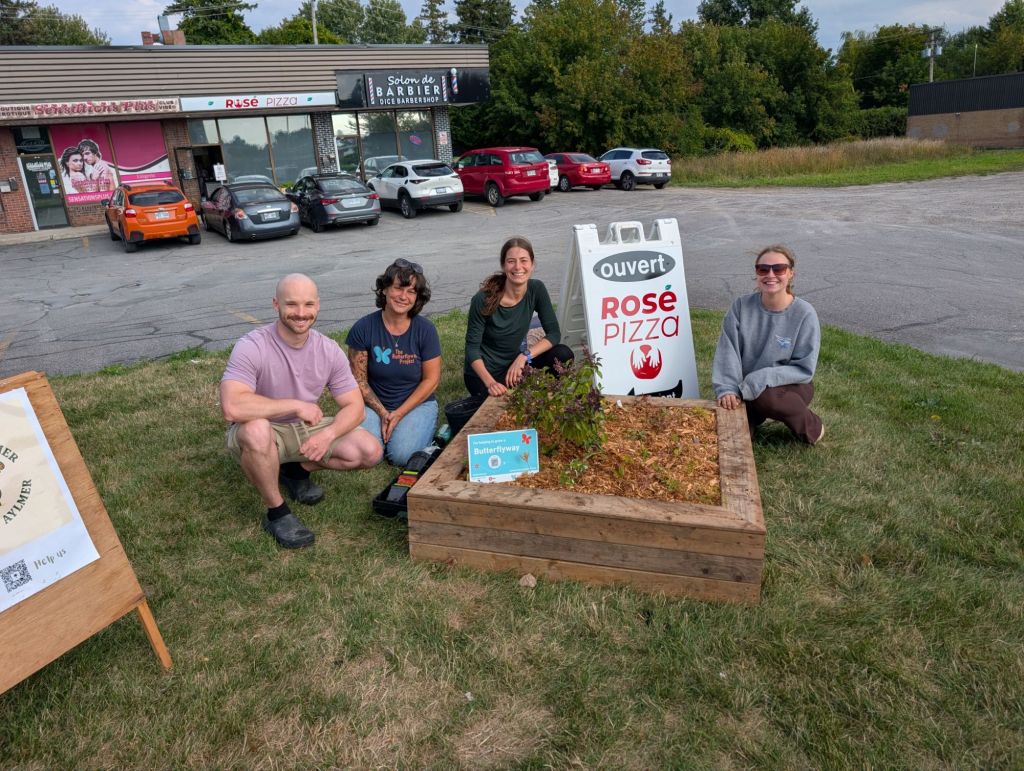
While Rose Pizza was extremely excited to participate and support our project, the landowner had concerns about permit requirements from the city, so we agreed to take baby steps.
As such, stop number seven became the smallest pollinator stop on our Butterflyway, as we got permission to plant nothing larger than a 4×4 ft area this year.
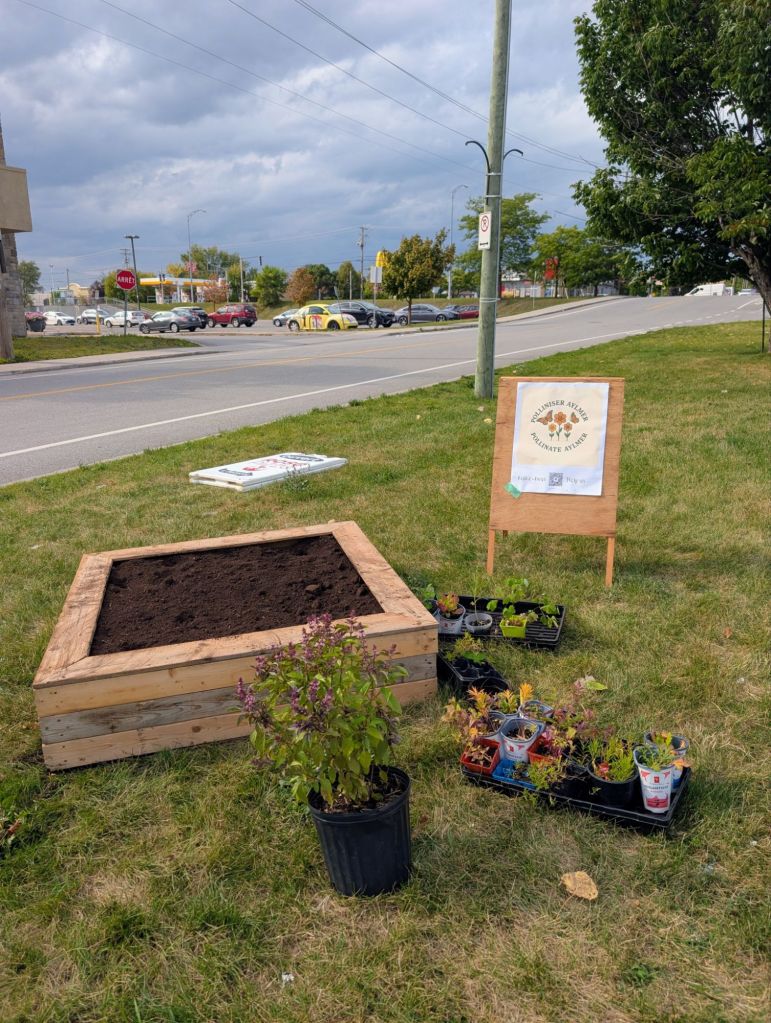
To prevent the tiny stop from being accidentally mowed over, we decided to build a small garden bed around it. The native plants we chose for this planting largely mirrored Rose’s colours.
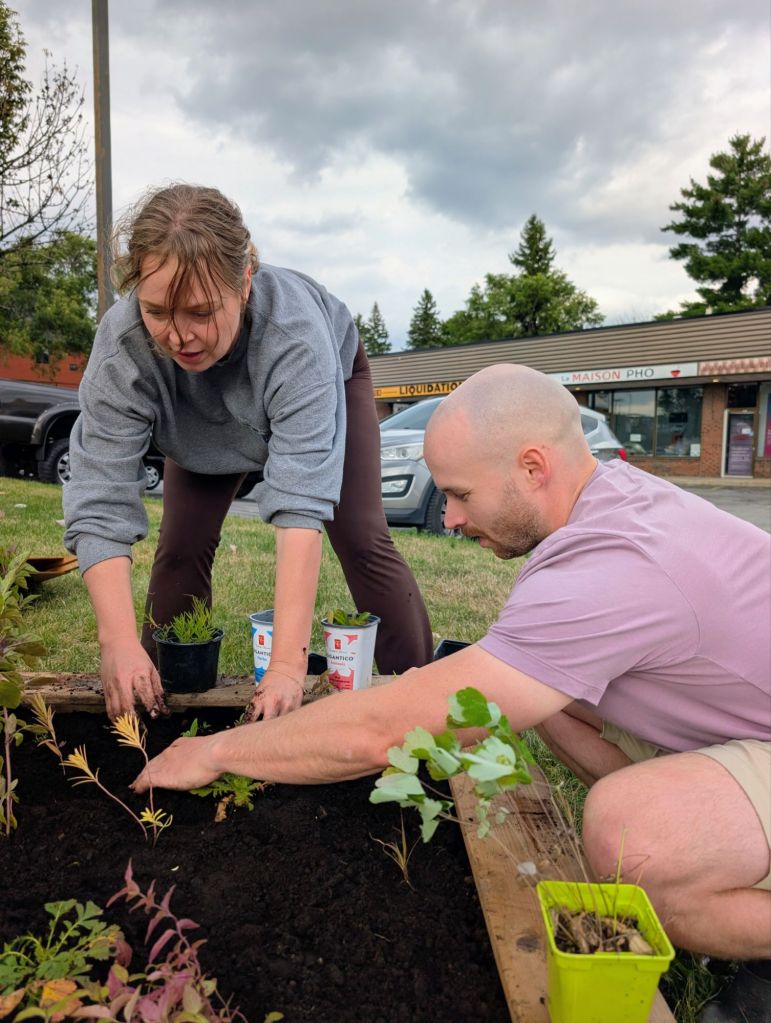
Since planting, Rose has also built a picnic table which is now placed right next to the little Butterflyway stop. Stop by and smell the flowers while you enjoy a fresh slice of the best pie in town (any white pie – in my opinion 🥰).
Stop #8: Ecole Montessori de l’Outaouais
I could probably dedicate three chapters of a book describing how much work went into this project of transforming the schoolyard of Ecole Montessori de Outaouais, outside of our Butterflyway project, and before Pollinate Aylmer got involved, but that is where our project starts.
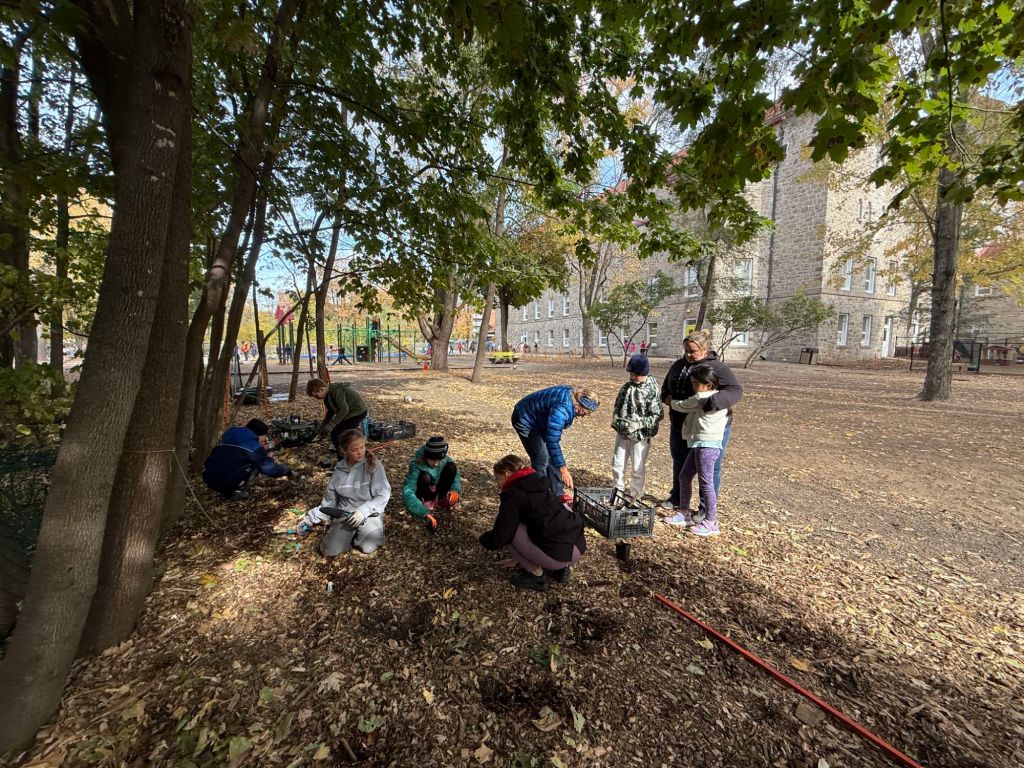
Before us, one amazing parent at the school, whom I have since met, worked closely with, and now consider a friend (and a full fledged member of Pollinate Aylmer), took it upon herself to completely revamp every aspect and area of the grounds of the school.
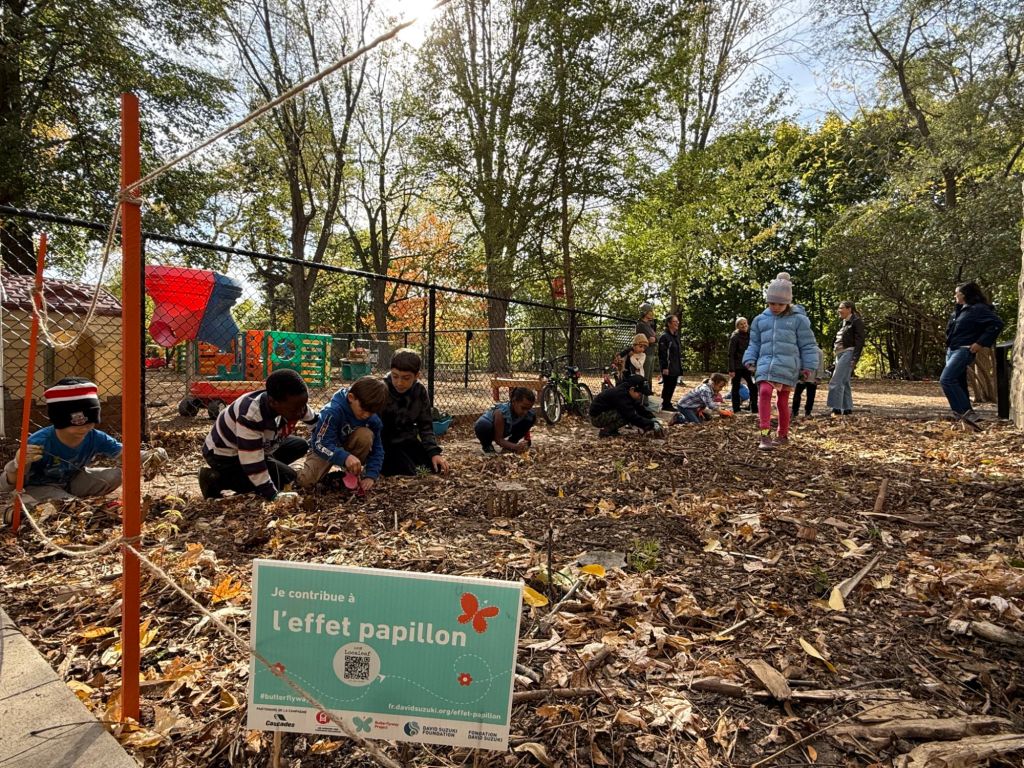
Pollinate Aylmer swept in to help after most of the hard work had been completed, but plenty of pockets of spaces remained for us to help create pollinator habitat.
Our group worked with the parents and teachers at Montessori to allow every kid at the school to help participate in the planting, while delivering our now famous ‘building pollinator habitat’ lesson to classes from kindergarten to grade six. The kids planted appropriate plants in various ecosystems throughout the school ground, including a sensory garden, a woodland garden, prairie garden, and a dedicated butterfly garden.
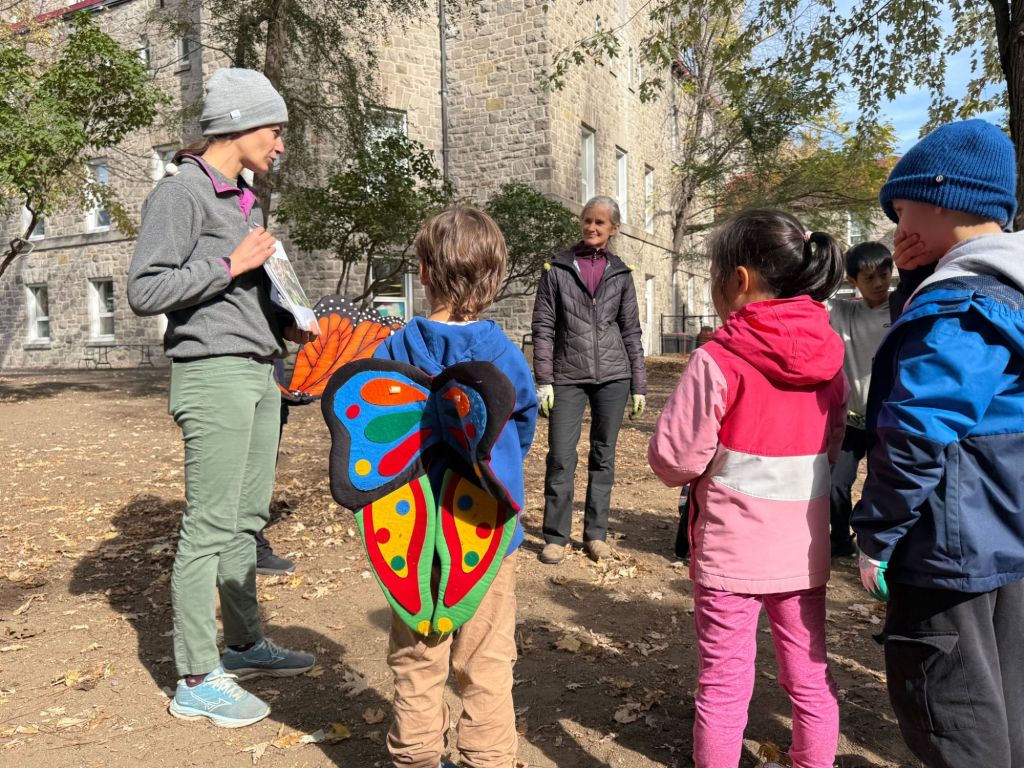
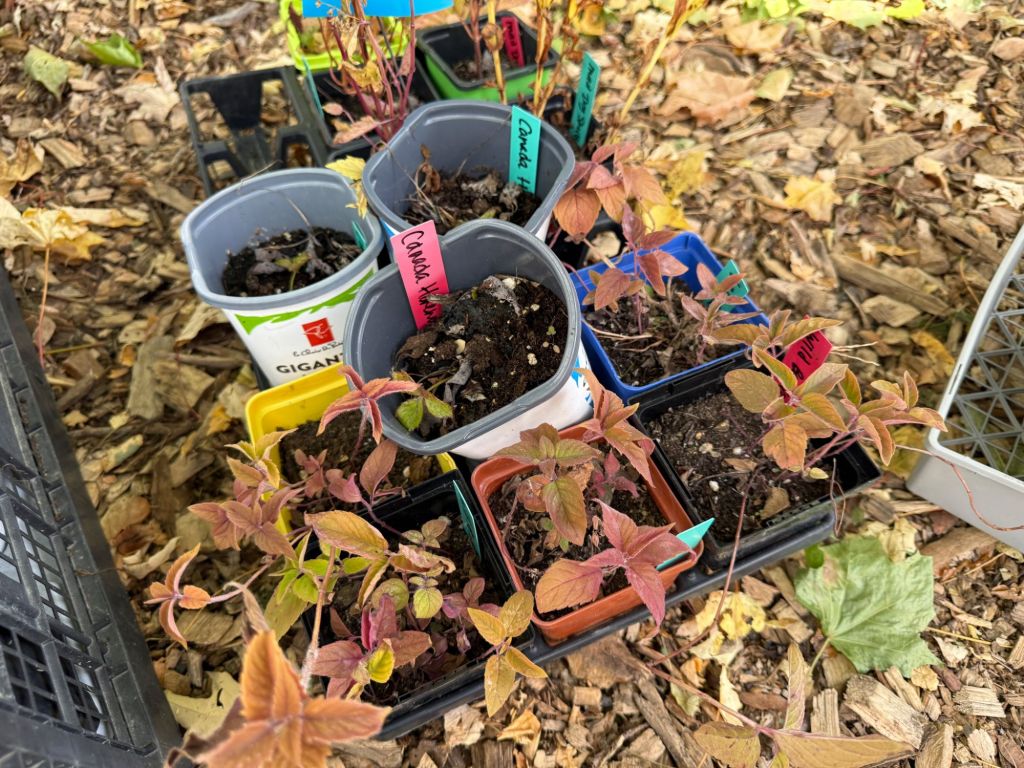
Full disclosure, by the time this planting happened late in the fall, many of the plants the children received to plant had become dormant, and looked like dead weeds above the soil.
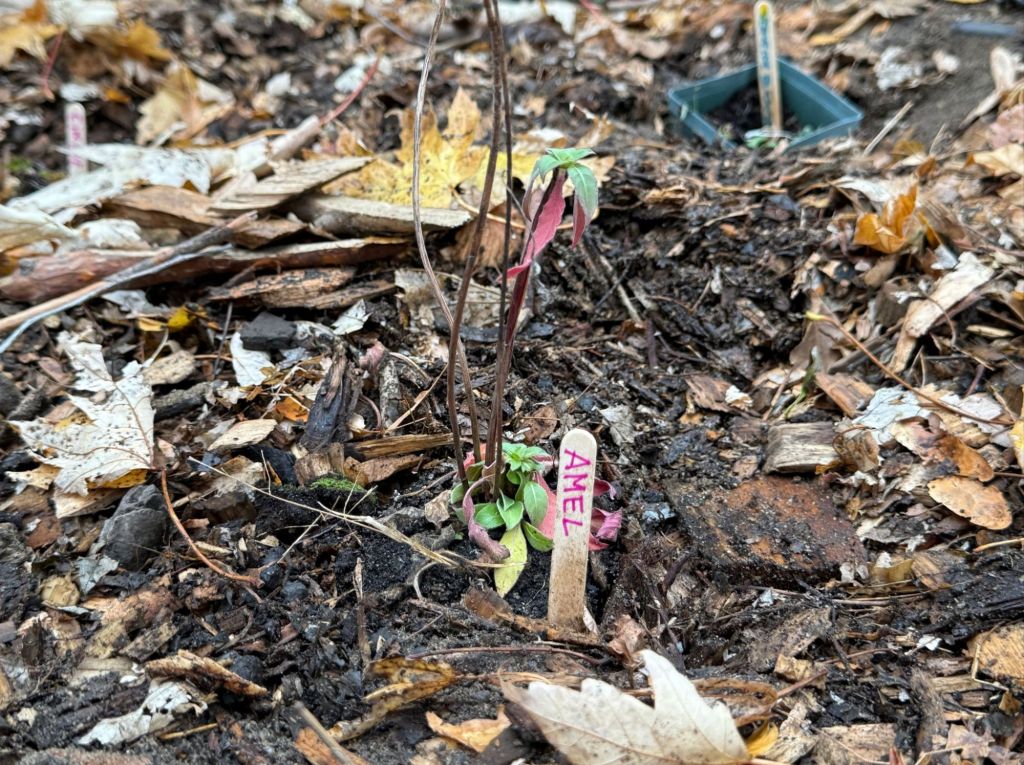
While the kids definitely had questions about this, seeing the dense and healthy root systems of the plant below the soil when they began to plant convinced (most of) them to trust that these plants are simply sleeping at this time of year, and will awaken and begin to show their beauty in spring.
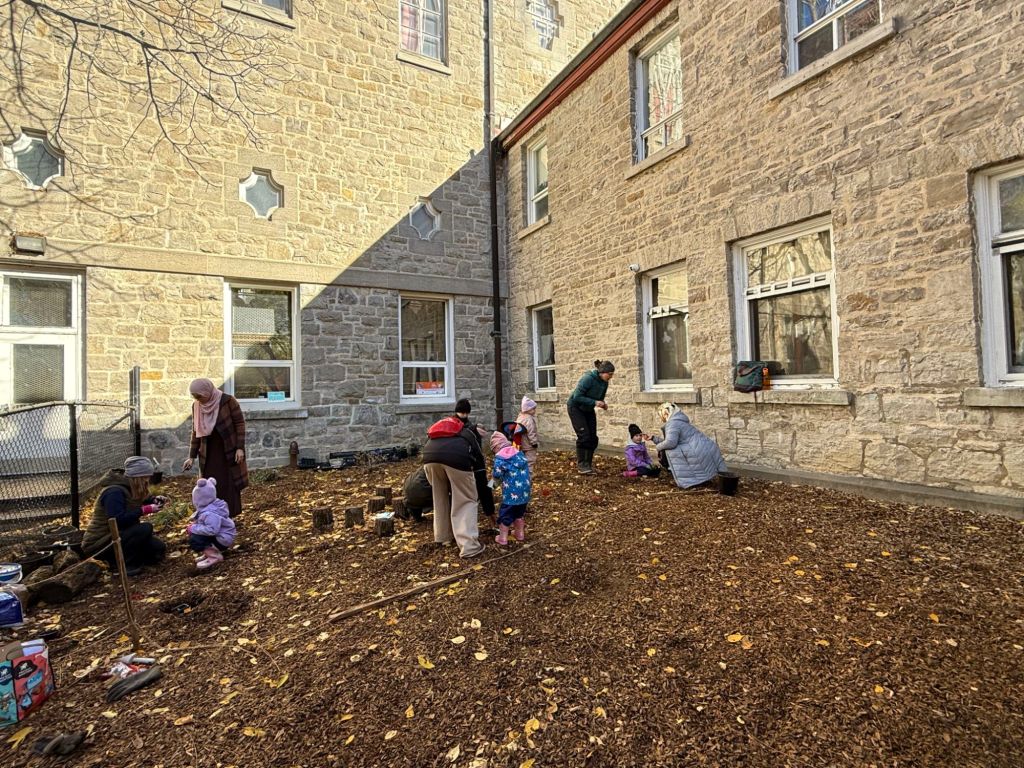
The kids, teachers and parents at this school have been amazing, and so engaged. We have collective ideas for how to continue to grow and expand on the kids’ thirst for knowledge, and I look forward to seeing what winter and spring bring in their garden of wonders.
Stop #9: Lakeview Park (colab) Association des Residents du Quartier Lakeview and Meres au Front
We are so fortunate that one of our Pollinate Aylmer members is very closely involved with the Outaouais chapter of Meres au Front (MaF), an established and far larger-spanning organization focused on protecting the environment surrounding our community for our children. MaF partnered with the Lakeview Community Association, as well as Pollinate Aylmer, Localeaf (that’s me 🙂), Canadian Wildlife Federation, and possibly other organizations I’m not aware of, and coordinated a project that saw a large section of grass at Lakeview Park converted into a butterfly garden and wildlife meadow.
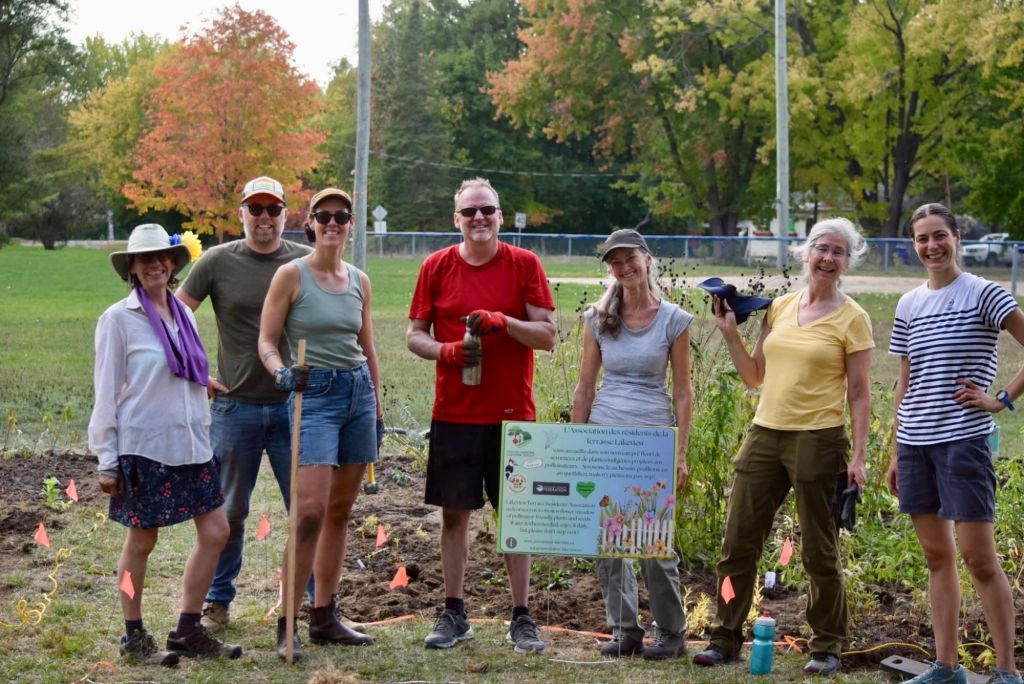
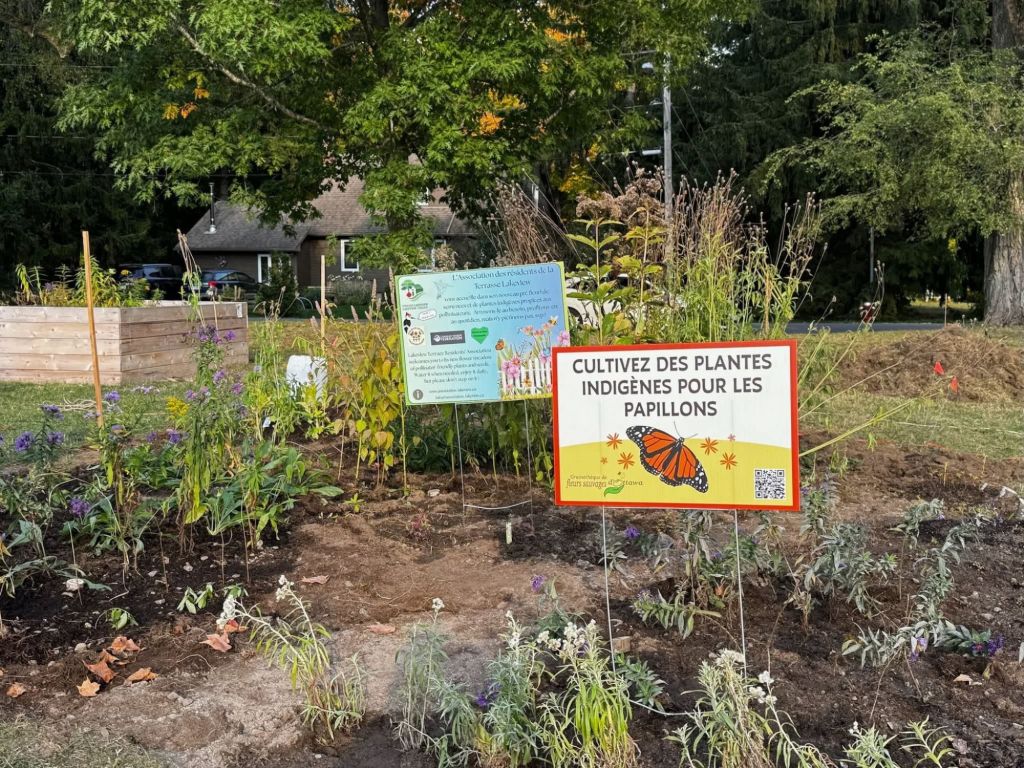
While technically this planting is outside of our original intended central Aylmer radius for the 12 gardens, we were happy to be invited to help support such a collaborative project, and will be sure to find ways to fill in some dots with additional pollinator stops between the park and central Aylmer next year (I guess we need more Butterflyway stops).
A lot of hard labor went into this planting, as no cardboard or wood chips were available, and the community opted to clear the site by manually removing all of the grass and weeds.
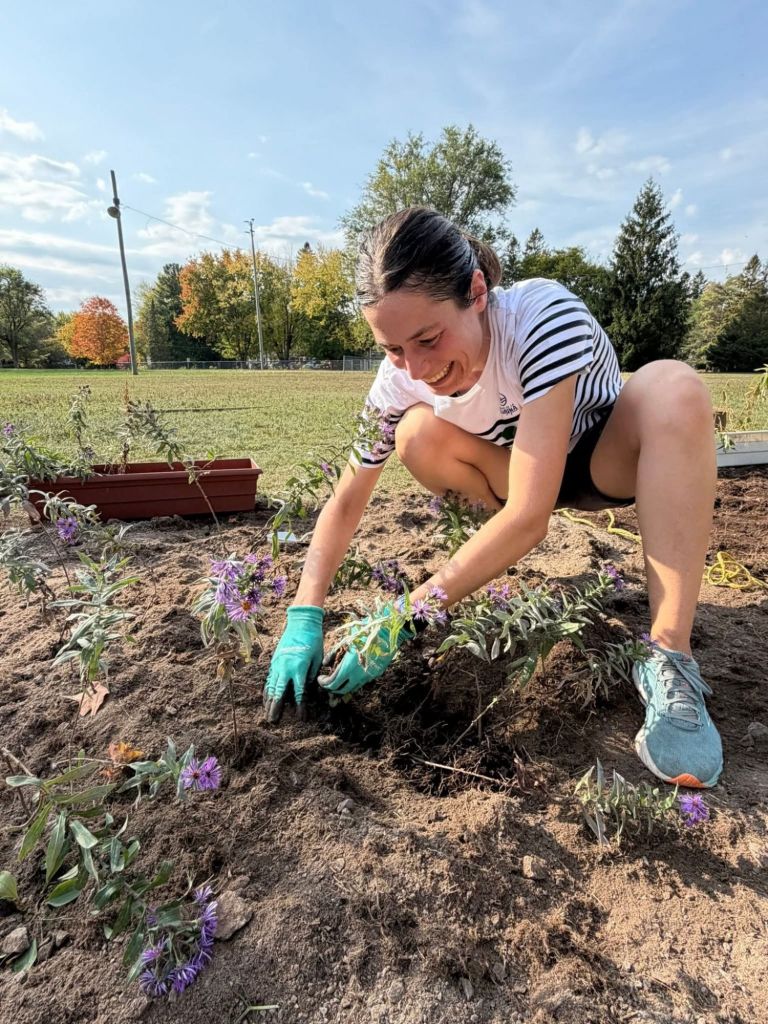
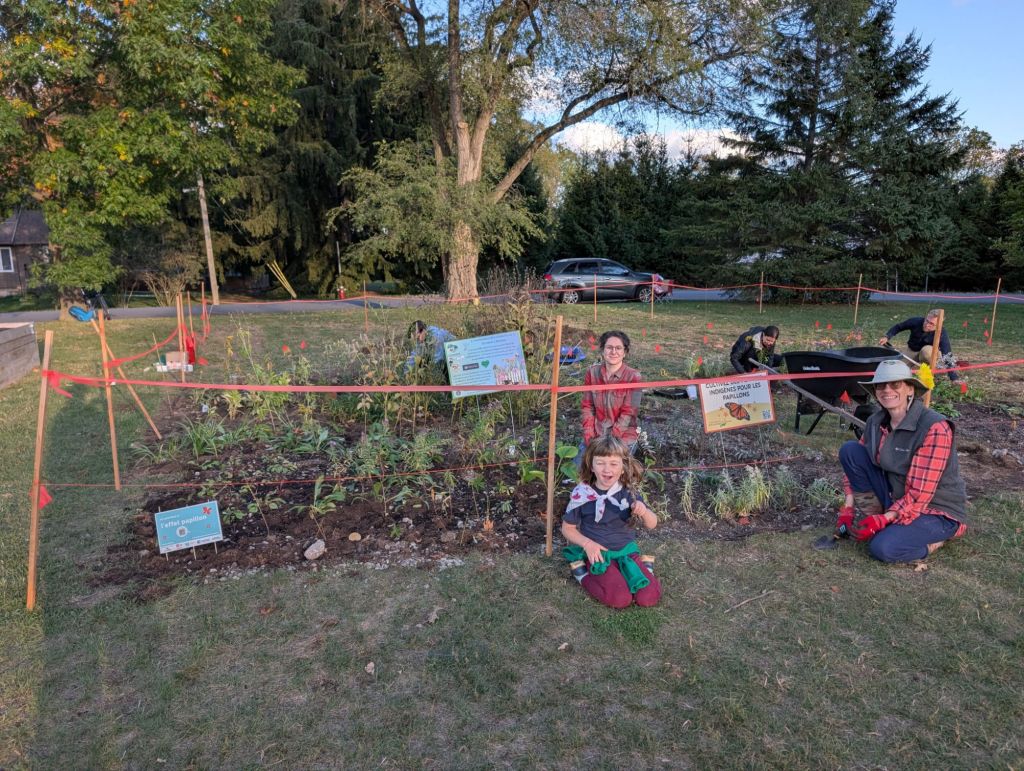
The community of Lakeview, together with volunteers from Meres au Front and Pollinate Aylmer came together, on two separate weekends, to complete the project.
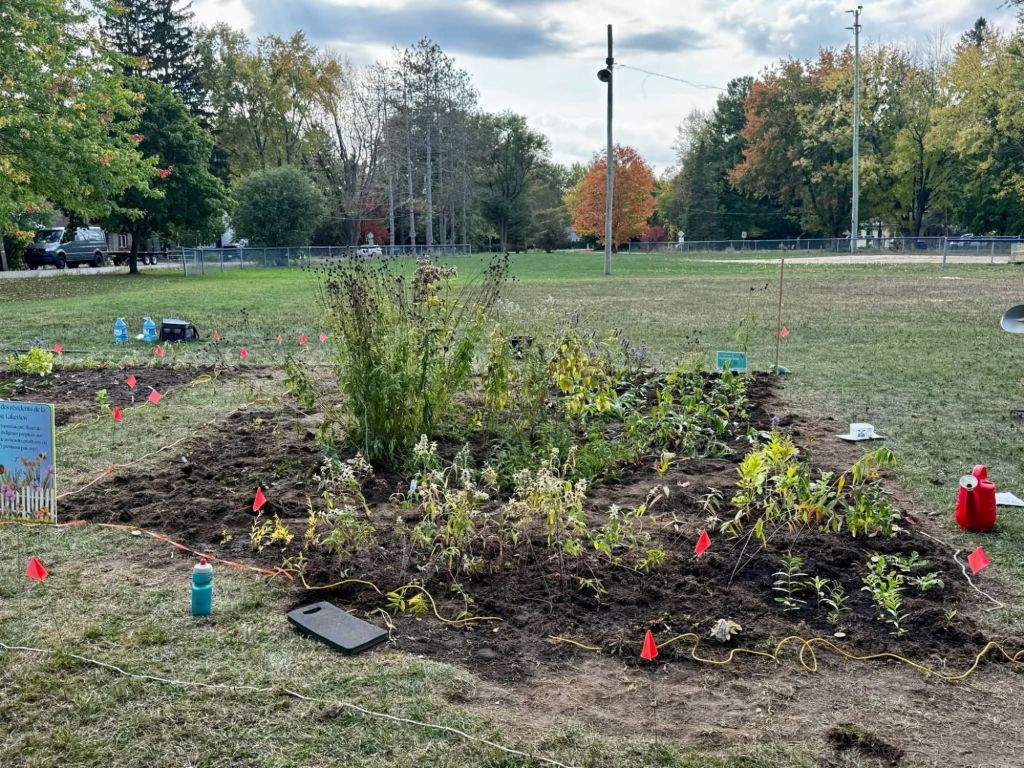
This Butterflyway stop combines plants from Localeaf, along with native plants donated by the community, plants grown by members of the association, and a portion of the area dedicated to a meadow grown from seeds donated by the Canadian Wildlife Federation.
Stop 10: Aylmer Food Centre (Food Bank)
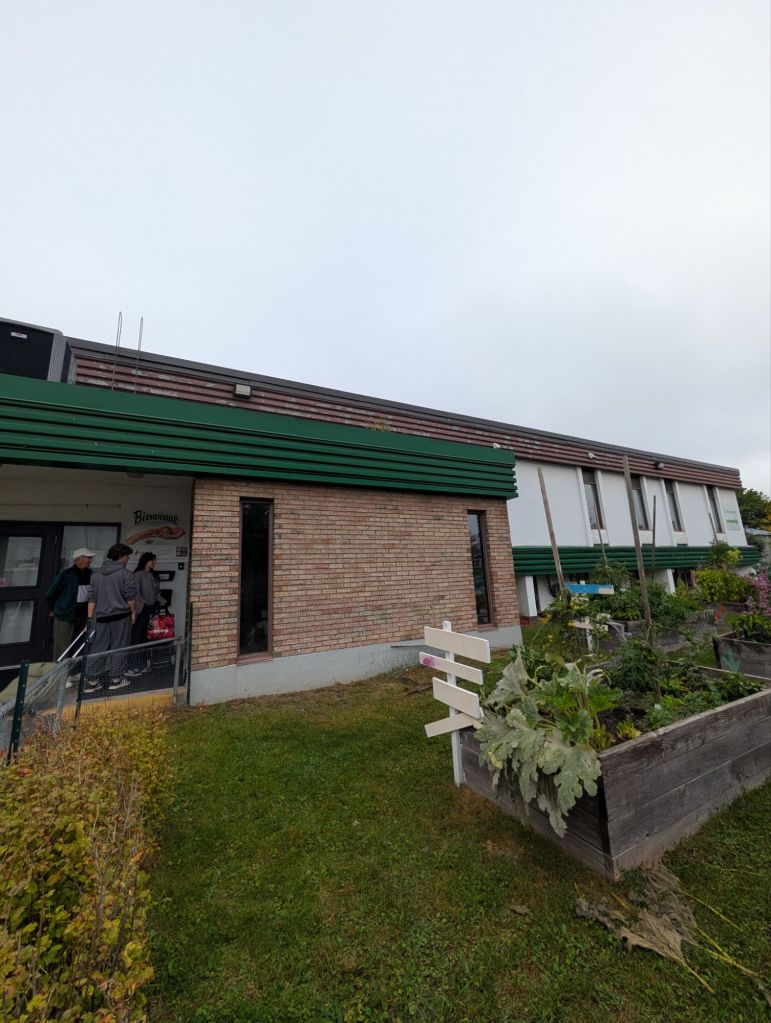
The Aylmer Food Centre has a good amount of surrounding outdoor space. A large section of the space has been fenced off and converted into a thriving vegetable garden, with support from volunteers and Les Partenaires du Secteur Aylmer.
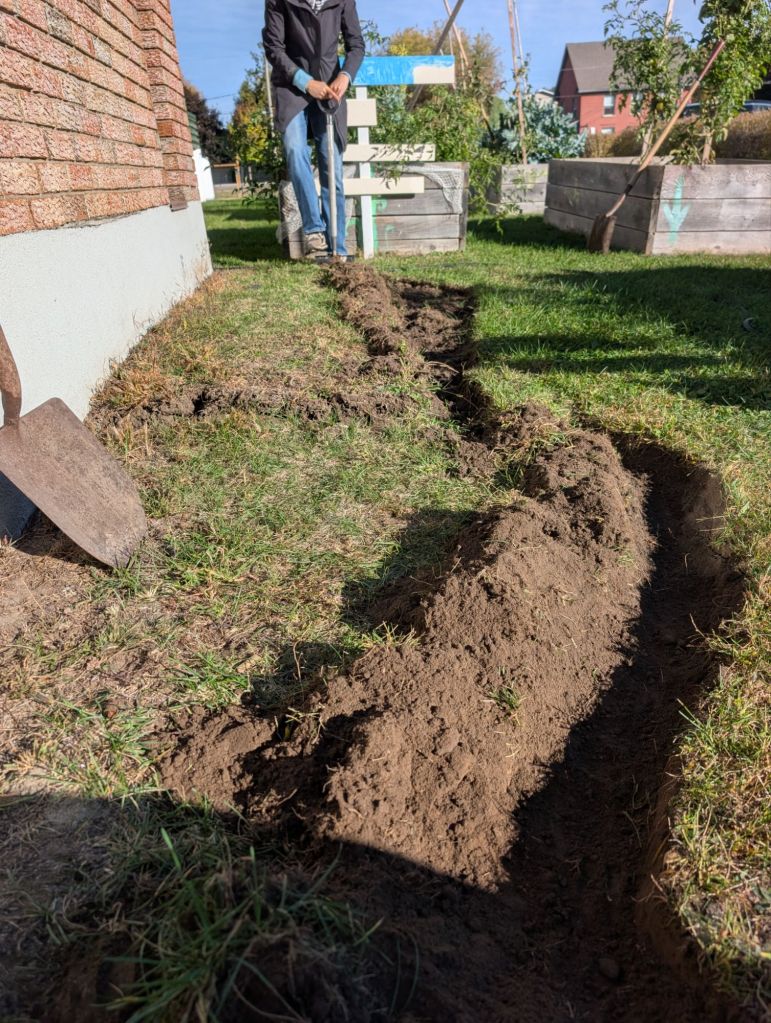
We approached them with the idea of creating a Butterflyway stop in a portion of this garden, near their front entrance, visible to anyone who enters the food bank, but also close enough to their large vegetable beds to perform some key companion planting roles, such as attracting pollinators, deterring pests, and acting as trap crops to veer unwanted insects away from the vegetable plants.
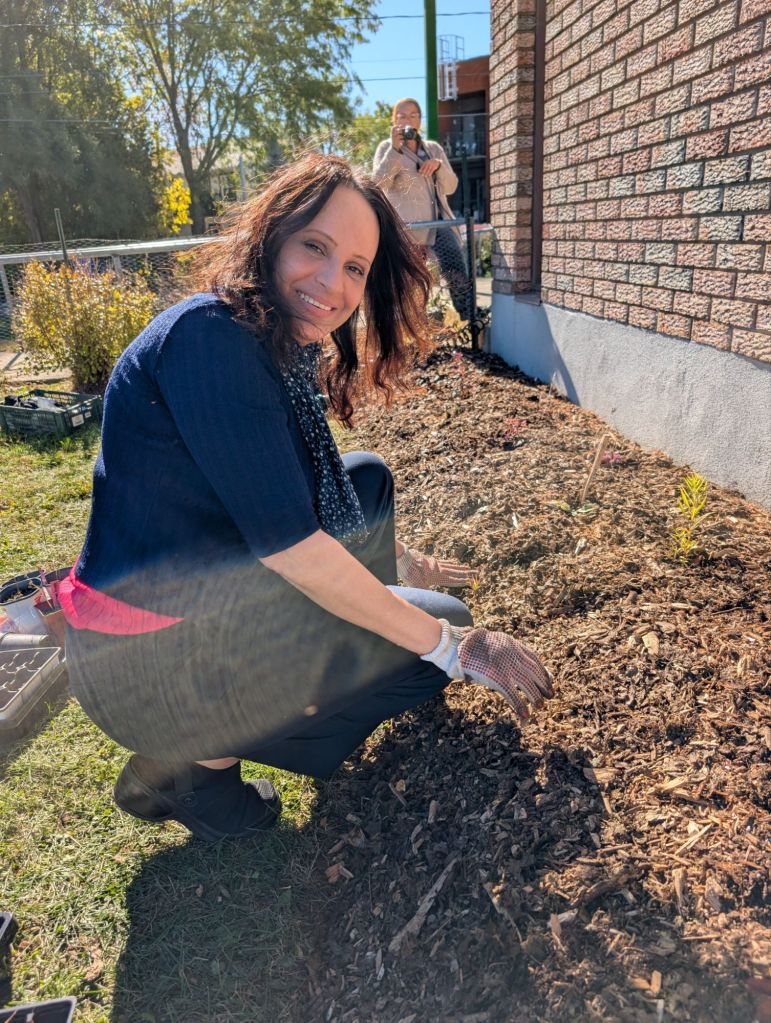
The idea was well received and we proceeded with a more formal approach to a front garden planting. We had help from the food center volunteers, as well as staff and even some board members who stopped by to learn more about our project and get their hands dirty.
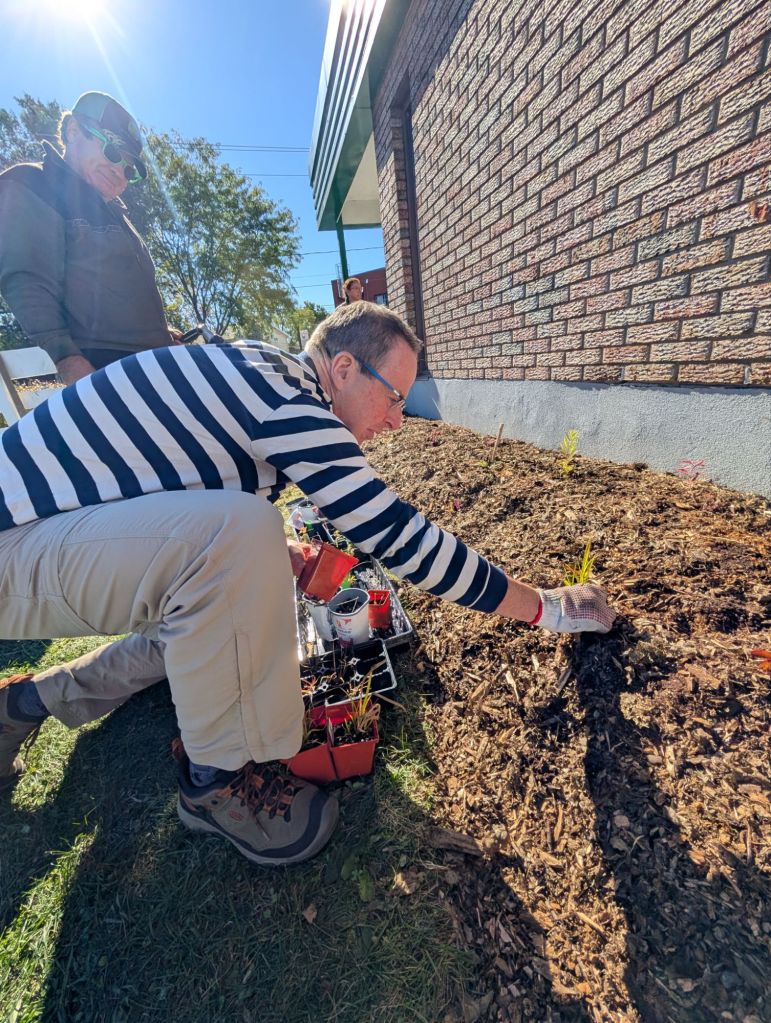
This planting was also the first one where we were able to reveal our new Butterflyway Aymer signage, designed and printed by one of our talented group members.
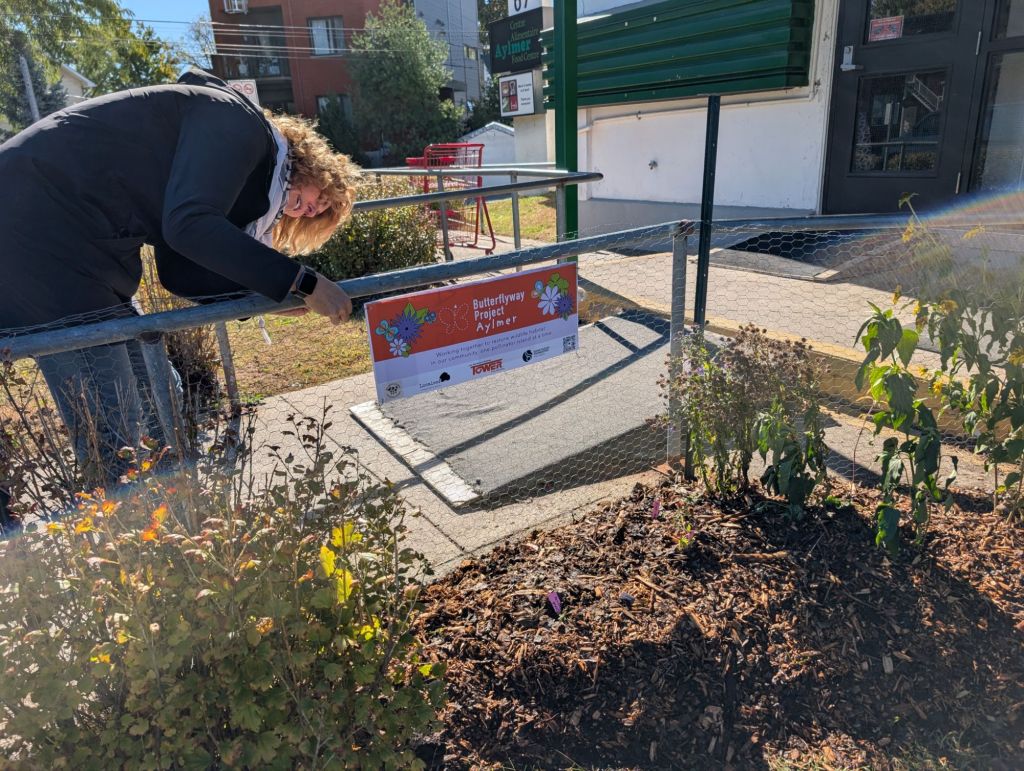
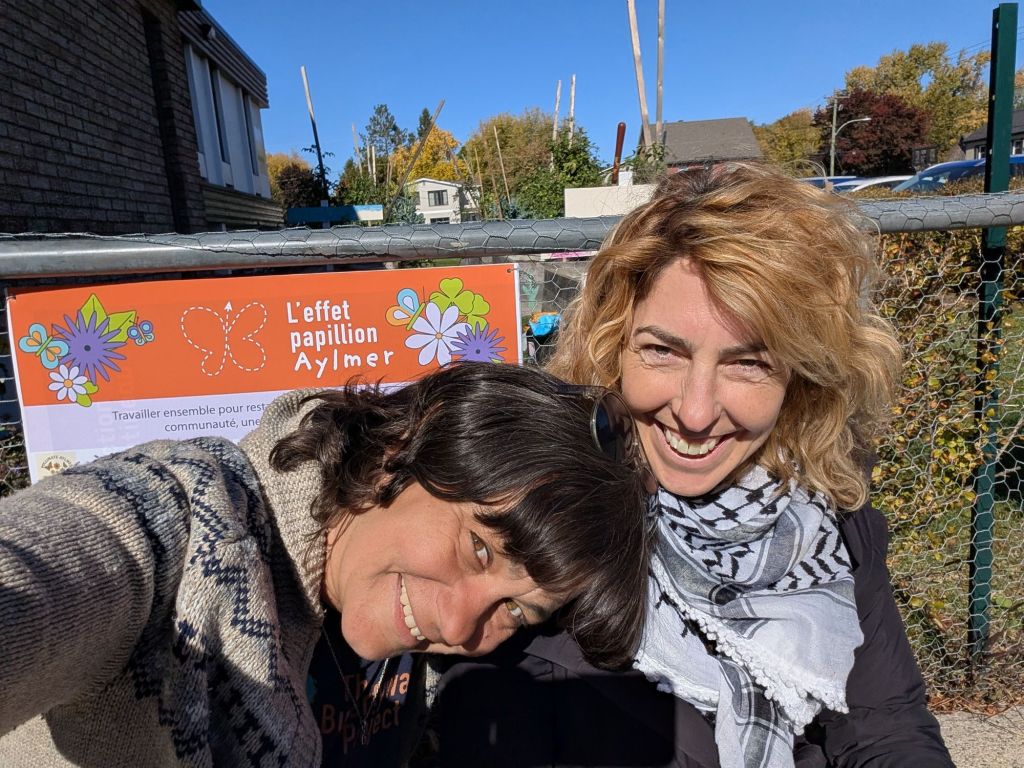
We have some GRAND ideas for the food bank, and hope to integrate some of them next spring, perhaps in small phases.
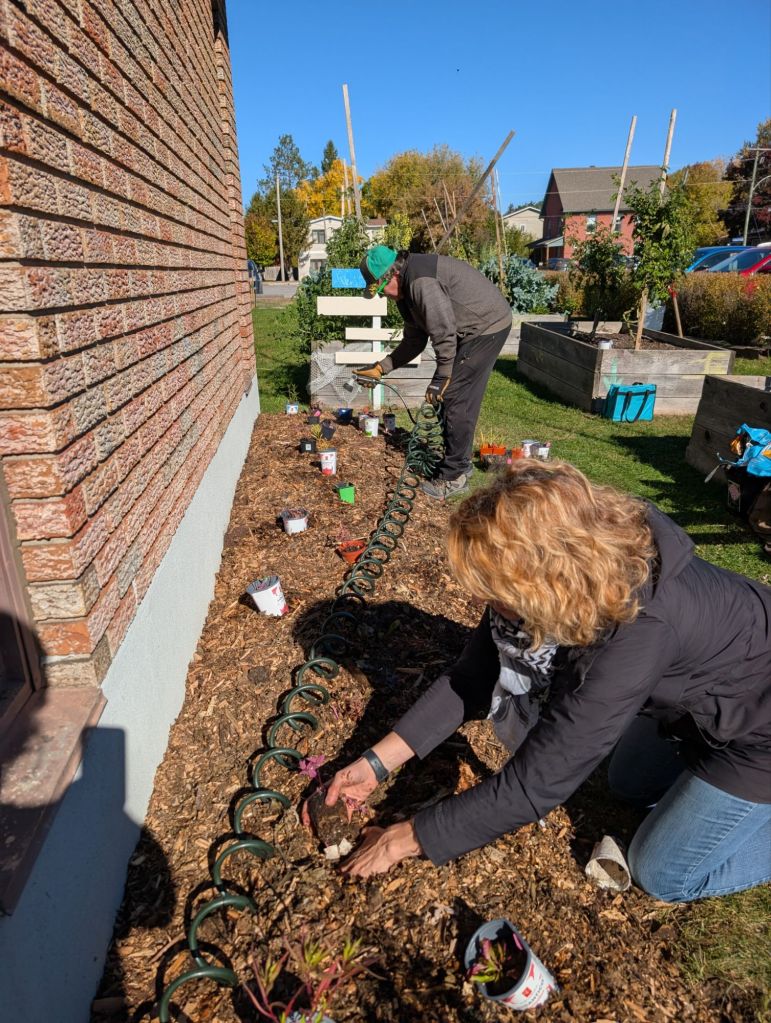
We noticed the roof above the door has some lone plants growing on it, and would love to explore the possibility of creating a rooftop garden, complete with some trailing native plants coming down and traveling upward between the pollinator gardens and the rooftop. We also see opportunities for creating a beautiful outdoor learning area within this garden space, to support many of the learning programs that the food centre has in place.

While completing our planting, we noticed a thin and flimsy fence surrounds the gardens of the Centre. When we asked about this, we were told the fence is necessary to prevent neighborhood dogs from running in and really causing havoc in the vegetable garden.
We don’t love the way it looks, and it’s too flimsy for us to try growing plants directly on it, but we had an idea.
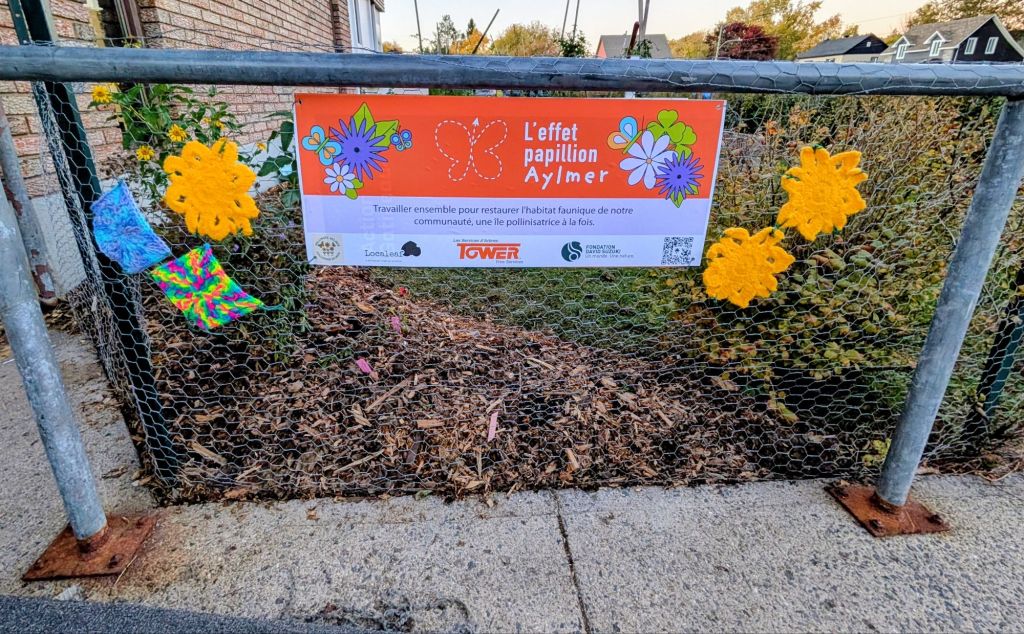
We put a call out to the community to help us crochet and knit enough flowers to cover the fence. We’ve had amazing reception and support, and one of our incredibly dedicated volunteers has taken on the task of collecting and sewing together these flowers.

Our hope is that by spring we will be able to cover the entire fence of the food centre with flowers from the community. We see these flowers as a symbol of the gratitude expressed by our community for all of the things the food centre does.
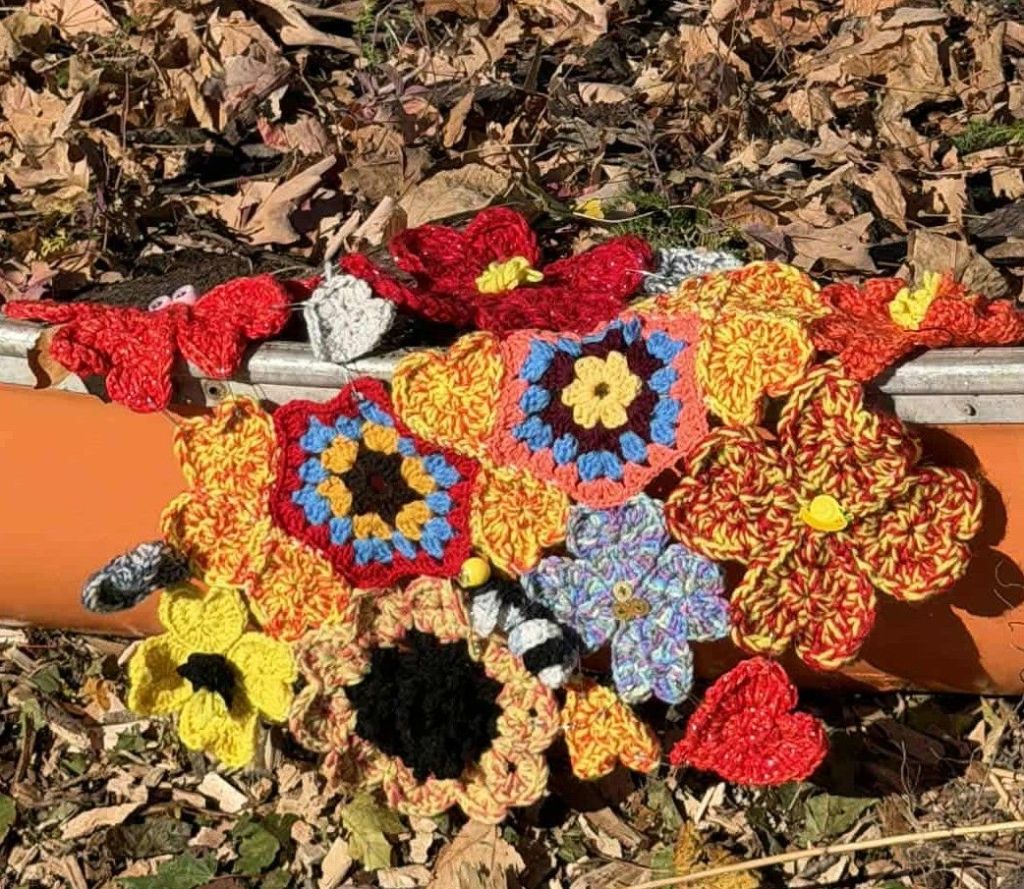
If you want to take part or know a knitting group or a knitter that might want to help us, please put them in touch with us. All we need are crocheted or knitted flowers, squares or small pieces of work. We can coordinate pickups and drop offs as needed.
Stop #11: Rue Centre / Rapido / Old railway track (colab: multi party)
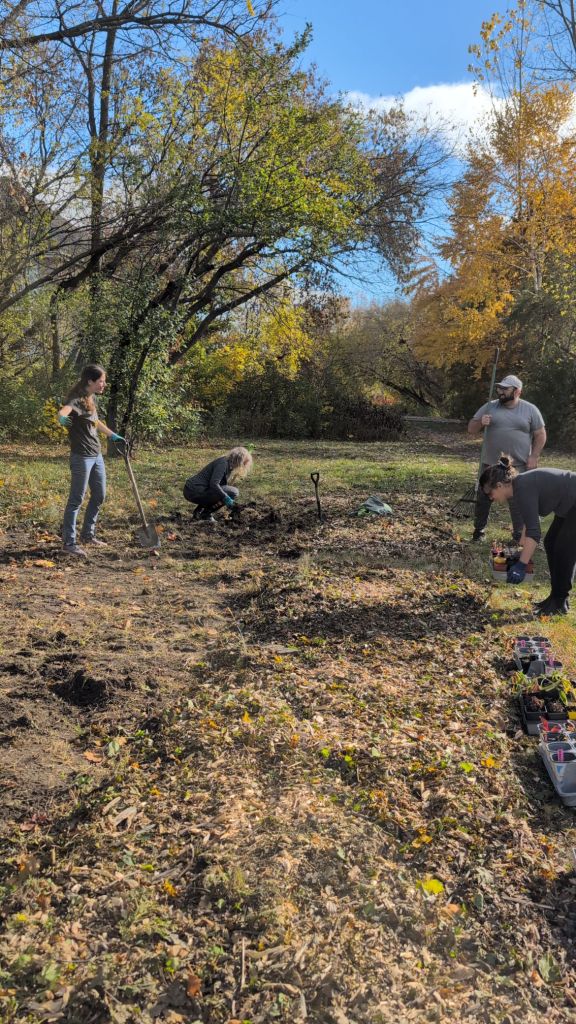
I’m not sure how to specify the exact location for this planting, other than to say it is near the gardens across the street from Rapido Depaneur.
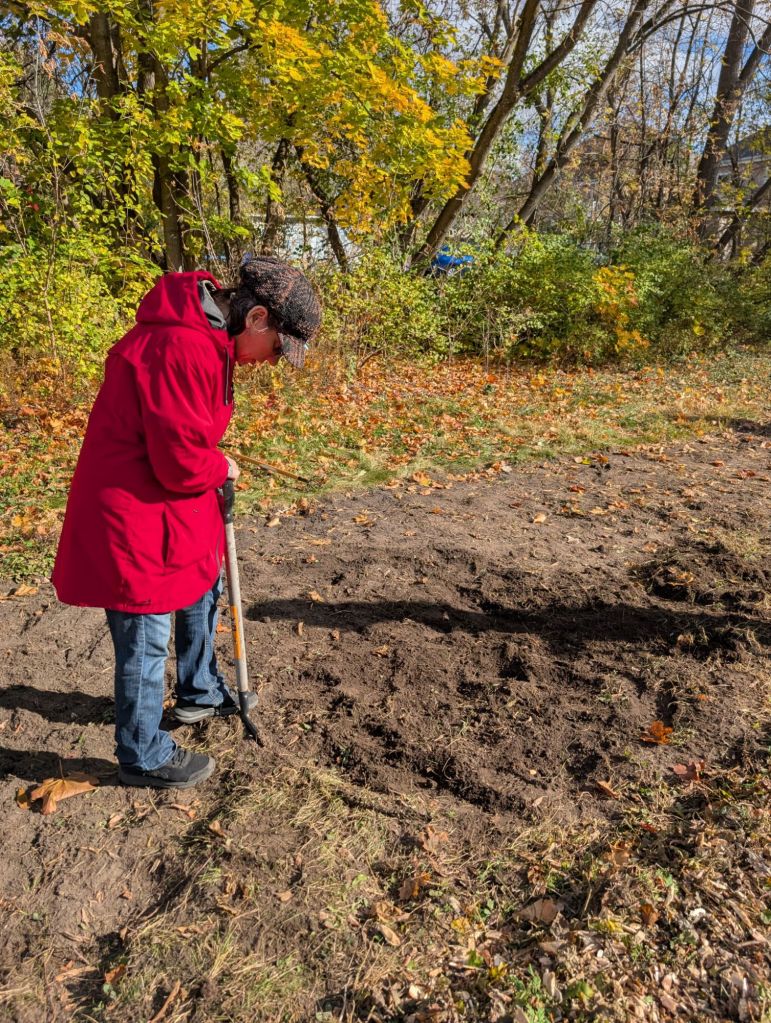
This planting was a result of a much larger, multi phased project initiated by Meres au Front (MaF), involving multiple partners, supporters and collaborators such as Amis de la Marina, Canadian Wildlife Federation and others, which Meres au Front was kind enough to let us tag along with.
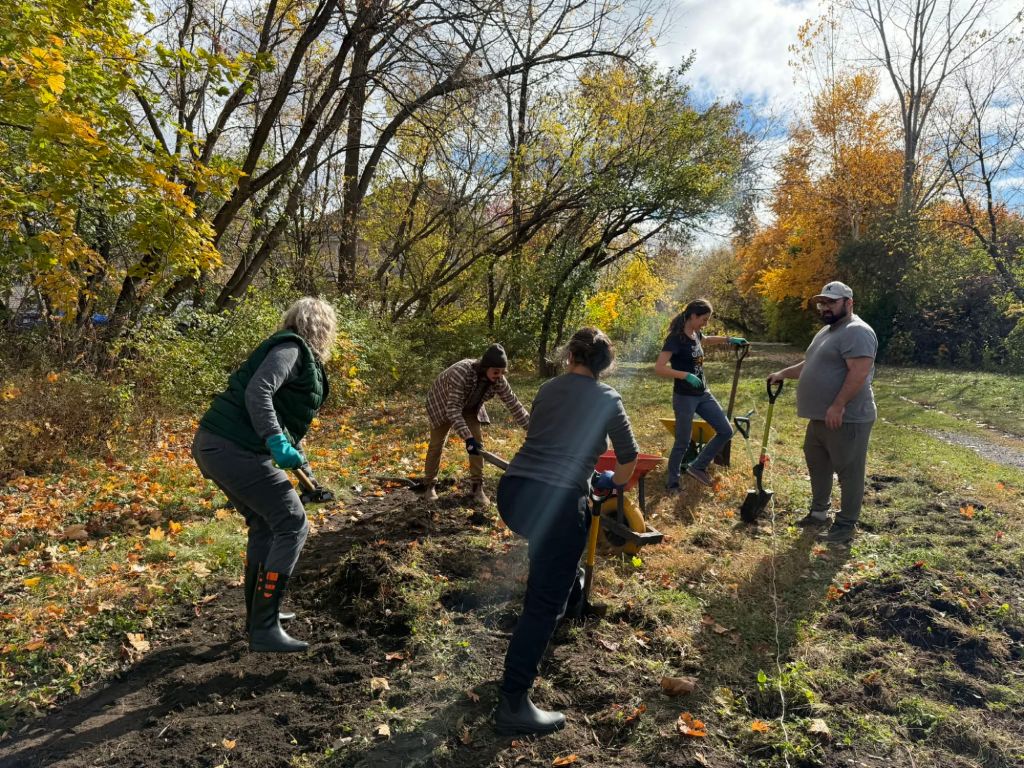
The first phase of this project involves converting a large section of unused space into a wildflower meadow and Butterfly garden, along the old railway track.
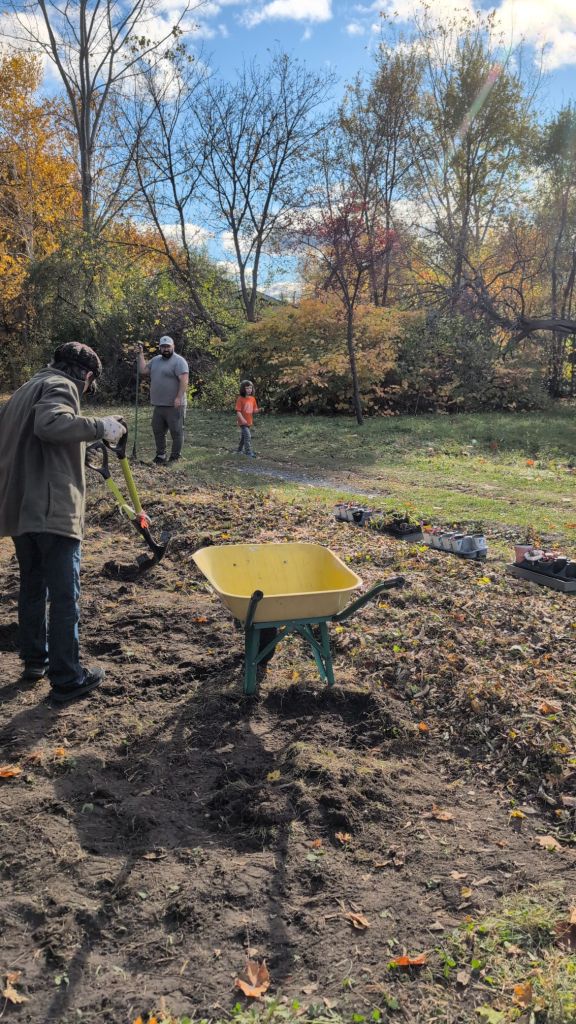
Thankfully, for this project we were able to secure wood chips thanks to a donation from Tower Tree Services, who delivered a large load of natural, untreated woodchips prior to the start of the project.
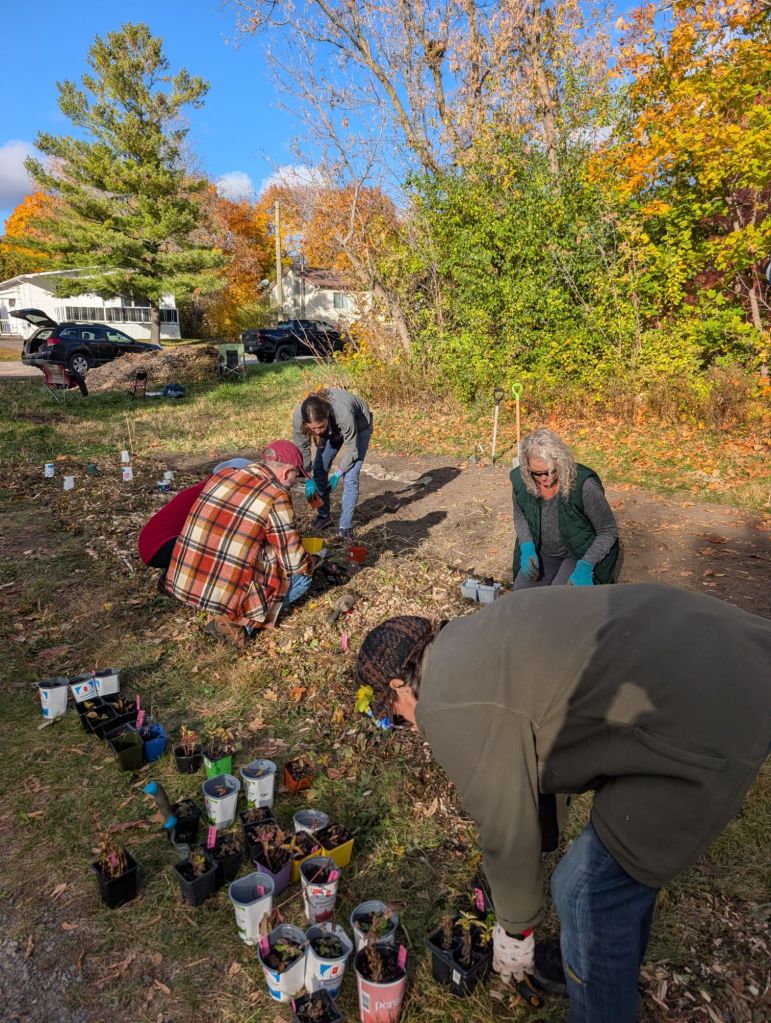
Despite the chilly day, several volunteers showed up to help clear the space, lay down a good layer of wood chips, plant a lot of dormant plants, and clear a space where seeds donated by the Canadian Wildlife Federation can be dispersed this fall, to grow a future wildflower meadow.
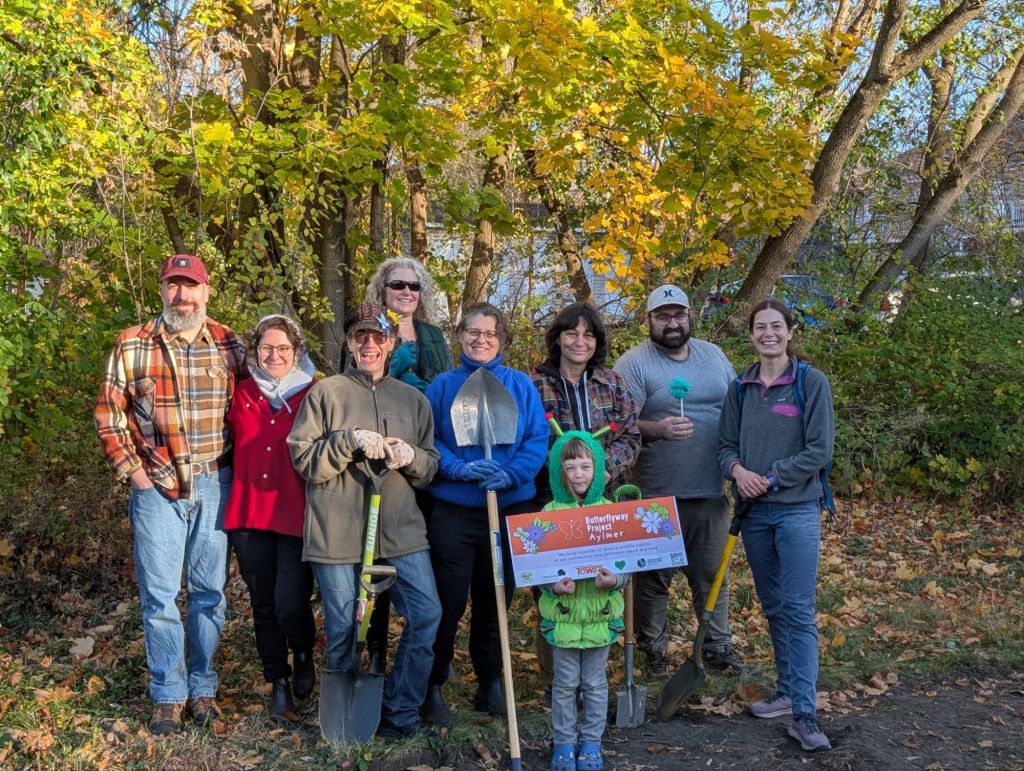

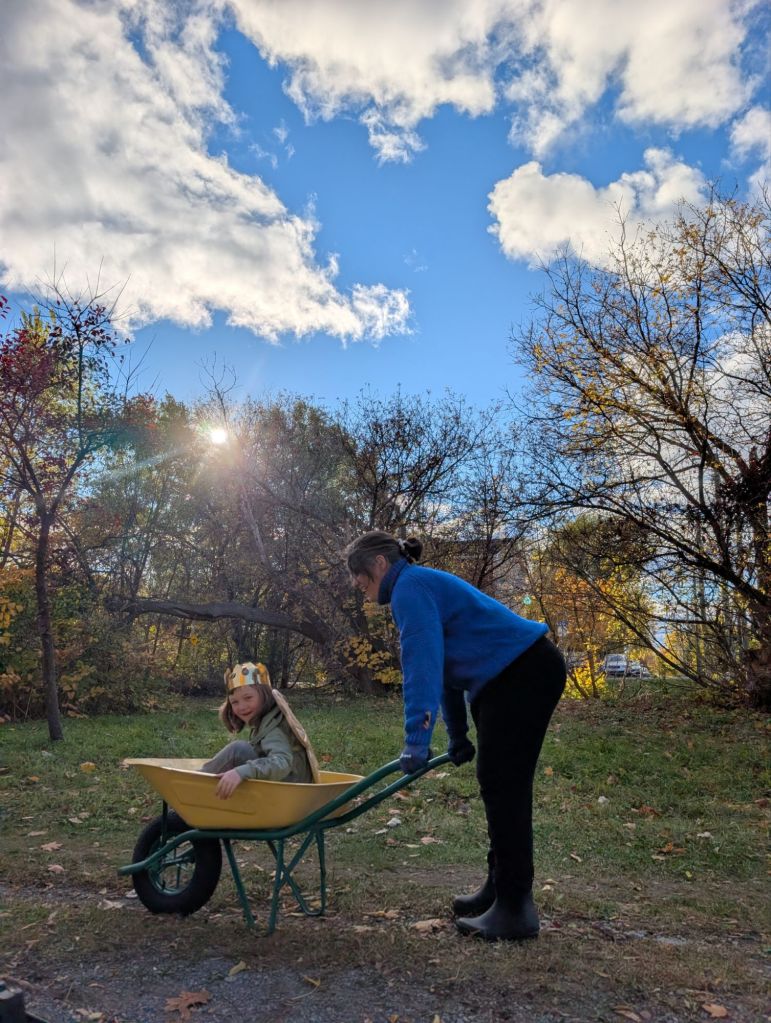
This planting was simply the start of a multi phase project that will see Meres au Front working closely together with Amis de la Marina and additional partners to convert this space into a multi-use area, with plans far bigger than our little Butterflyway stop. We hope to find ways to help out in future phases, as we all had a lot of fun creating this stop.
Stop 12: Localeaf Gardens (Bonus Stop)
By our count we were at 12 stops without this one, but the count became ambiguous by various criteria (we were counting Eardley Elementary as 2 stops, since originally we had considered them such. We also had concern that our stop #4 had since been de-comissioned.)
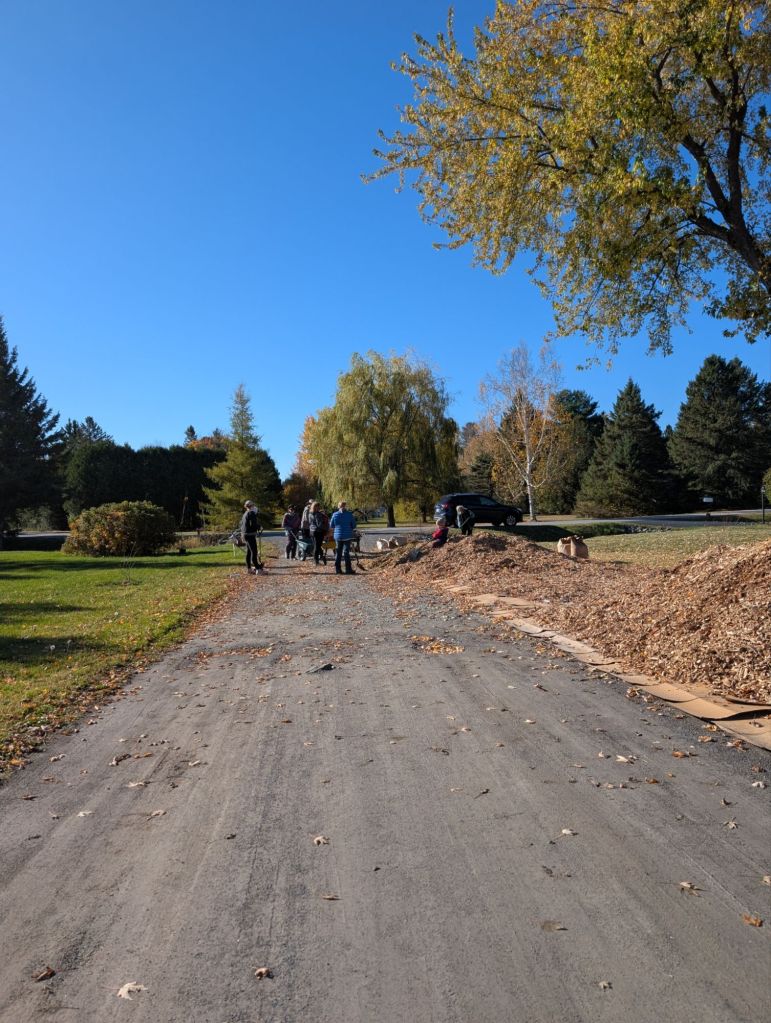
While it was the end of October and we were all pretty planted-out, we also wanted to be sure there was no ambiguity of our count, so (bonus) stop at the nursery seemed like a fun idea.
This stop is also a little further away than the others, and probably too for a butterfly to reach fluttering over from a previous stop. This means we will be looking to create more stops in between Aylmer proper and Aylmer North next year. Unfortunately, there is no shortage of expansive lawns out here, so I am hopeful we can slowly convince our neighbours we can fit pollinator islands in.
Anyway, I digress. This stop became a little celebration of our work, and took a slightly different twist.
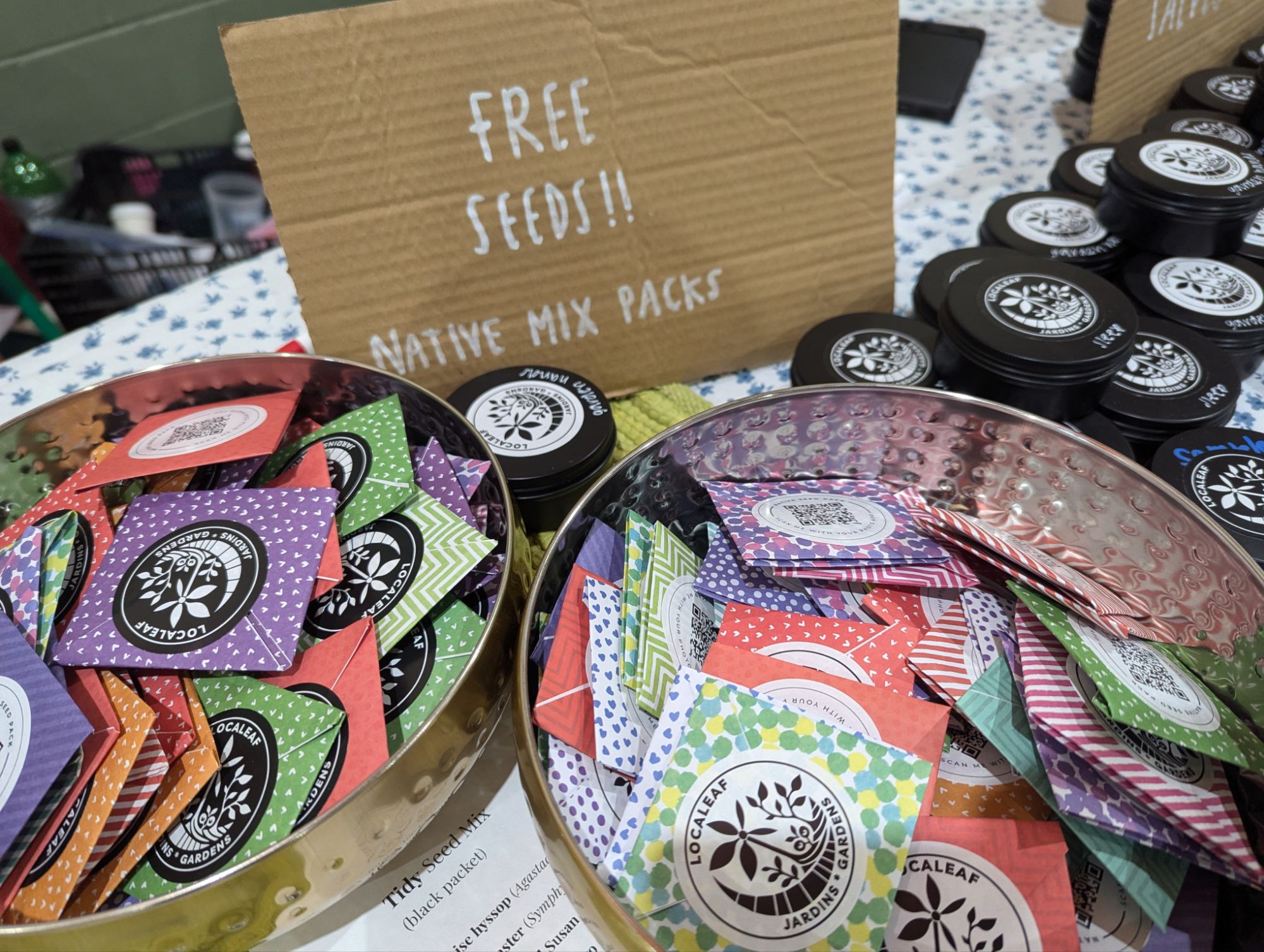
If you’ve been following our story since last year, you may recall we made native seed mixes from our garden last year before we moved. My kids packaged up hundreds of them into two curated ‘Tidy’ and ‘Wild Child’s mixes, and we gave them away to anyone who wanted some.
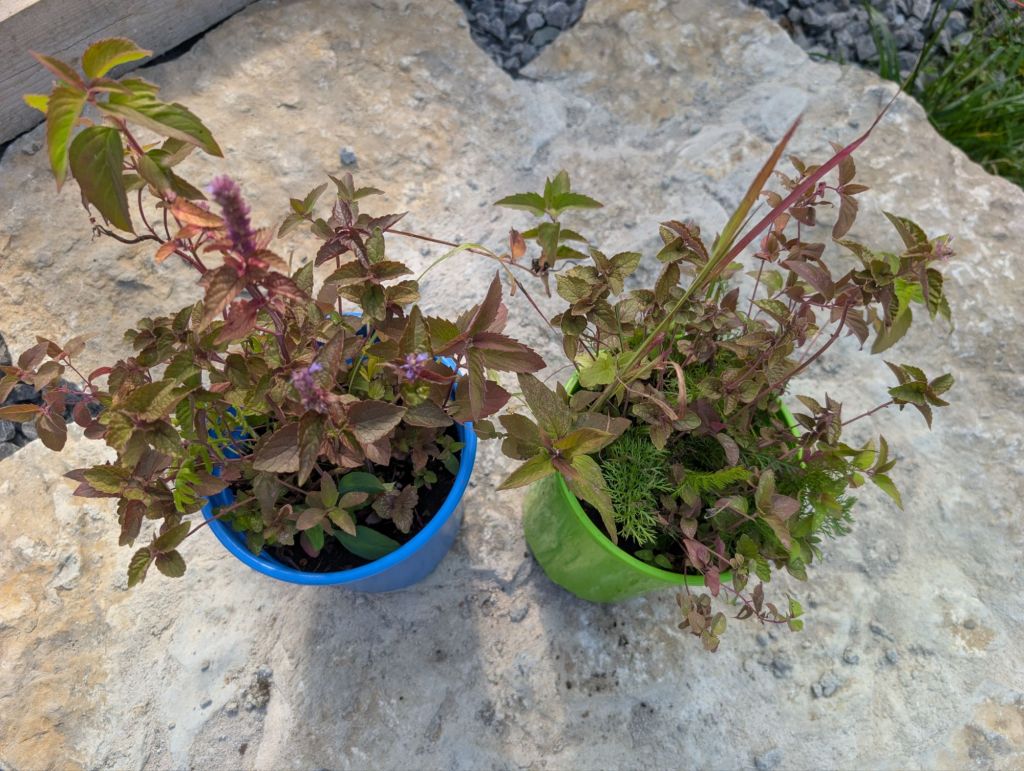
I winter sowed 2 of those packs in pots, and got so busy with my own projects, the almost-nursery, and our community plantings that I just forgot about them.
Here they are, after spending a summer completely neglected, exposed to severe drought, largely un-watered, roots tangled and growing together.
The idea for this last stop had come to me from some old media coverage of Butterflyway stops planted inside a canoe. That seemed like lots of fun, and I had a perfect place for it.
I have been working on a conversion of a large strip at the front of my home into a wildlife habitat, and decided to place a cheery canoe at the front to attract attention, and hopefully convince passers by to stop, and learn about what I’m doing, and why.
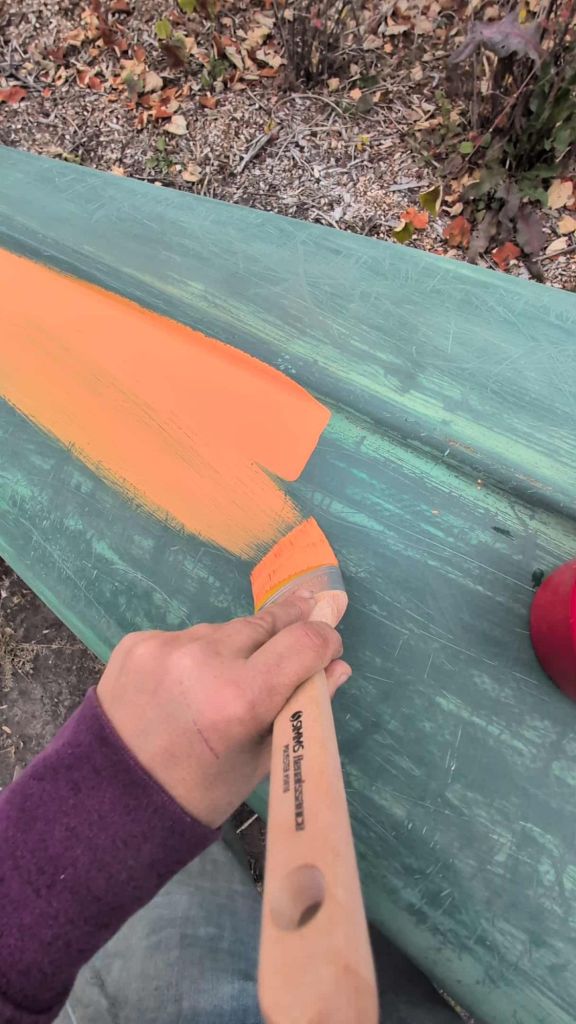
I found a broken old canoe on marketplace, and rushed to paint it before we got started. On October 27th, several Pollinate Aylmer volunteers came to help plant the canoe. We had a lot of fun this day. We portaged the canoe to its new resting place, and foraged my property for organic materials we could use to fill it with.

Loosely following the german Hugelkultur approach, we began with small logs, then branches, bark, small sticks, recycled potting soil, some leftover mushroom compost, and finally, some woodchips.

We took apart the two pots of seedlings, and partially untangled, partially tore apart the roots of the plants, then planted those spaced out a little better inside the canoe.
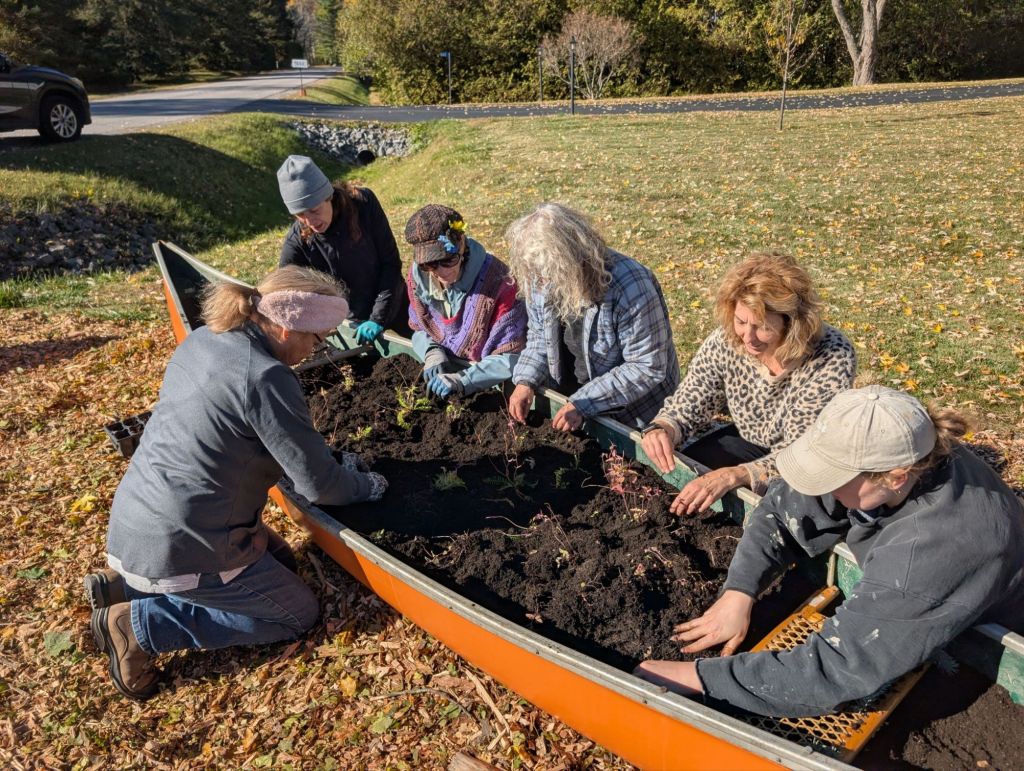
I can’t wait to see what grows there next year, started as 2 little seed packs of mixed native seeds from my old (also in Aylmer) garden, coming full circle in our new place, in their new home, at the front of our almost nursery, planted by the amazing people that have helped me find homes in our community for all these plants, grown from seed, right here in the same place this canoe now rests.
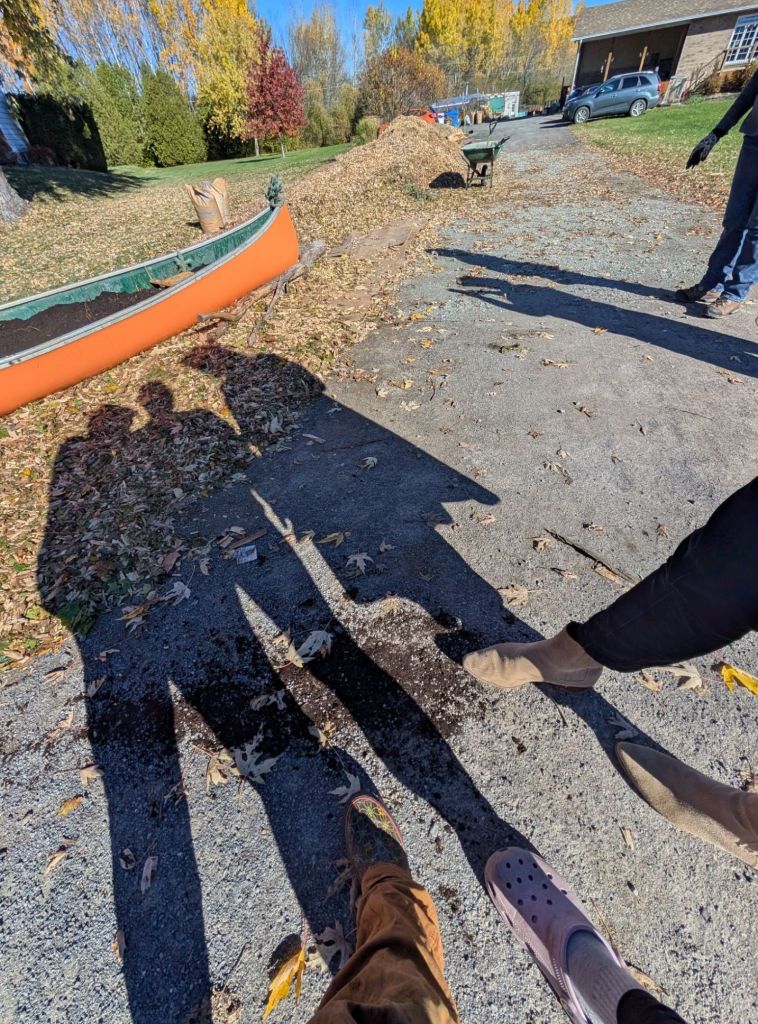
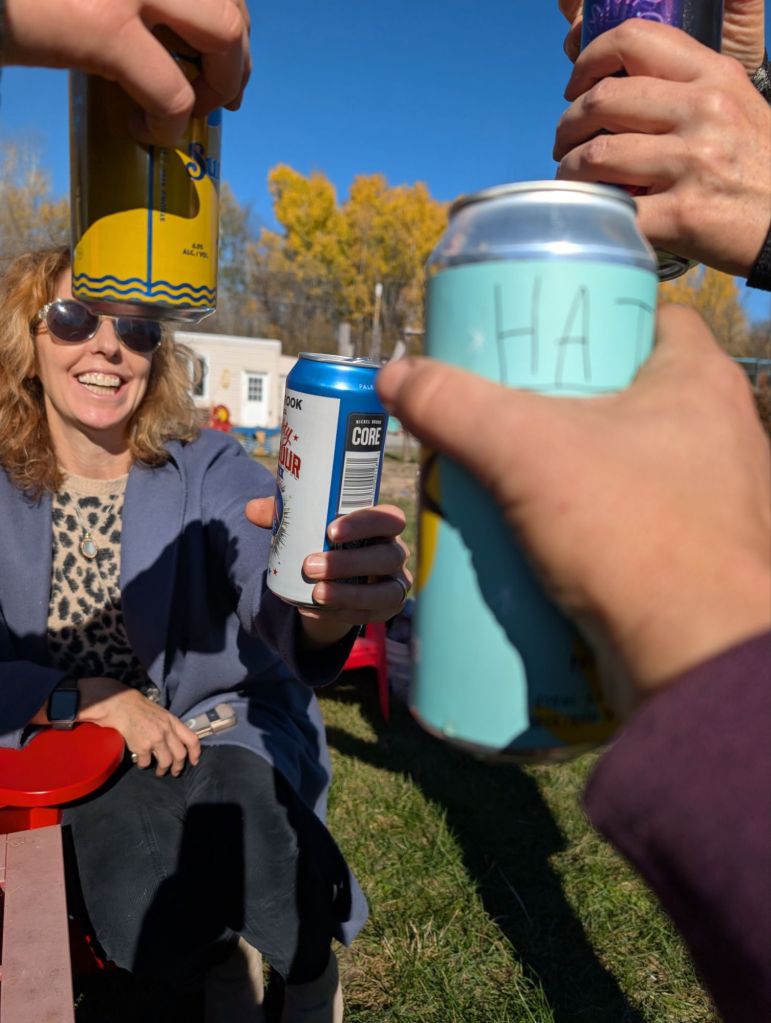
We planted, we laughed, and when we finished we got pizza, drink beer, and celebrated the official birth of the Aylmer Butterflyway.
You can now find each of our Butterflyway stops on the larger Butterflyway project map:
https://davidsuzuki.org/take-action/act-locally/butterflyway/

Thank you again to everyone who has helped create the Butterflyway Aylmer so far. We are just getting started. I would love to see the Butterflyway expand with tiny pollinator islands in the middle of every lawn. When we make room, and homes, shelter and habitat for our native pollinators, they come.
If you want to help us in the next phase, join our FB group Pollinate / Polliniser Aylmer. There are so many ways we can use your help.
With immense gratitude for helping me bring this project to life,
Ioana
(Aylmer-local Butterflyway Ranger)
Discover more from LocaLeaf
Subscribe to get the latest posts sent to your email.

 LocaLeaf