Preparation
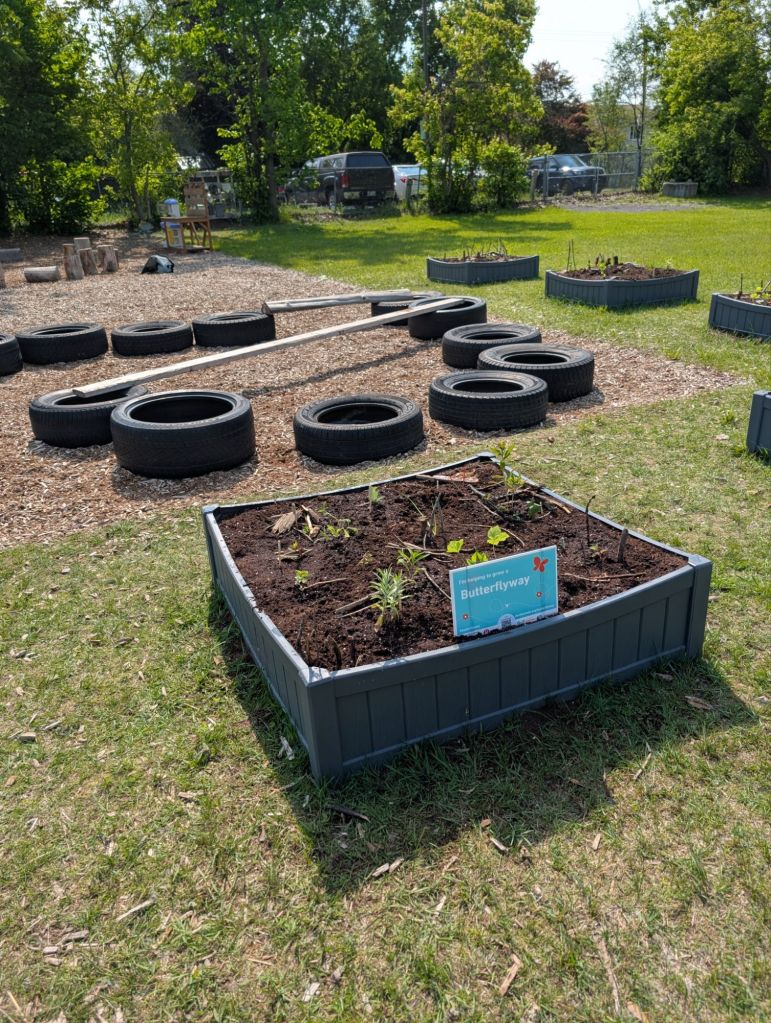
We spent a few weeks discussing, planning and preparing for planting a pollinator garden and native habitat at Lord Aylmer Elementary. The kids in the outdoor education program worked hard with their teachers to build 6 raised planters to border their outdoor adventure playground. In pouring rain, their teachers proudly told us, they assembled the beds, then filled them with compost and the best soil mix their small budget could afford.
We had learned some important lessons from our previous elementary experiences at Eardley Elementary.
We needed better photos of our native pollinators to show the kids (my first ones were blurry), and we needed more of us to help with planting.
Planting Day
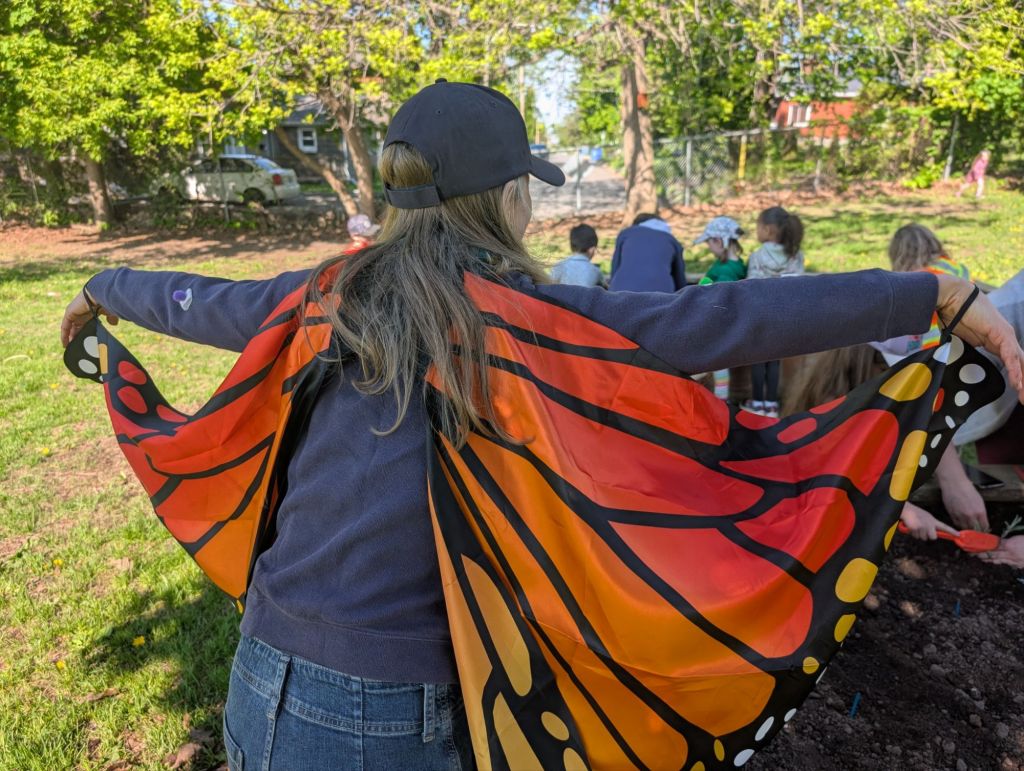
On planting day, we arrived to find around 25 kids in a circle, sitting on stools made of tree stumps, staring blankly at my giant butterfly wings. I told them I’m a butterfly ranger and it’s my job to help the butterflies and their friends, and their blank stares told me they needed some enlivening. We fluttered around like butterflies as they tried to catch me, then hovered like bumblebees, and when I think back to it now I wish I had thought to make them stop, drop and wiggle like a caterpillar, and I hope we remember that next time.
By the time we sat down I was their friend, the butterfly lady, and they were listening.
The Lesson
We talked about different pollinators and how they move pollen, and their picky diets, and where they sleep, lay eggs, and hide.
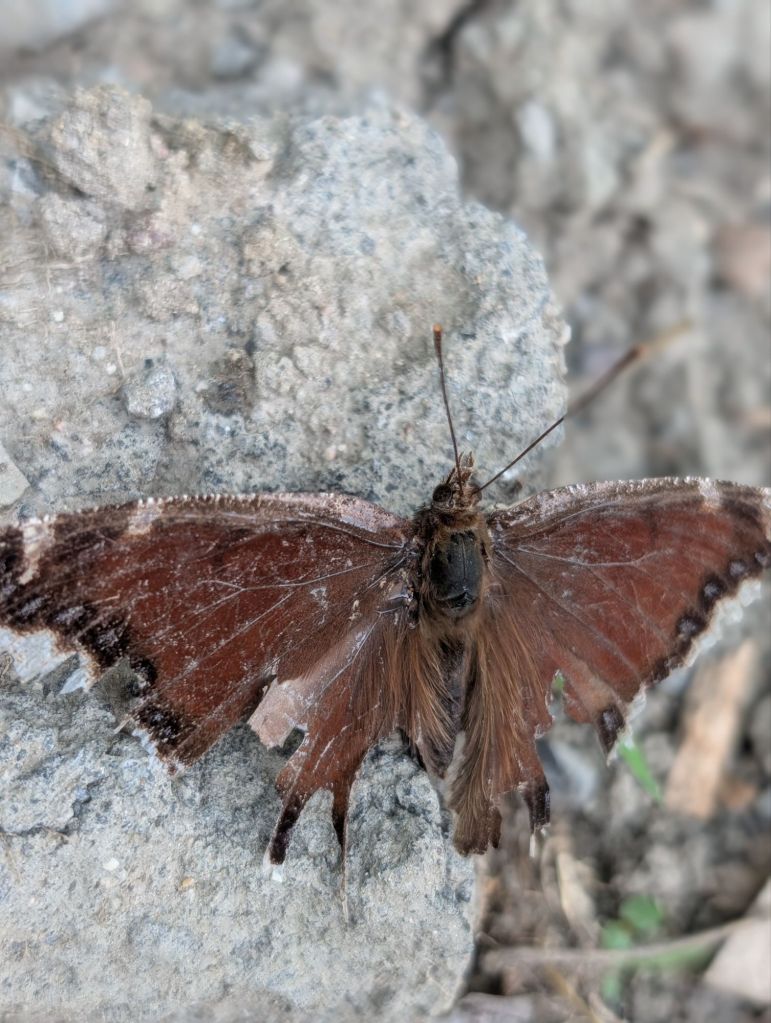
We talked about how the spaces where they can do this are harder to find in our cities, and how we can help them, so easily, and make a huge difference to them by making little habitats for them in our own gardens. Having lots of those tiny little habits gives the pollinators places to flutter to, and either stay, or have a snack and move on to the next one.
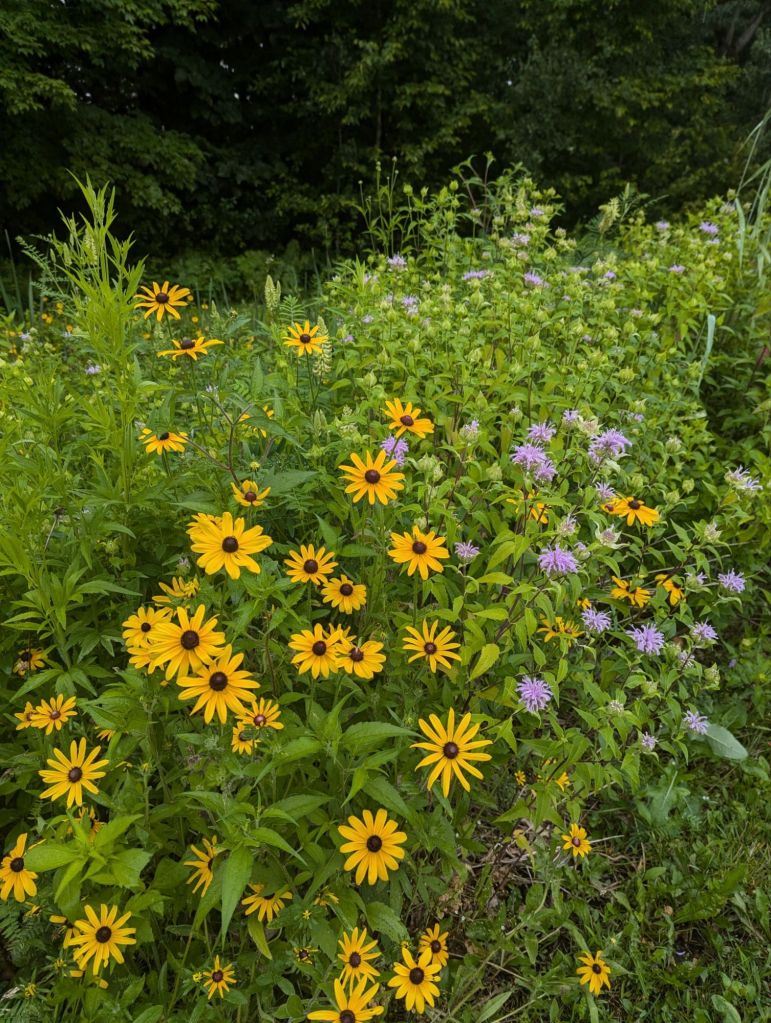
We talked about how little pollinators actually need, and how important special plants and trees and bushes are for them, especially for the picky eaters.
They giggled at the name of some of the plants we brought them, some purposely chosen to elicit that reaction; plants like Hairy Beard Tongue, and Sneezeweed, and Square Stemmed Monkey Flower, Mad Dog Skullcap and Zig Zag Goldenrod;
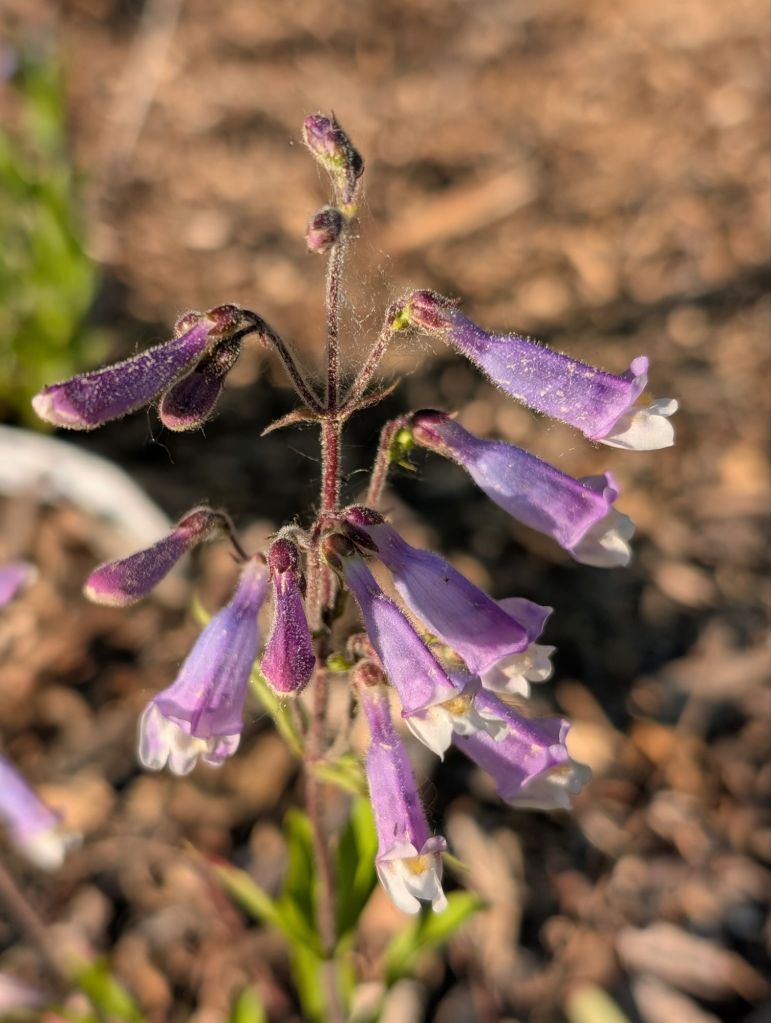
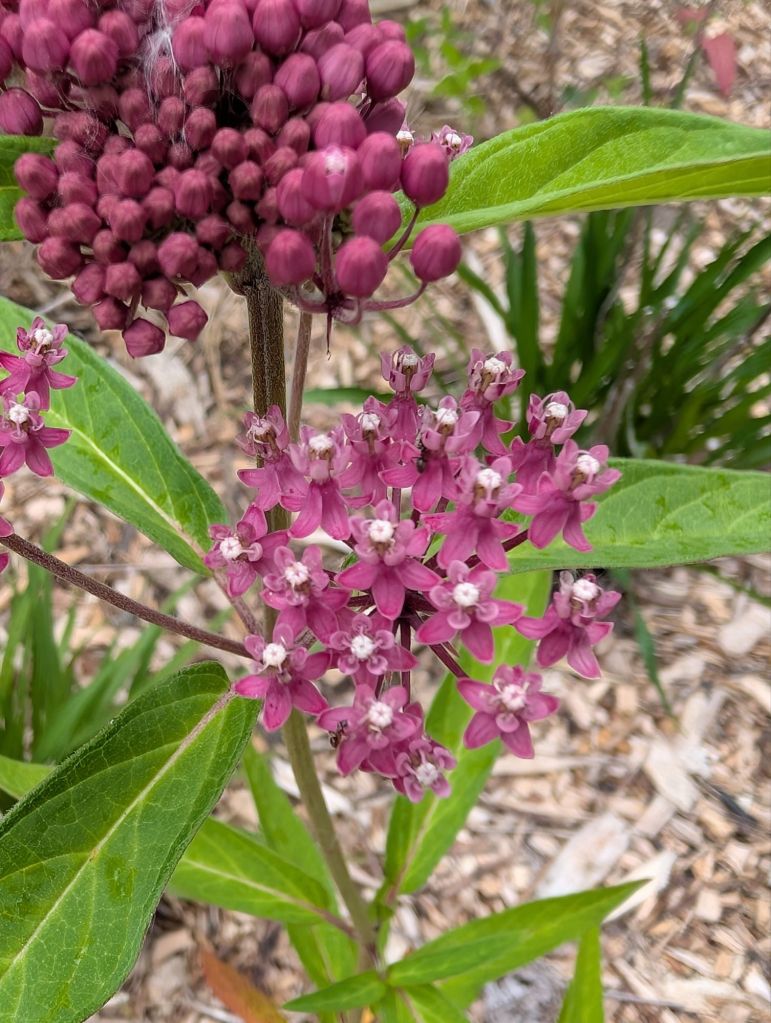
They took away an understanding of the delicate relationships between milkweeds and monarchs, and other more abstract examples like Pearly Everlasting and the Painted Lady Butterfly, and how long shaped blooms like Penstemons and Cardinal Flowers attract hummingbirds, whose long beaks fit perfectly in them. They were surprised that some flowers open at night to support night time pollinators, but at 5 years old, they easily understood that concept.
They learned that willow trees, not dandelions, provide the early pollen needed by our bumblebees and other pollinators, and that tall fall flowers that look like daisies are called Asters and those, along with goldenrods, are some of the last pollen available before winter.
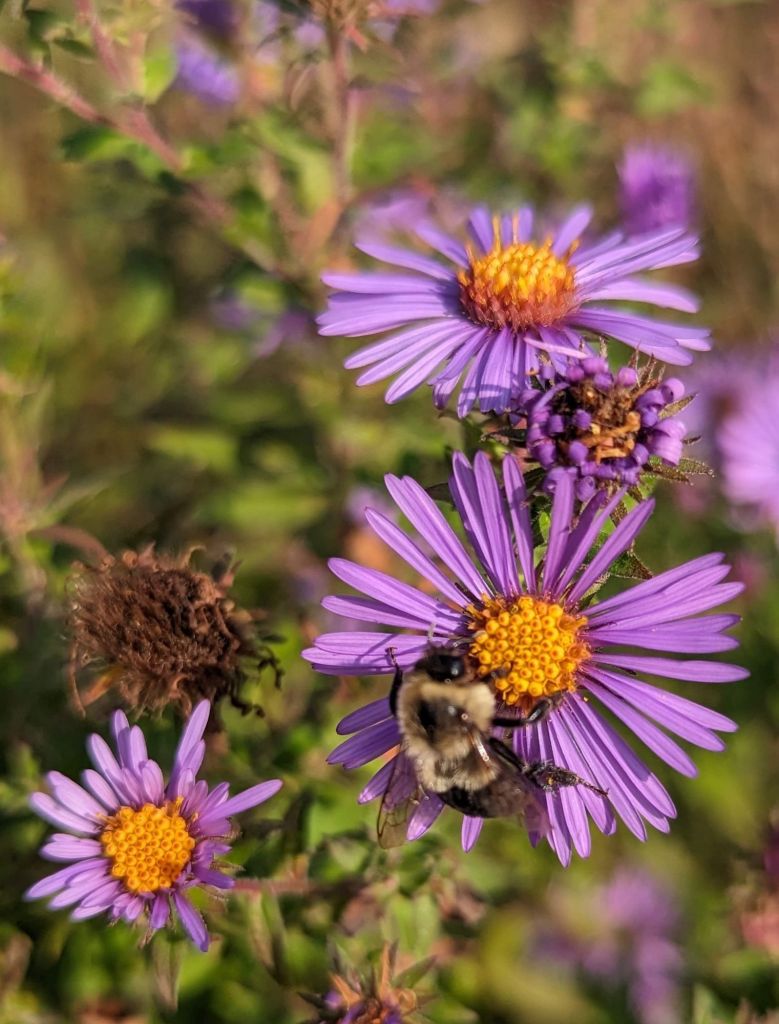
They learned that birds eat berry seeds and then poop them from the sky, and if the poop lands in a good spot a new berry bush or tree will grow.
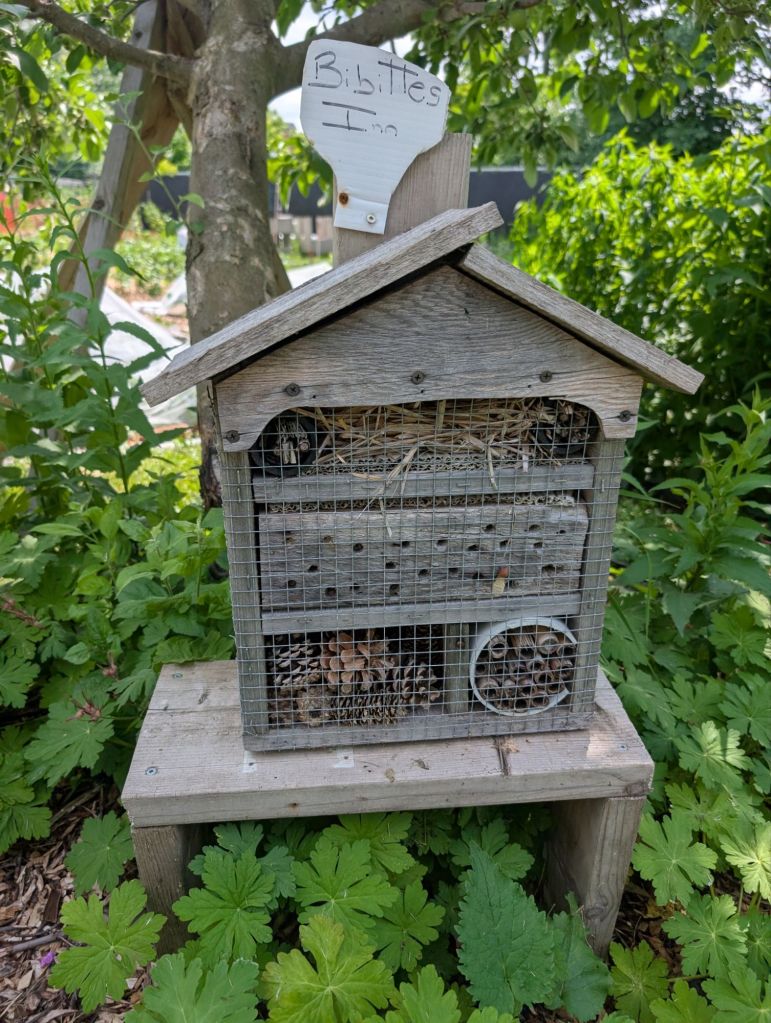
They learned that grasses with silly names like Purple Lovegrass, Big Bluestem and Side Oats Grama help pollinators and their babies hide from birds until they grow up stronger, and that birds in turn use those grasses to make nests and eat the seeds of in the winter. They learned that most bees don’t actually live in hives, but inside small hiding places, like the stems of old flowers, under leaves and in old pieces of wood, and anywhere near the food they eat where they can make their babies safe.
Planting Native Plants
We taught our young and eager learners that they have everything they need to make a pollinator habitat. They searched around their school yard and found sticks, bark, leaves, twigs and pinecones.
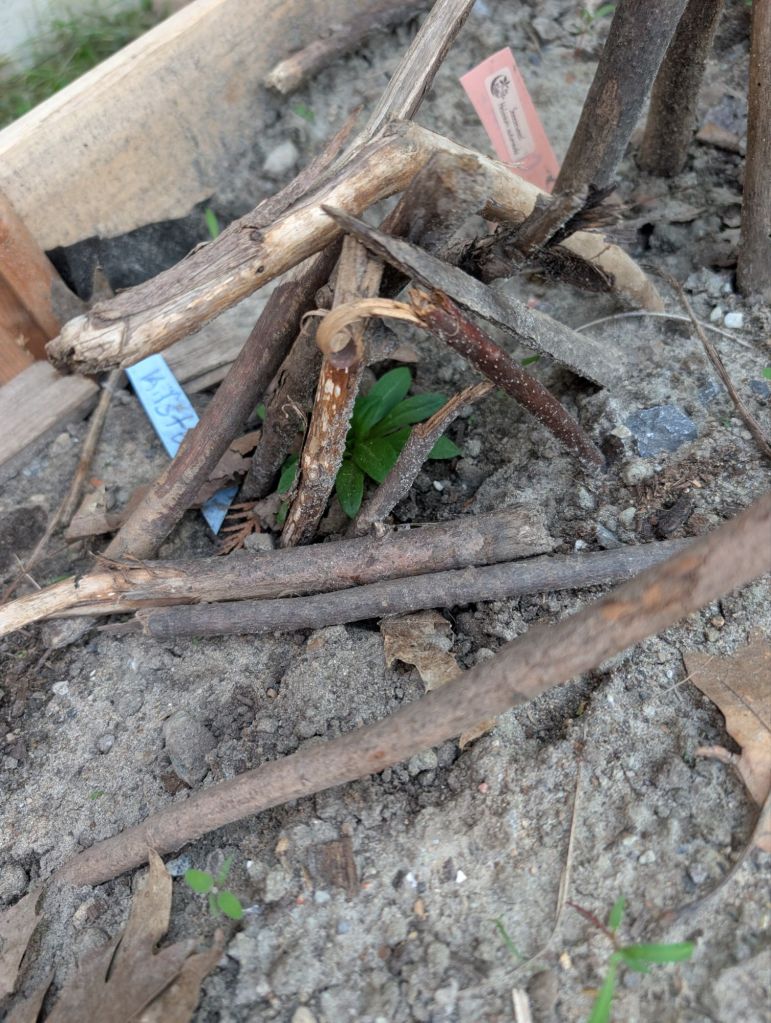
Their teachers helped them sort these into bowls, and explained to our group how this incorporates their learning outcomes into our lesson plan.
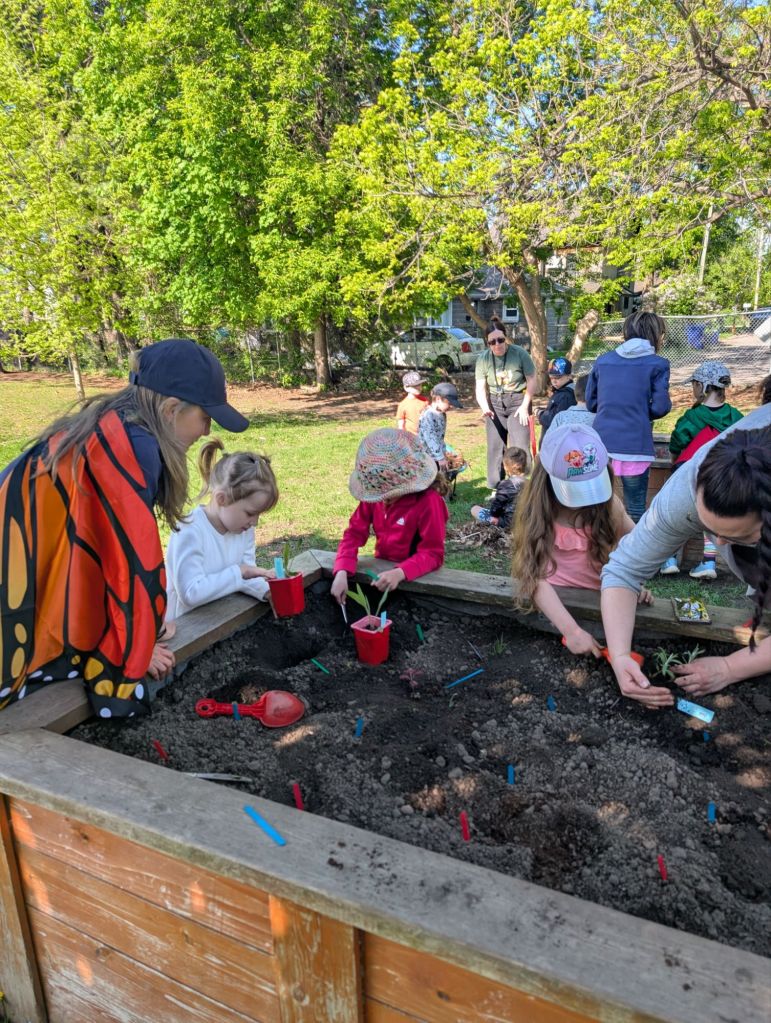
They dug holes, and given a choice to use a shovel or their hands, most chose their hands, which warmed my heart, even though it was already overheating. They chose plants, after learning about them, and here too they showed us what they took away, and how their personalities differed.
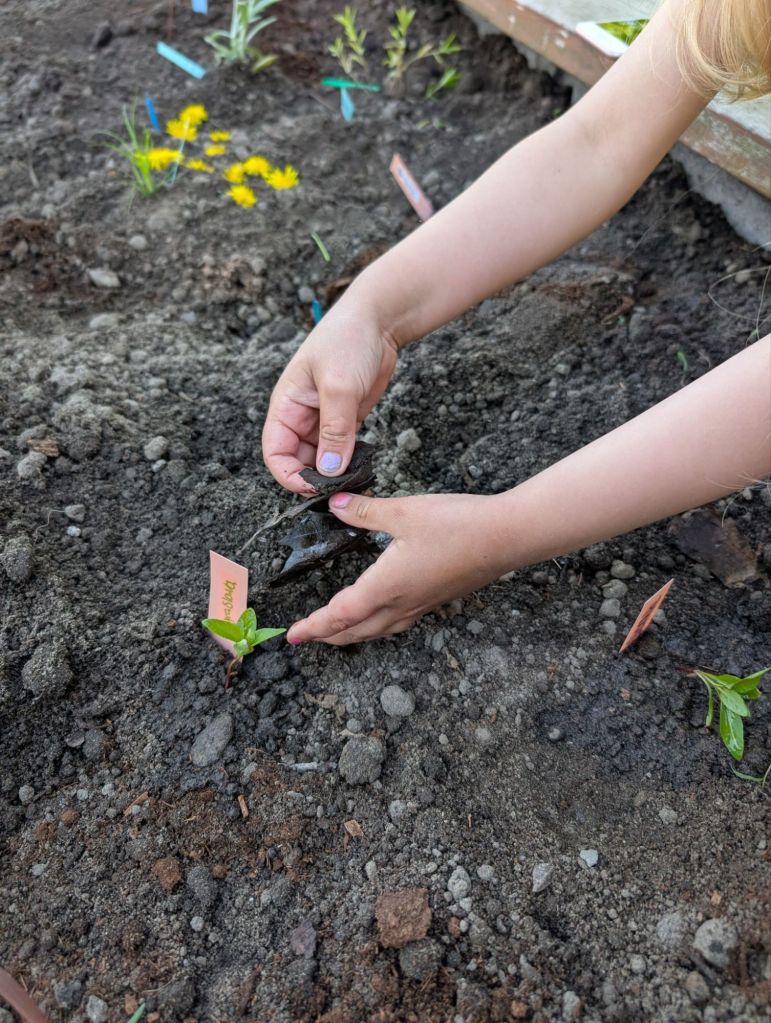
Some wanted the largest plants. Some wanted the swamp and butterfly milkweeds to help the monarchs. A couple of shy girls asked for the Pearly Everlasting. A group of boys wanted the tufts of grasses, and the night opening Evening Primroses and Hairy Beard Tongues were a hit as they were nearing bloom. Some asked for tall flowers, some picked them based on their favorite colours, and they each planted the little plants with their little hands so carefully, and patiently raised their hands and waited for their teachers to come around and write their name on the little stick next to their plant.
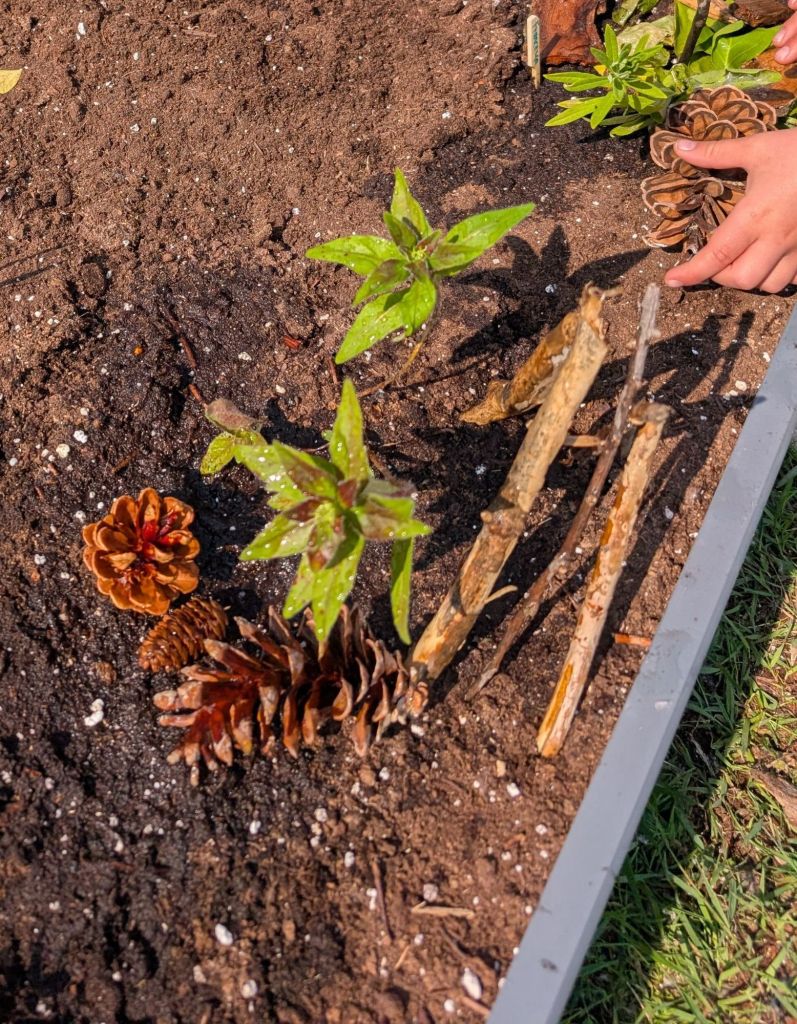
When they finished planting, we had extra plants and they happily returned for second, and third rounds of planting, until all the plants had homes in one of the six planters the classes had assembled together, in the rain.
Building Shelter & Habitat
They then returned to the bowls of collected materials, sorted into piles of pinecones, bark, large sticks, small sticks and leaves. They grabbed handfuls to put around their plants, and build their own pollinator habitats, to help encourage native pollinators to come have a bite, and a rest, and perhaps even make a nest near their new plants.
They took turns using two giant watering cans to make sure each plant got a drink, then continued ‘decorating’ their newly created habitats.
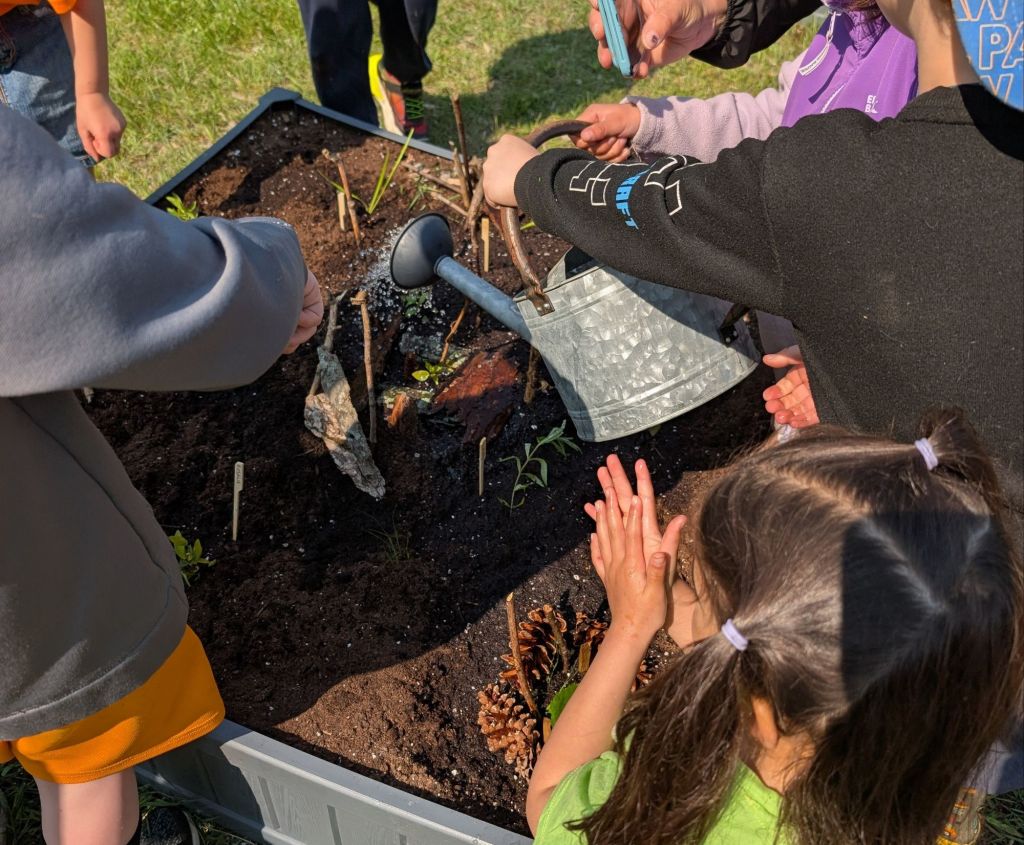
When their teachers told them it was time to go inside, they groaned, but lined up, and listened, and gave us a heartful thank you, and left us to admire their work. The 5 of us took a moment to breathe in what we accomplished there that day. For the bees, and the butterflies, and the moths, fireflies, birds, bats, beetles and spiders and wasps and dragonflies, and any other purposeful or accidental pollinator or pollinator predator I missed, but also for the kids. We reached them in ways that will hopefully remain with them for life.
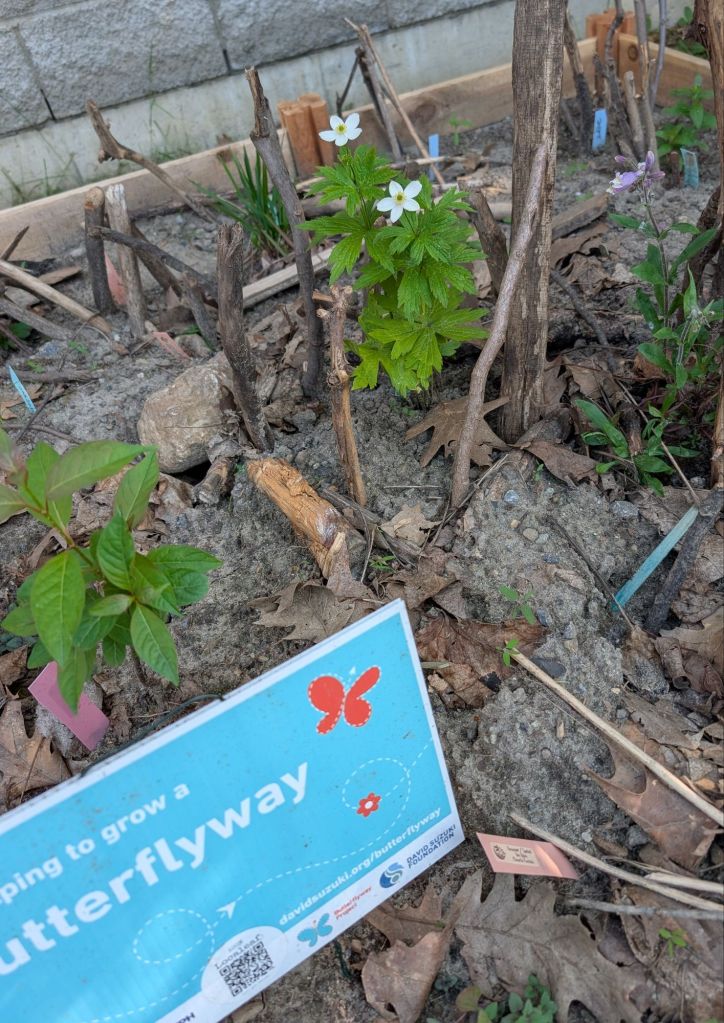
Beyond Planting Day
We left them with am innocent, but cheeky last thought. We created habitat for pollinators that day, by choosing special plants for them, and giving them places to hide, and nest, and snack and raise their families in the middle of grass.
We asked them to go home and ask their parents if they can have a small spot in their yard, or in a pot, on their balcony, to do the same.
If somehow you’ve happened upon this blog, and you are one of those parents, or want to be, or learn, or make what these kids made today, we have a wonderful group of passionate people in our community ready, and willing, and wanting to help.
Classroom Resources
I have documented the lessonplan and script we used with these kids at Lord Aylmer Elementary, as well as several classes at Eardley Elementary school a couple of weeks prior. The script was originally created by my friend, and Pollinate Aylmer co-founder Erin Lenore and myself, and has been adapted after we were fortunate enough to deliver it to multiple elementary classes within the WQSB board this spring.
I would love to see it continue to grow, and reach more kids, because the messaging works. Our group, Pollinate Aylmer, is working on incorporating some additional teacher feedback, and translating it into French, and would gladly deliver this workshop in and around Aylmer, if invited. The lesson plan and script are good, and the feedback we’ve received lets us feel confident expressing that. Feel free to take these and use or adapt them as you see fit for your own purposes. If you need help delivering it in a classroom, reach out and ask.
Aylmer Butterflyway
If you’re interested in helping make projects like this happen around Aylmer, come join our group, Pollinate Aylmer, and learn, or teach, or share, and help us Pollinate our little community of Aylmer.
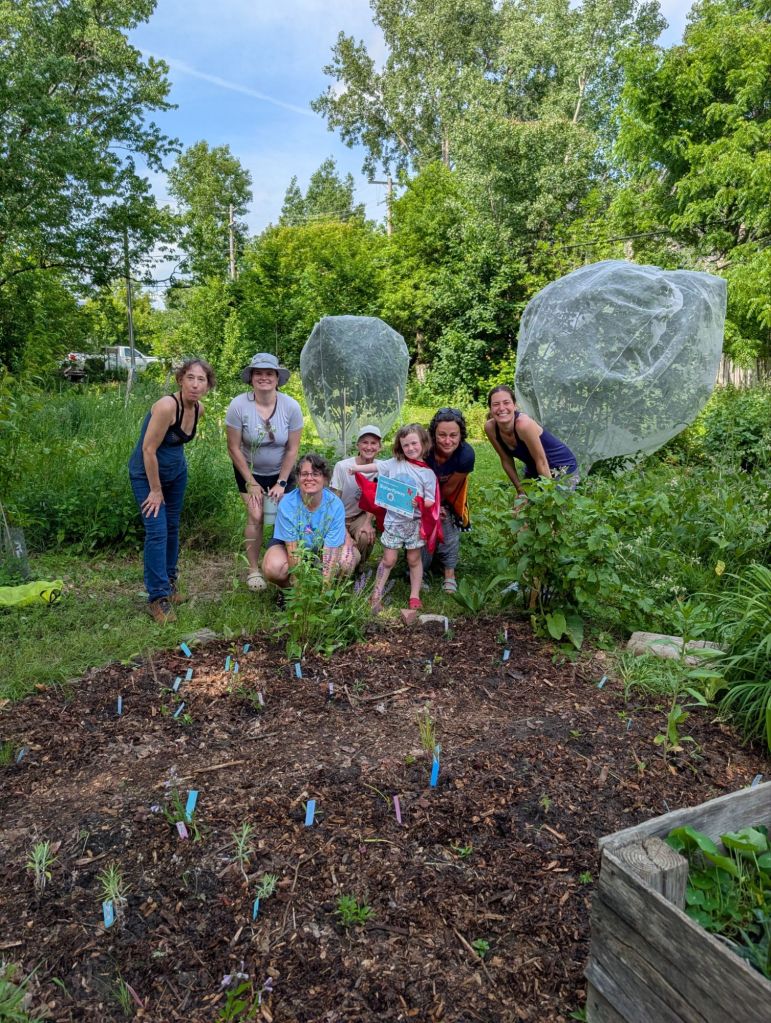
Converting a small space for pollinators and wildlife makes a small difference. An interconnected corridor of many, many such small spaces makes a huge difference to hundreds of species.
We call those interconnected corridors of habitat gardens a Butterflyway, and we have set out to create one in Aylmer.
We have already completed several stops. These are, in planting order:
1. Eardley Elementary Adventure playground
2. Eardley Elementary front garden
3. Aylmer Heritage Association
4. Lord Aylmer Elementary Junior Campus Adventure Playground
5. Jardin North Collective Garden
We have additional upcoming plantings in the following locations:
6. Les partenaires du Secteur Aylmer / Centre Communitaire Entre-Nous
7. Clinique O Si Naturel
8. Belmont Plaza (c/o Pizza Rose)
We still have capacity for a few additional stops in Aylmer this year.
Once we reach 12, we are considered a full-fledged, official Butterflyway by the David Suzuki Foundation, and are recognized as such by the Butterflyway Project.
If you have a suitable public space in mind in Alymer, get in touch, we would love to chat.
If you are looking to convert part of your yard, or balcony, into a native pollinator habitat, and would like to join your own pollinator habitat to the Aylmer Butterflyway, join our Facebook group, Pollinate Aylmer, and learn how.
Discover more from LocaLeaf
Subscribe to get the latest posts sent to your email.

 LocaLeaf