
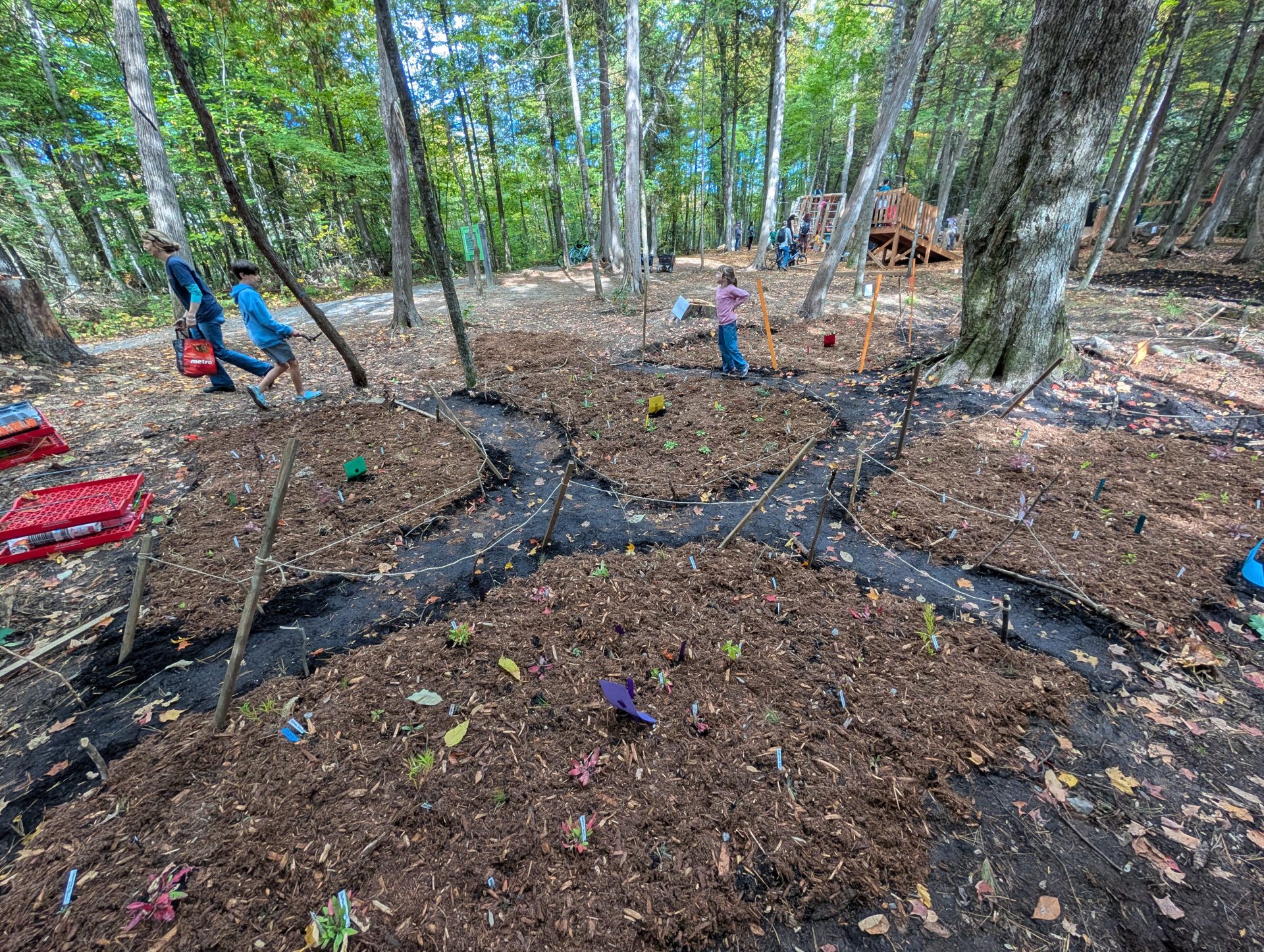
This week marked the finishing touches of a purposefully built pollinator garden in Forêt Boucher, and one of several planned throughout the forest this fall in collaboration with Canopée Localeaf, Foundation de la Forêt Boucher, as well as several local elementary schools.
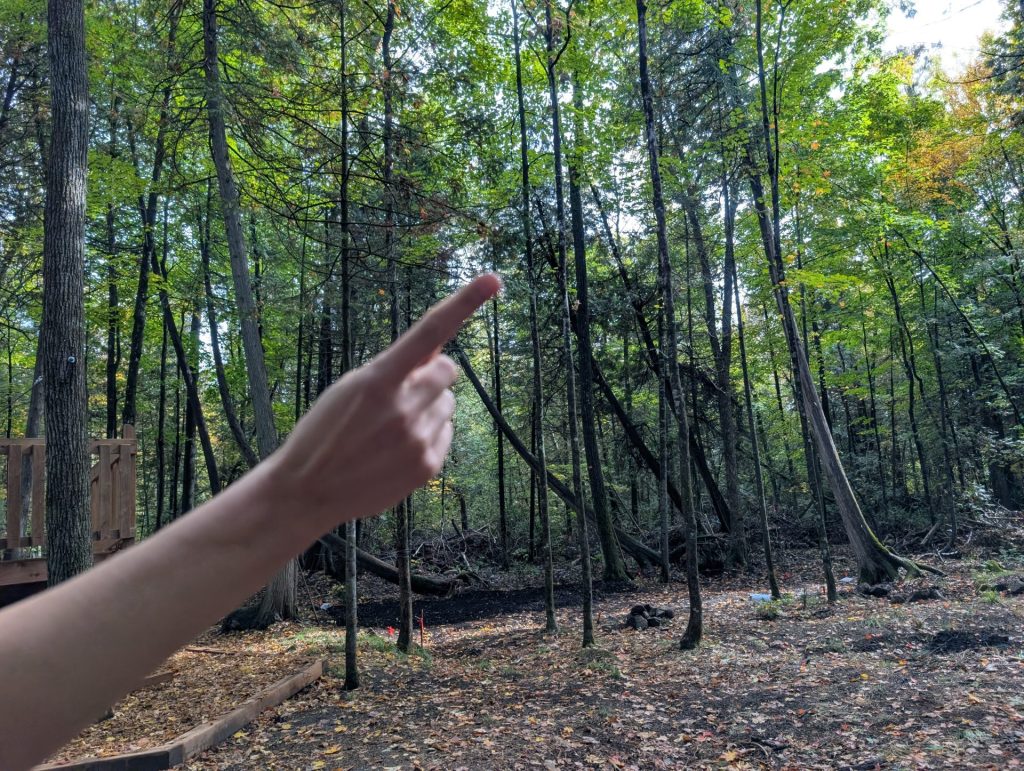
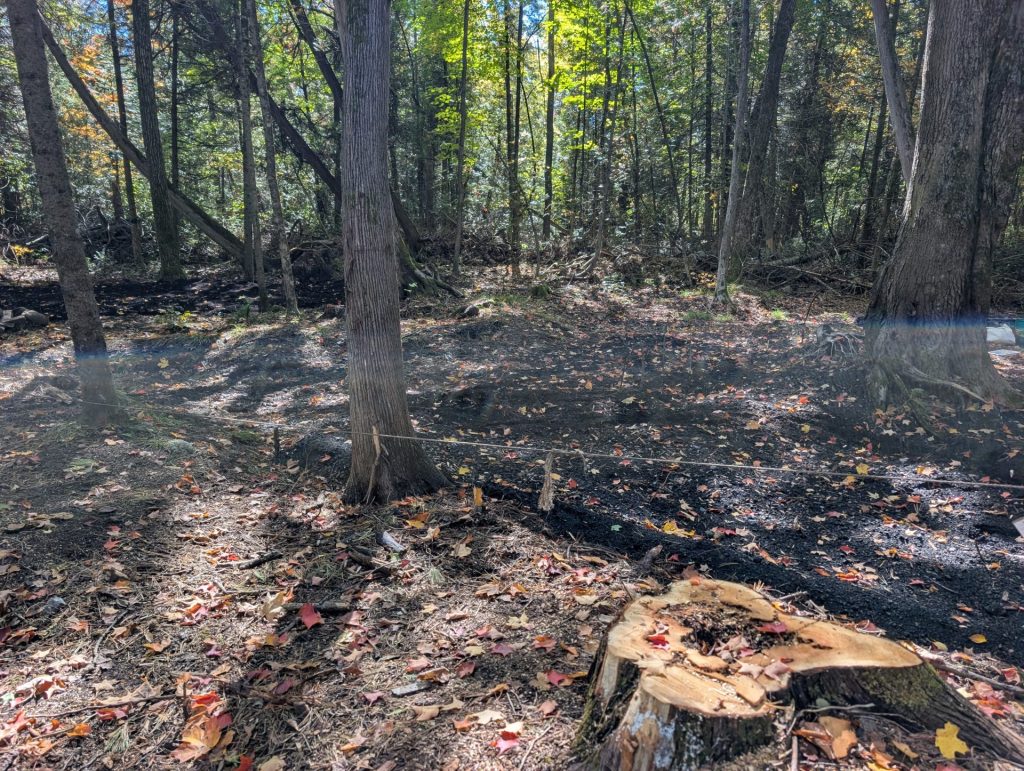
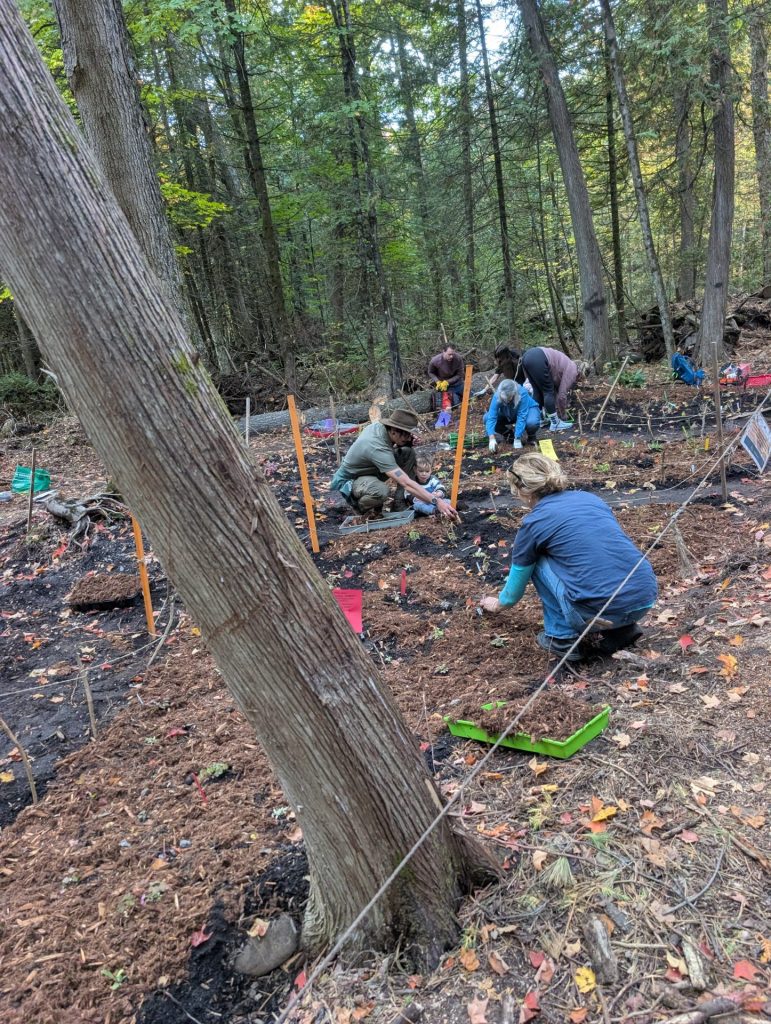
We planted most of this particular 5×10 metre area last weekend during the Fete de la Forêt festival, in a small clearing in the forest left slightly open to dappled sun throughout the day after some majestic trees were destroyed by the Emerald Ash Boarer, and needed to be cut down.
This first forest planting area happened to be next to the beautiful Sentier de l’Oriole trail, a natural playground and adventure obstacle course in the middle of the forest. While we usually find kids LOVE getting filthy next to us while we plant, we knew we had a zip line and some pretty unique wooden bridges and structures to compete with, so we expected engagement from the younger generation to be spotty.
Instead of bracing for community participation, we decided to focus on creating an interactive experience worthy of it’s location, adjacent to the place in the forest where in-the-know parents seem to come and bring their wild children to let them get their zombies out.
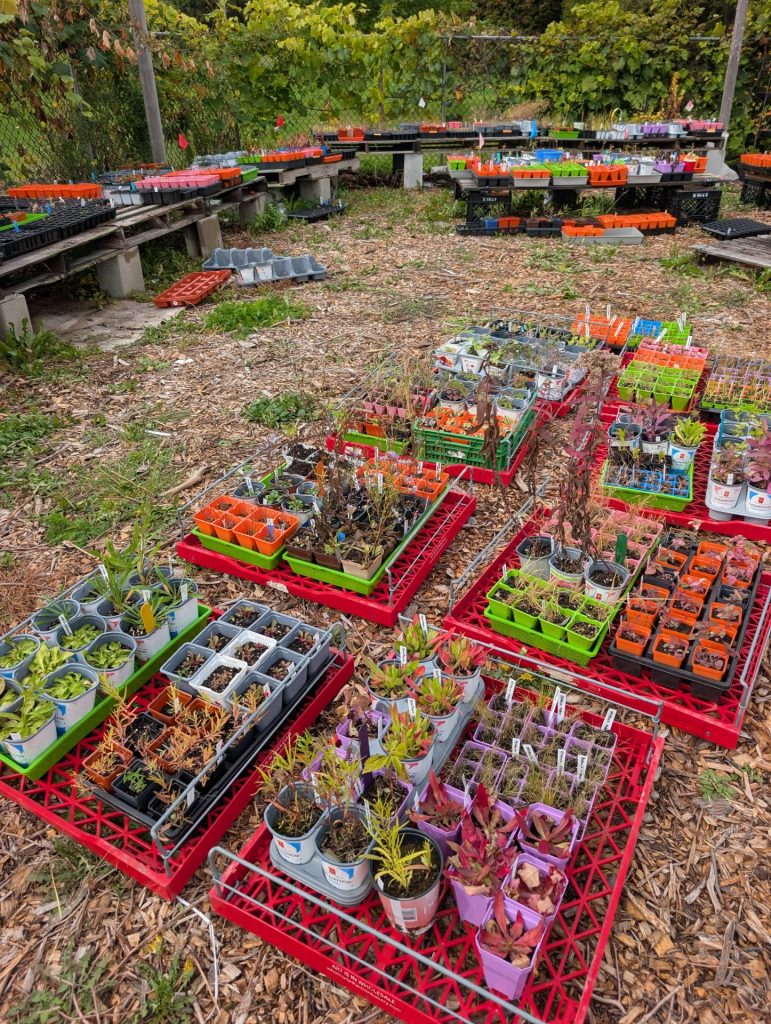
My task was simple. Choose and deliver plants for the pollinator gardens, with a rough planting guide. This task was made far easier by my failure to attend most of the public market days I had intended to attend this summer, which meant I still have many hyper-local native plant species in stock at the nursery. The Foundation provided us with an inventory of species observed in the forest, and this largely formed the vision for the first garden in our forest garden series.
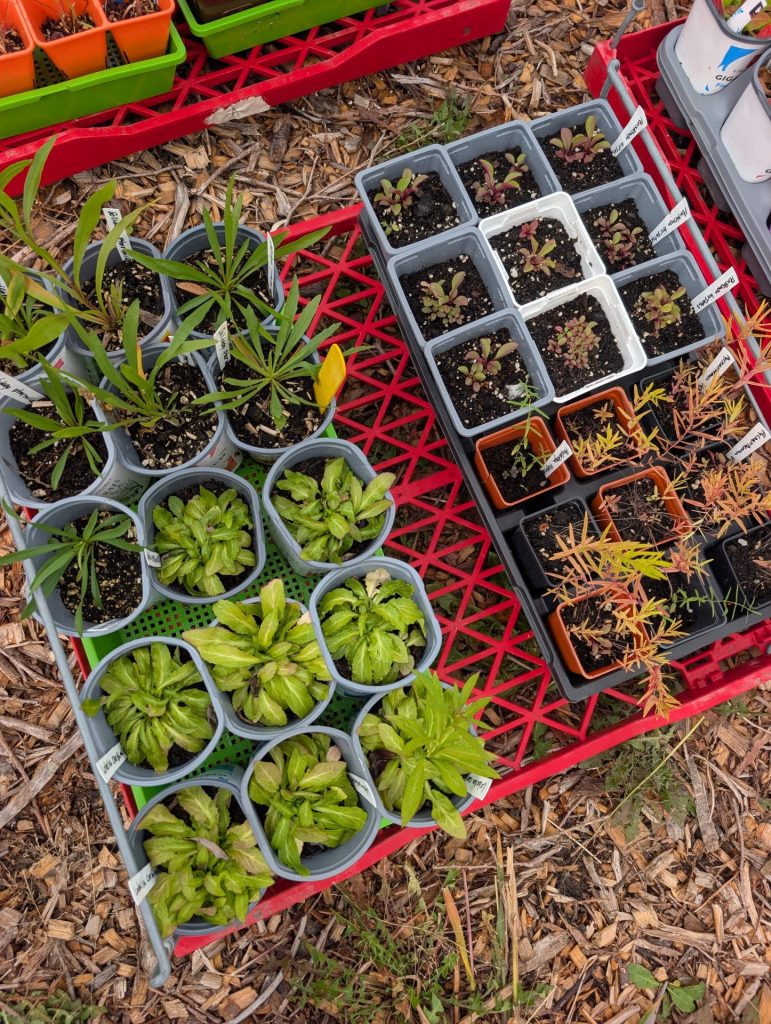
We wanted to showcase mostly forest-native pollinator magnet plants, while also introducing a few locally native but not catalogued species endemic to the forest, AND find ways to showcase plant communities that would inspire forest visitors to consider adding some native plants to their garden spaces at home.
Early in the design process, I decided to divide the planting site into six distinct areas, with pathways allowing both children and Forest visitors to easily move through the sections, without disturbing the plants or forest creatures that rely on them. Below is a brief overview of the chaos that is my design process.
My chaotic design process
Garden Space
I work on paper. With pencil. It’s not pretty, it’s not instagrammy, and it is one of my favorite things to do.
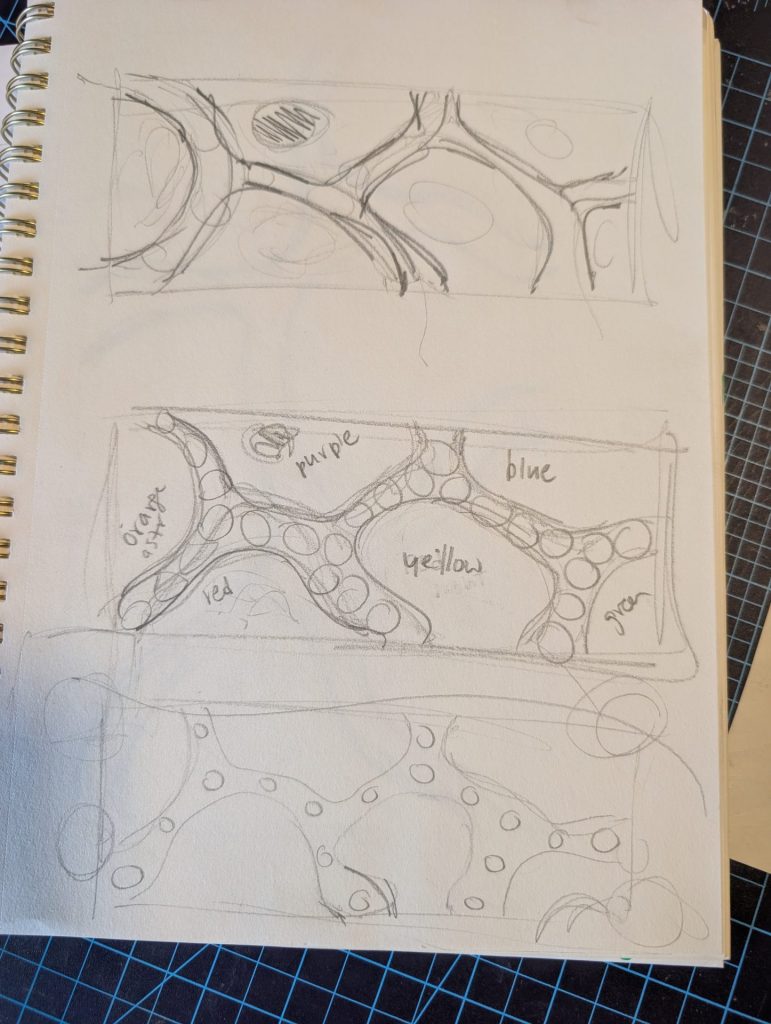
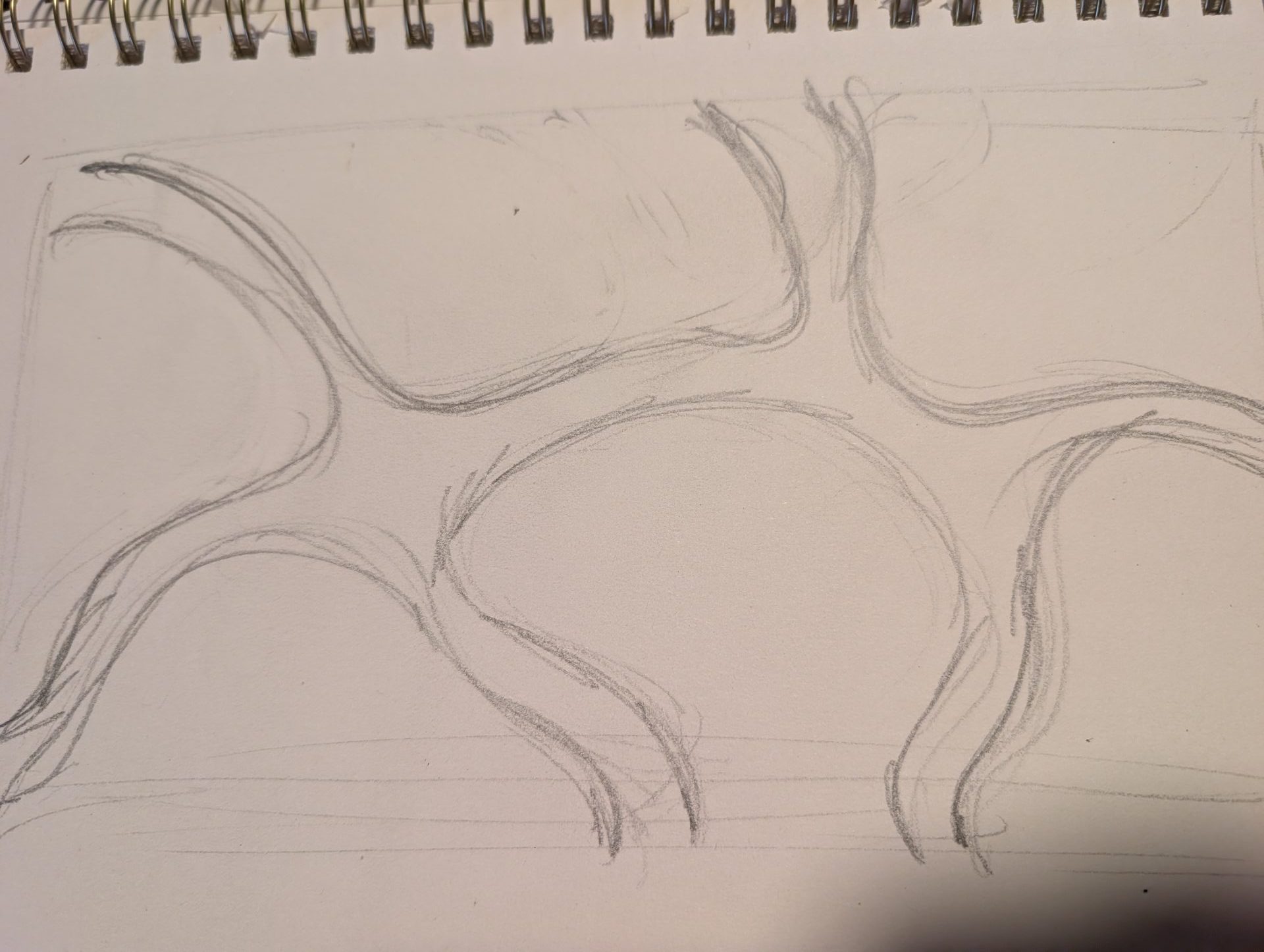
I started with a rough rectangle representing the planting site. At this point I felt uninspired. I envisioned the entry points from all likely angles of visitors walking, and began doodling potential walking paths, lightly in pencil. After several rounds of erasing and do-overs, I was happy enough with the shapes of the paths that I created a second, more vivid rendition as my ‘final’ design.
Plant communities
I began with a printout of the list of plants selected for the garden. Linden tried to help.
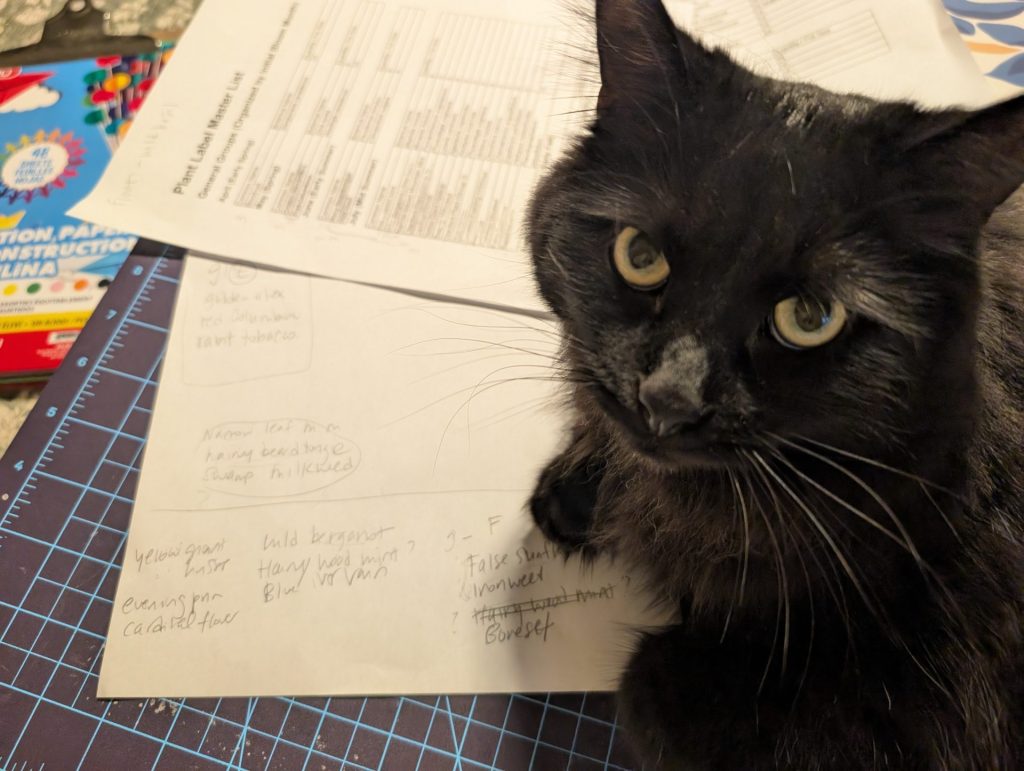
I took a blank page, and divided it in sections. This is where I began grouping plants. There was some erasing, some revisions, some chicken scratches and eventually the plants were grouped, then copied onto colour coded construction paper for planting day.
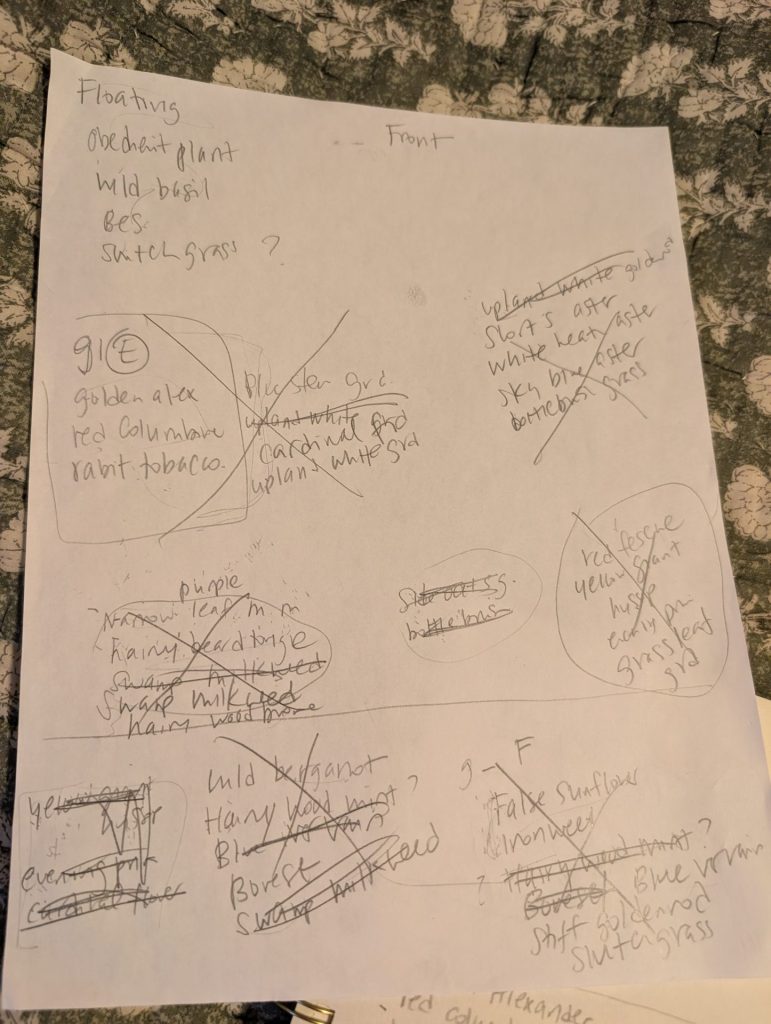
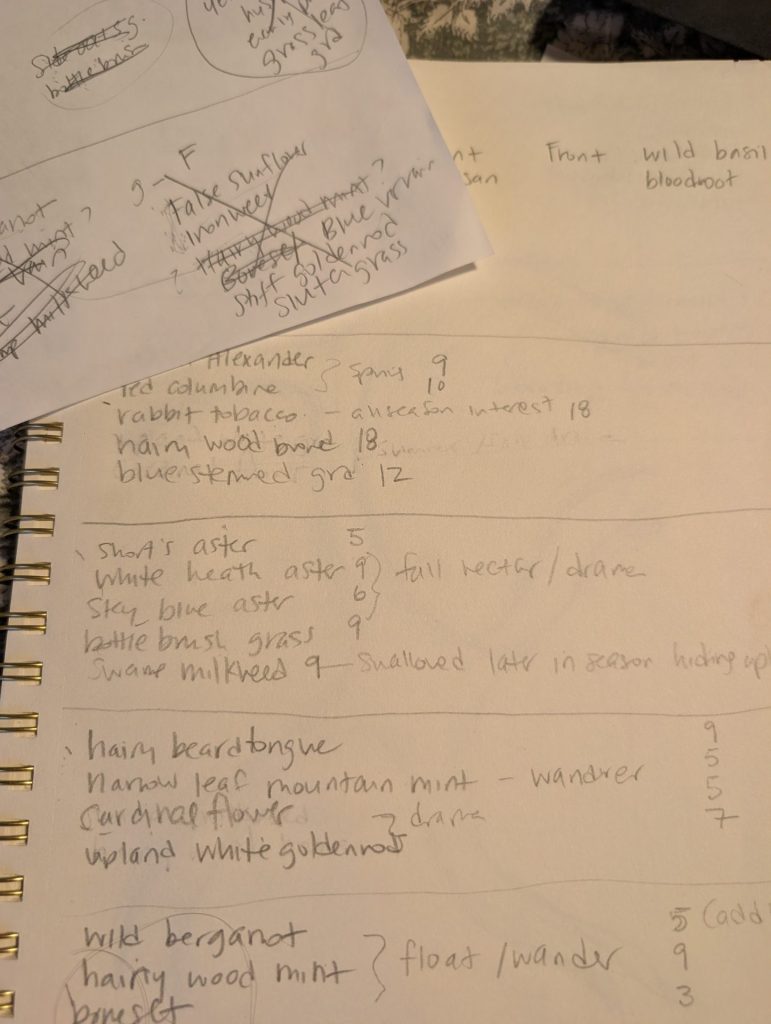
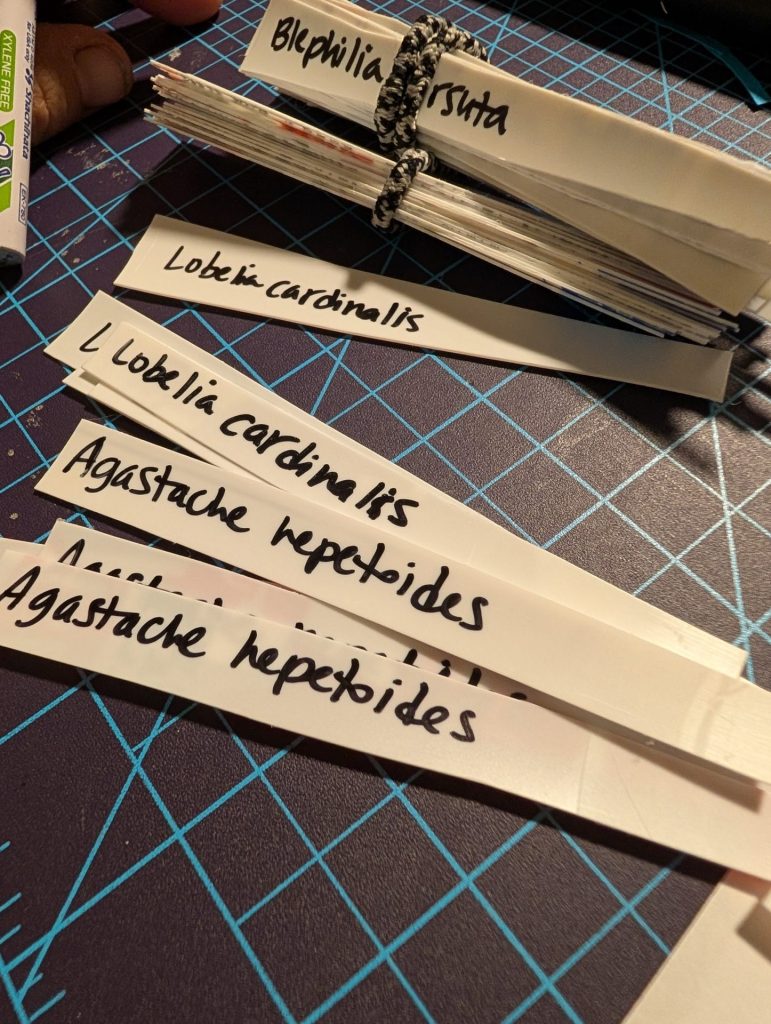
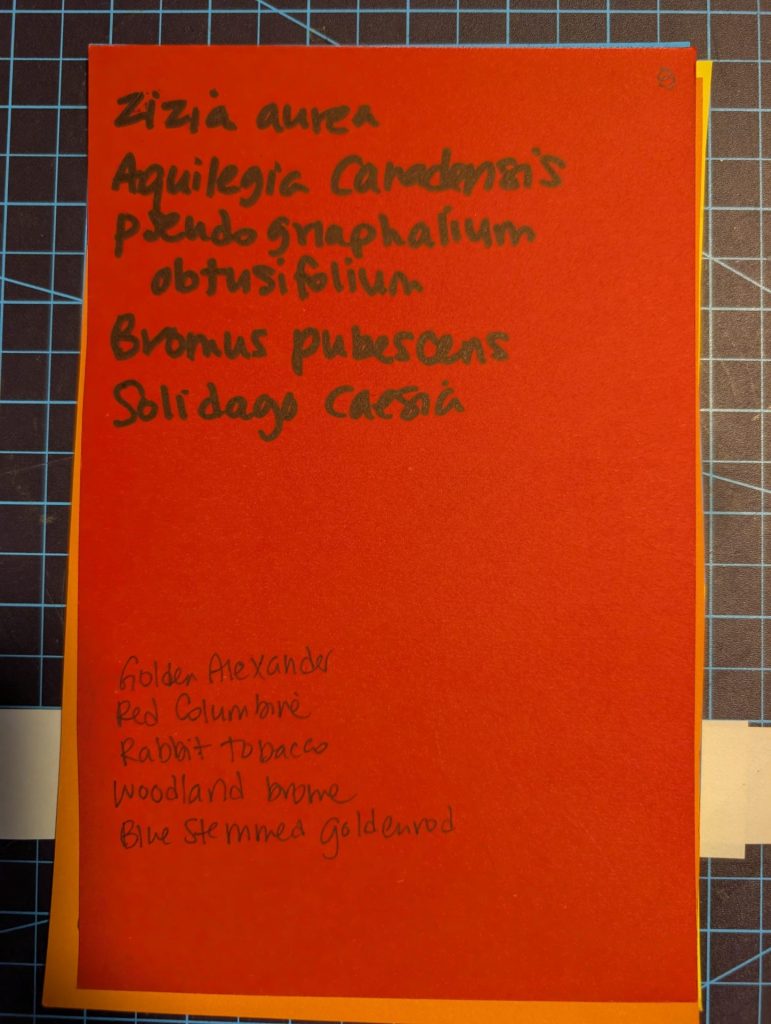
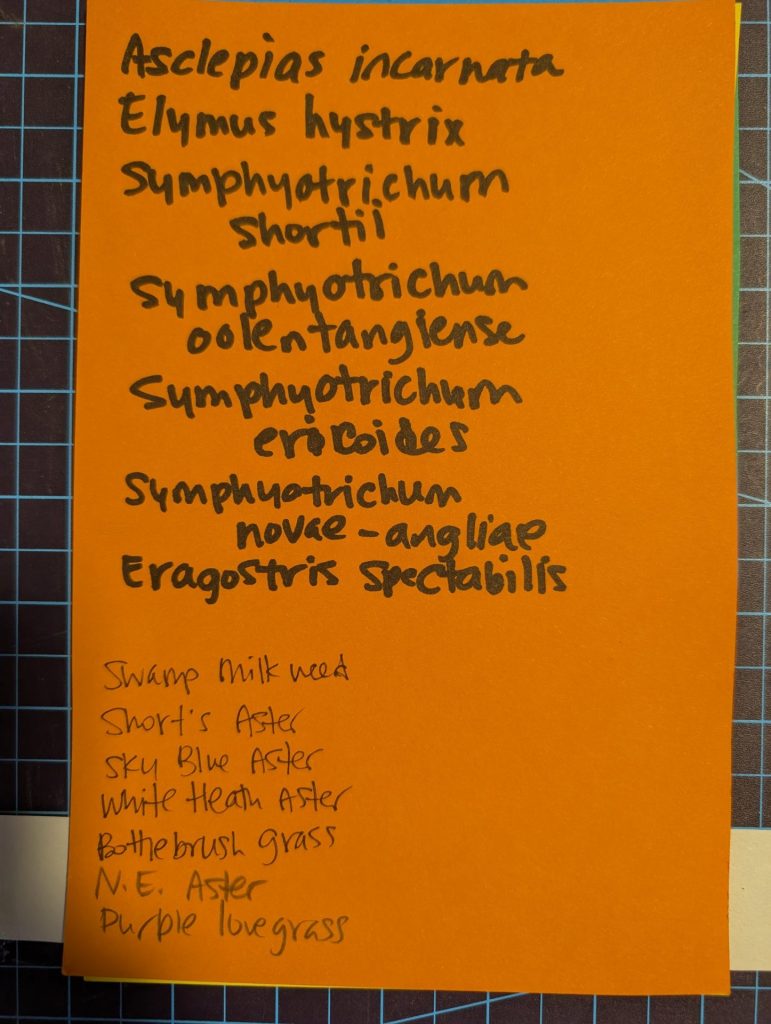
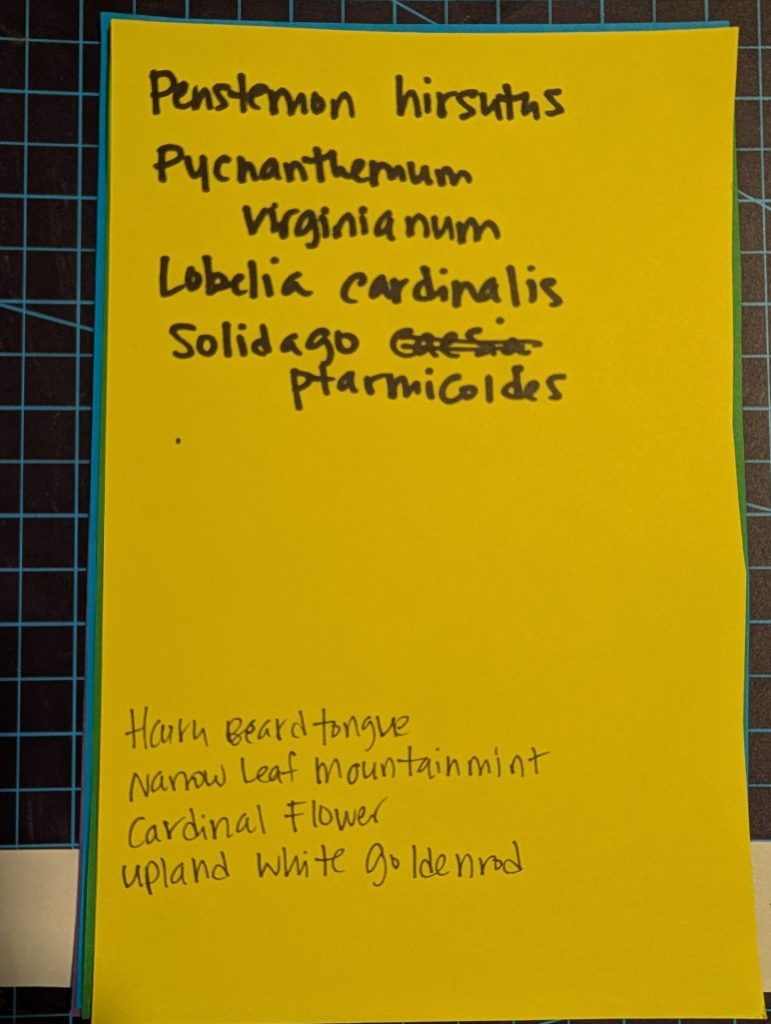
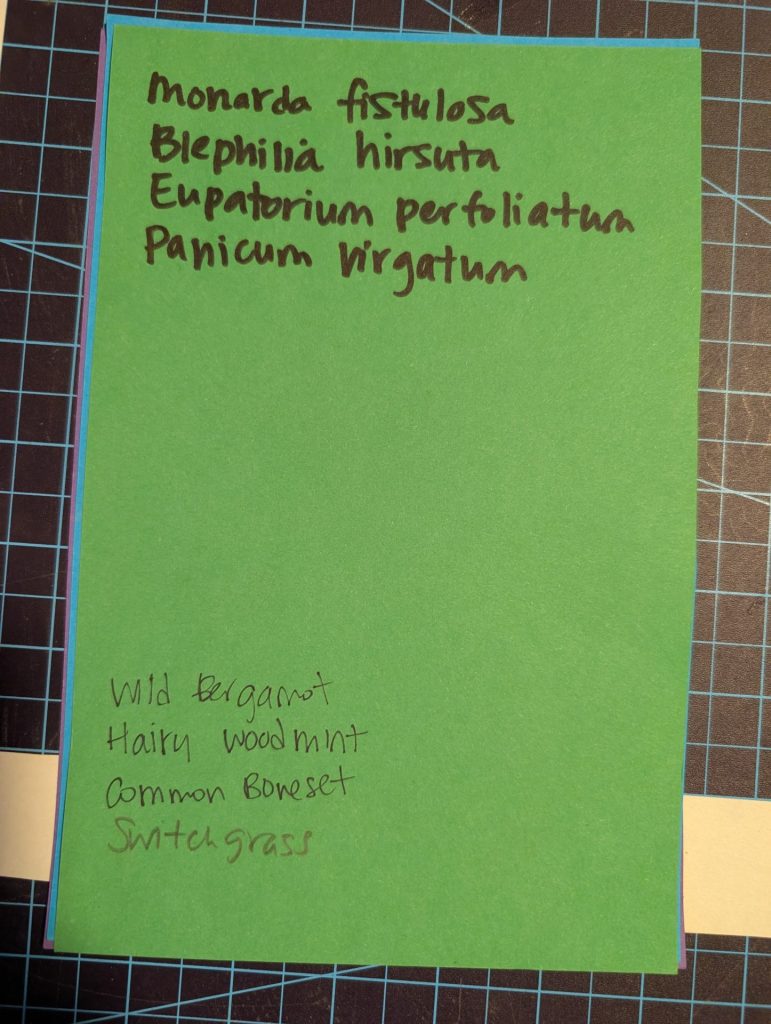
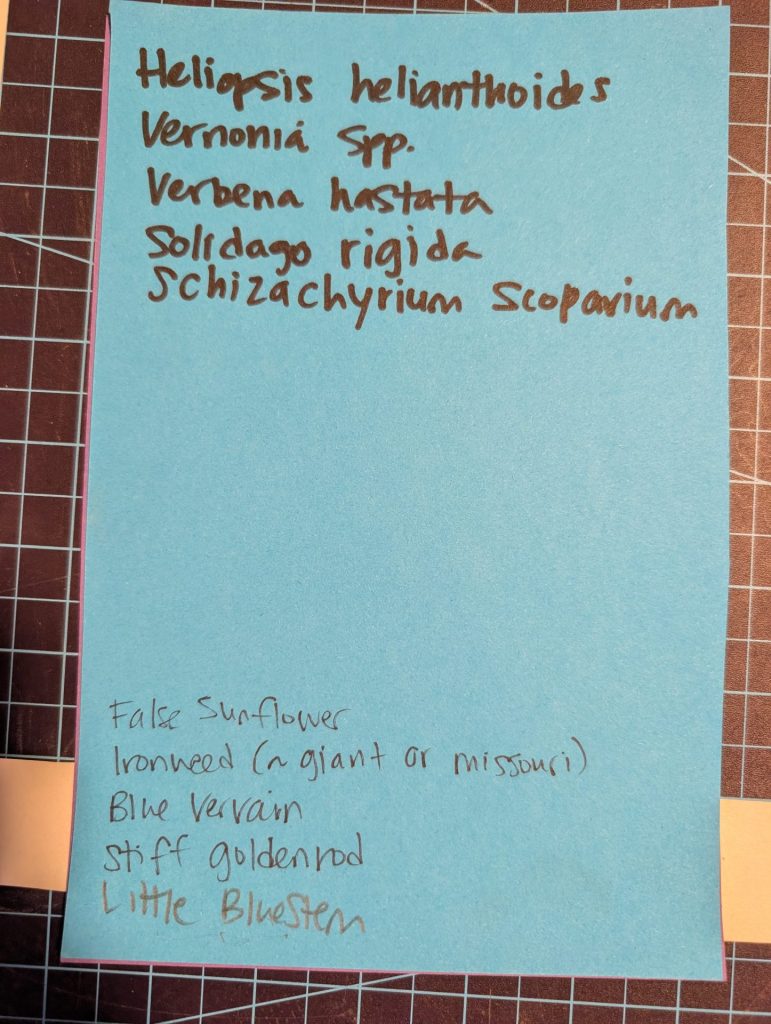
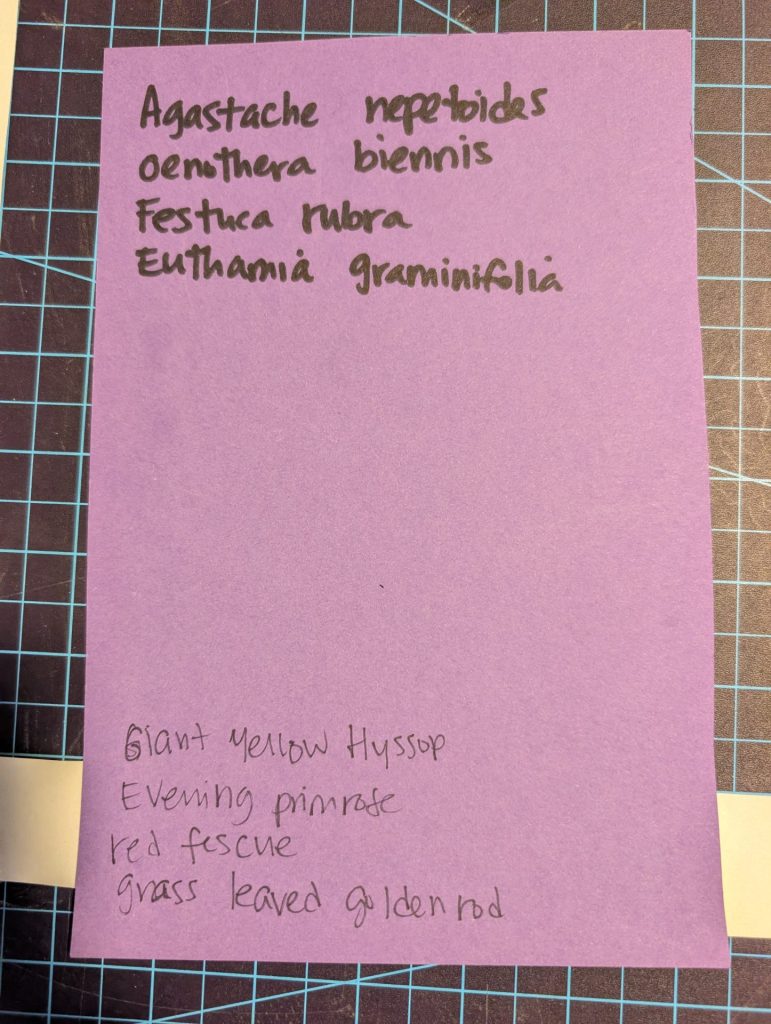
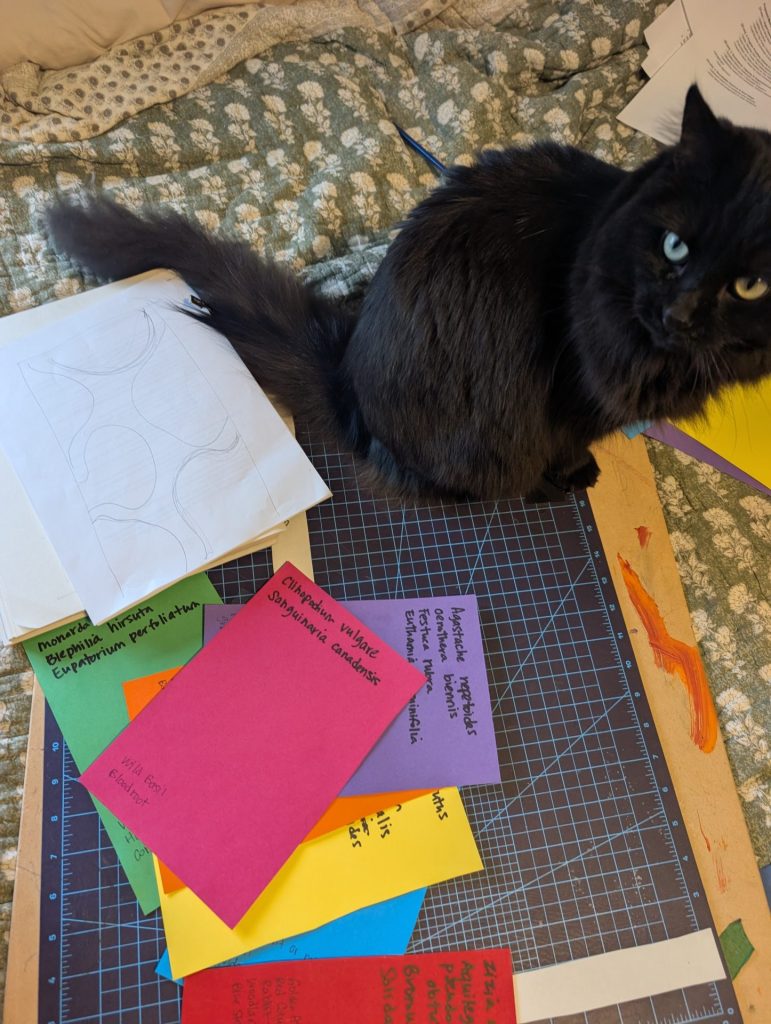
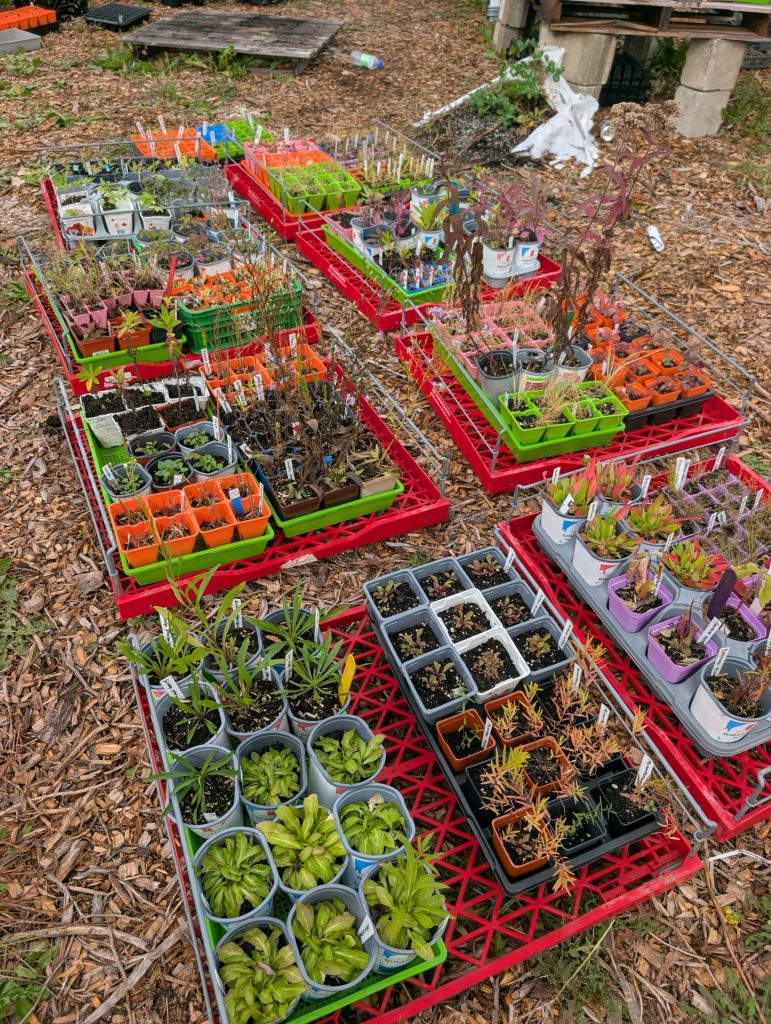
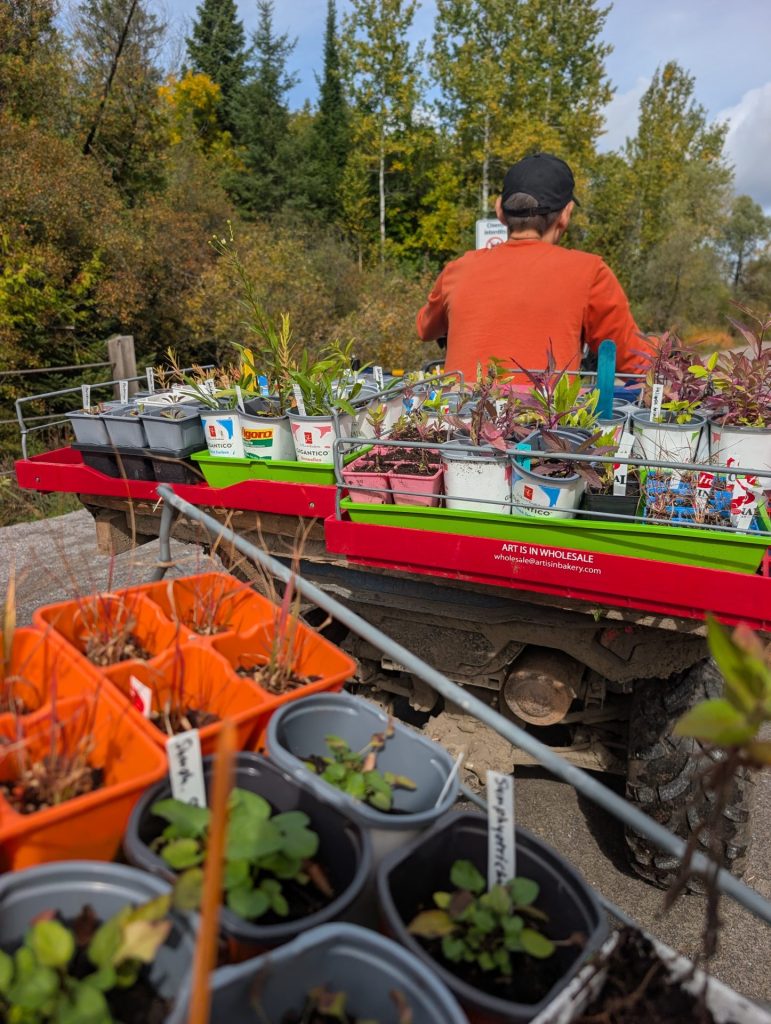
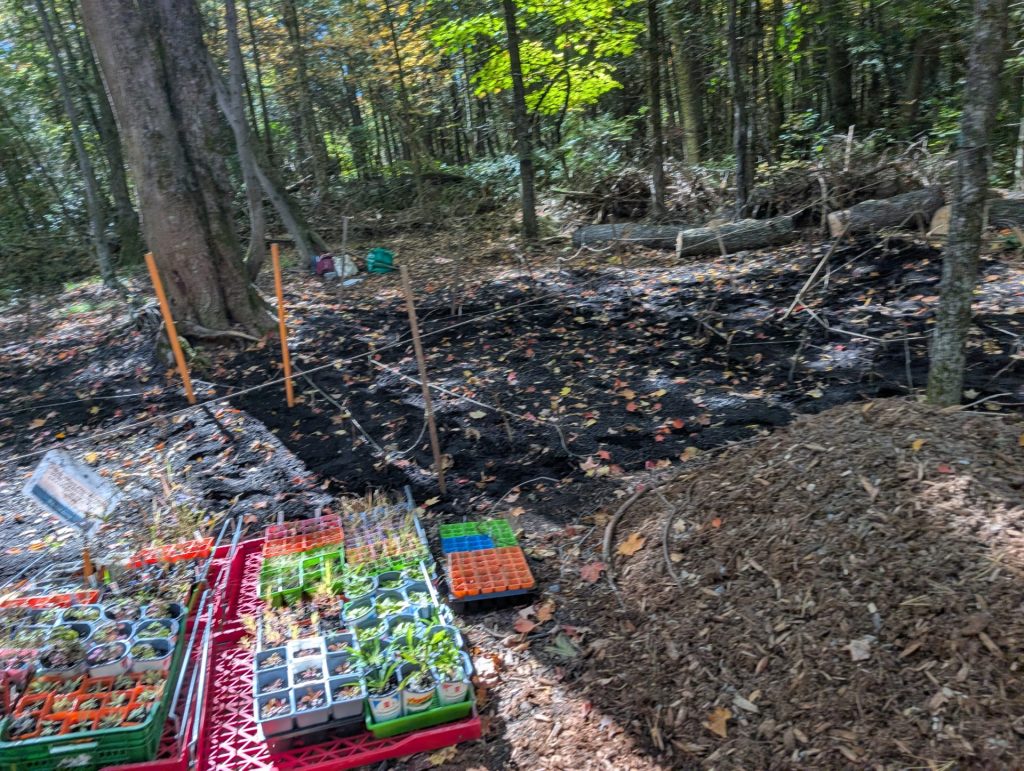
Once finished, I went back the plants in the nursery, and reorganized these by colour, for each of the 6 defined planting areas, so each had their own bread tray.
Transport
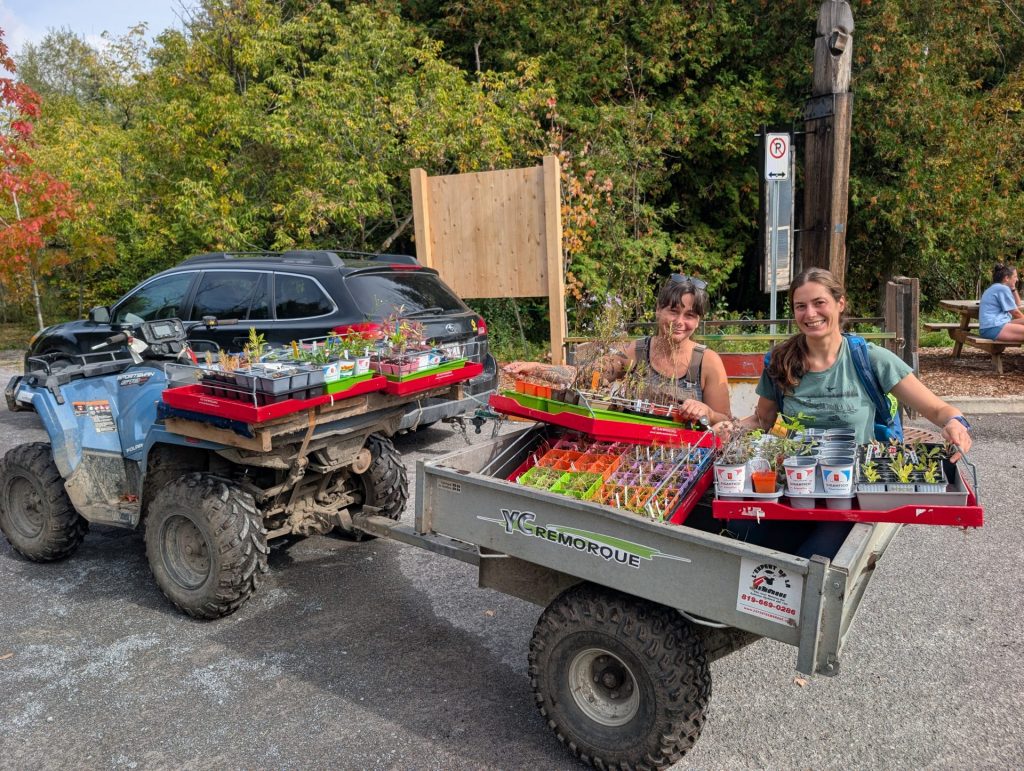
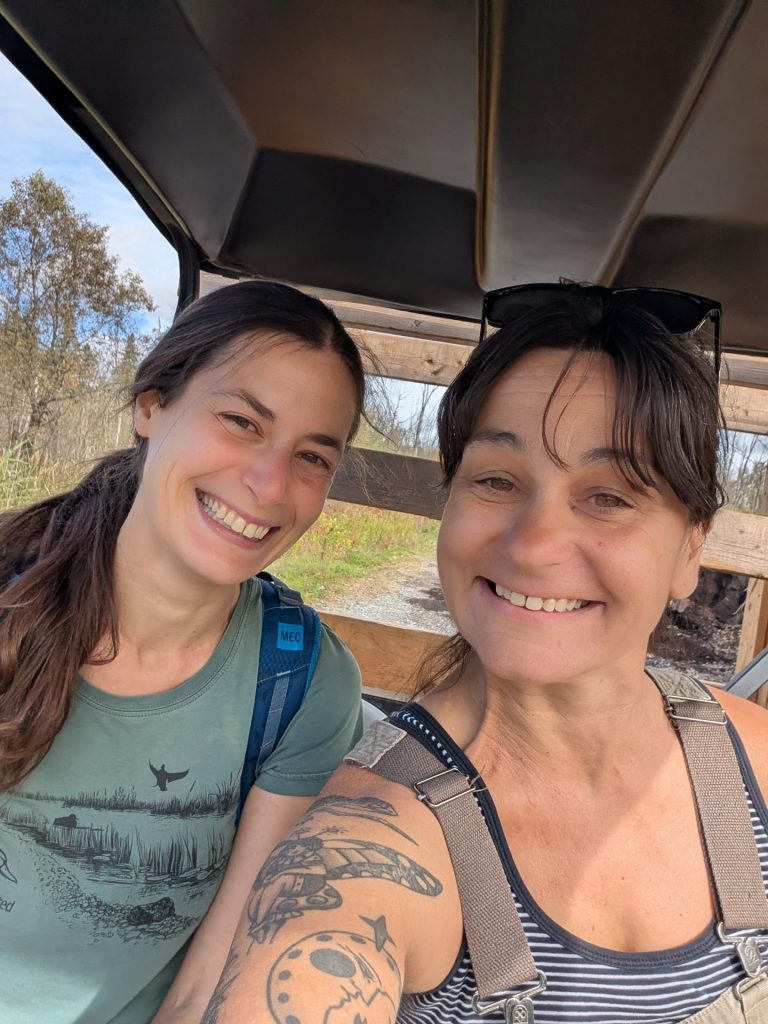
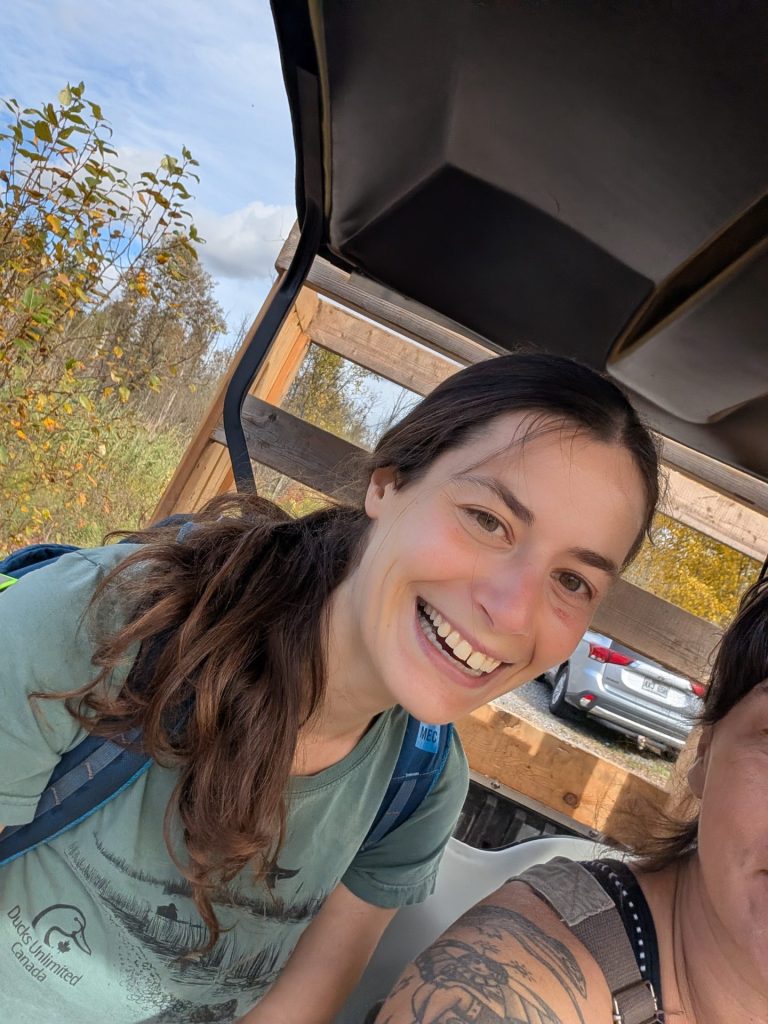
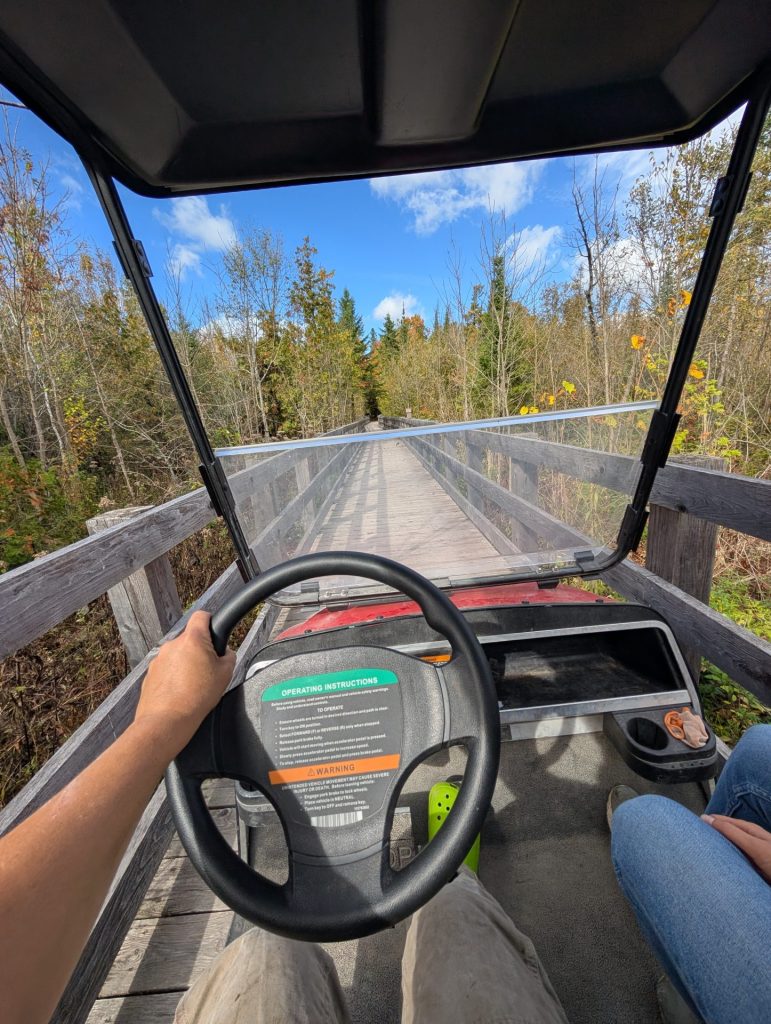
We had THE BEST TIME getting these trays of plants to the site. Hugo greeted us at the gate and we were treated to a ride, plants in our laps, and later trusted as ‘pseudo employees’ of the park with the golf cart for subsequent trips.
Site prep
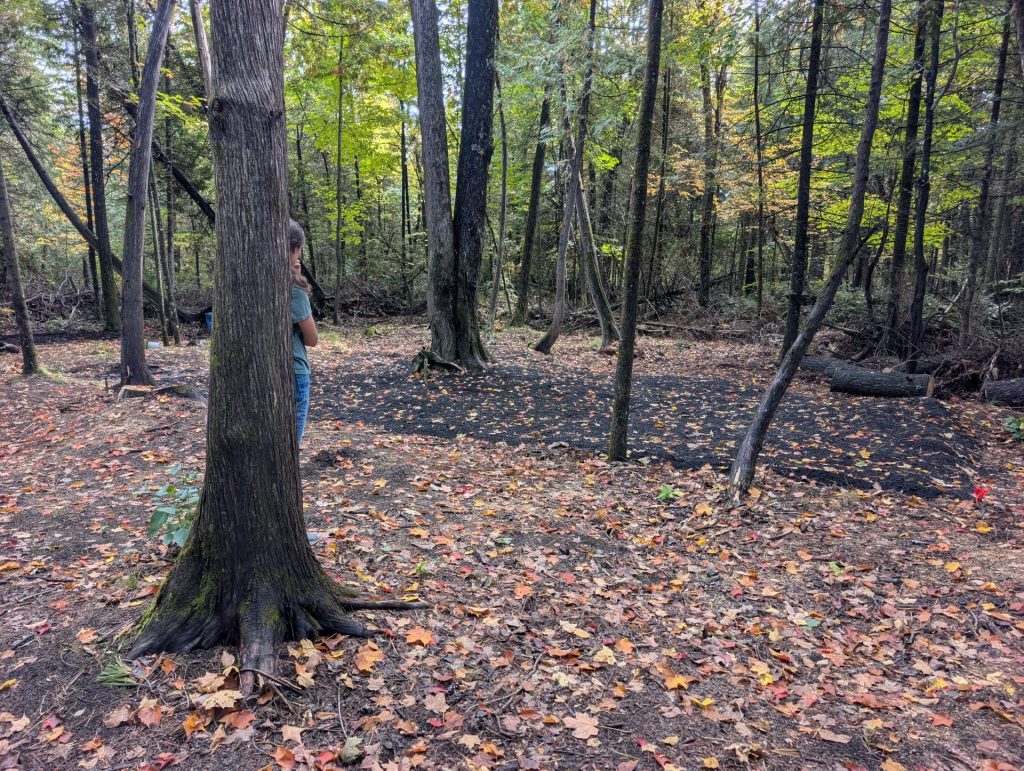
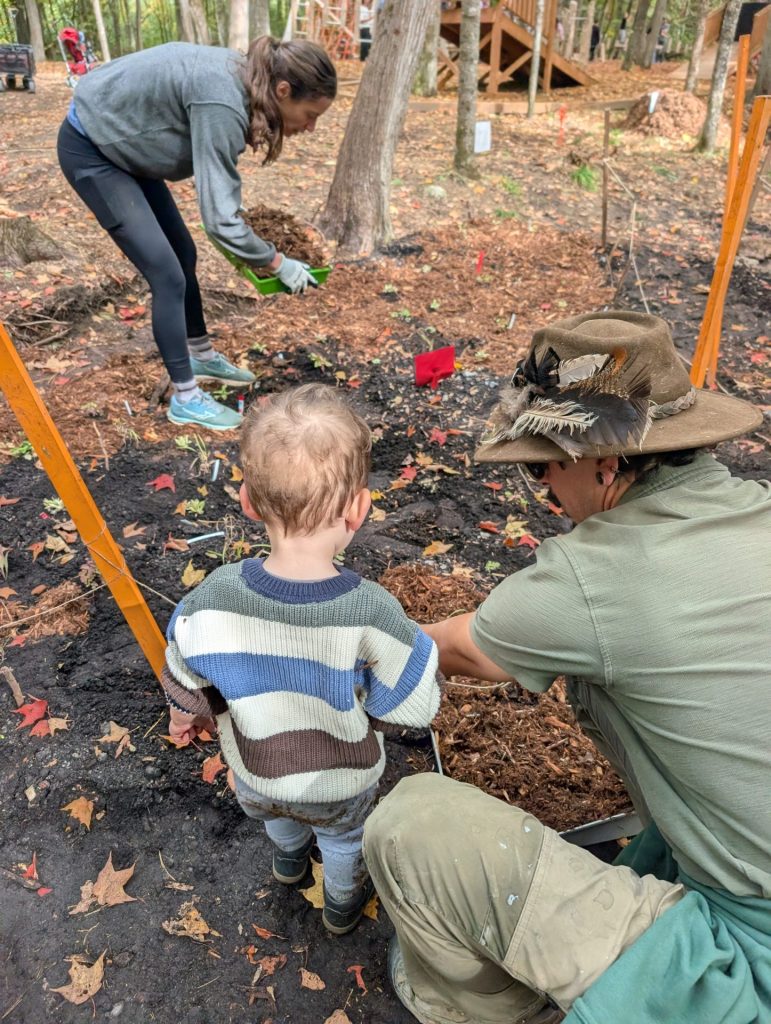
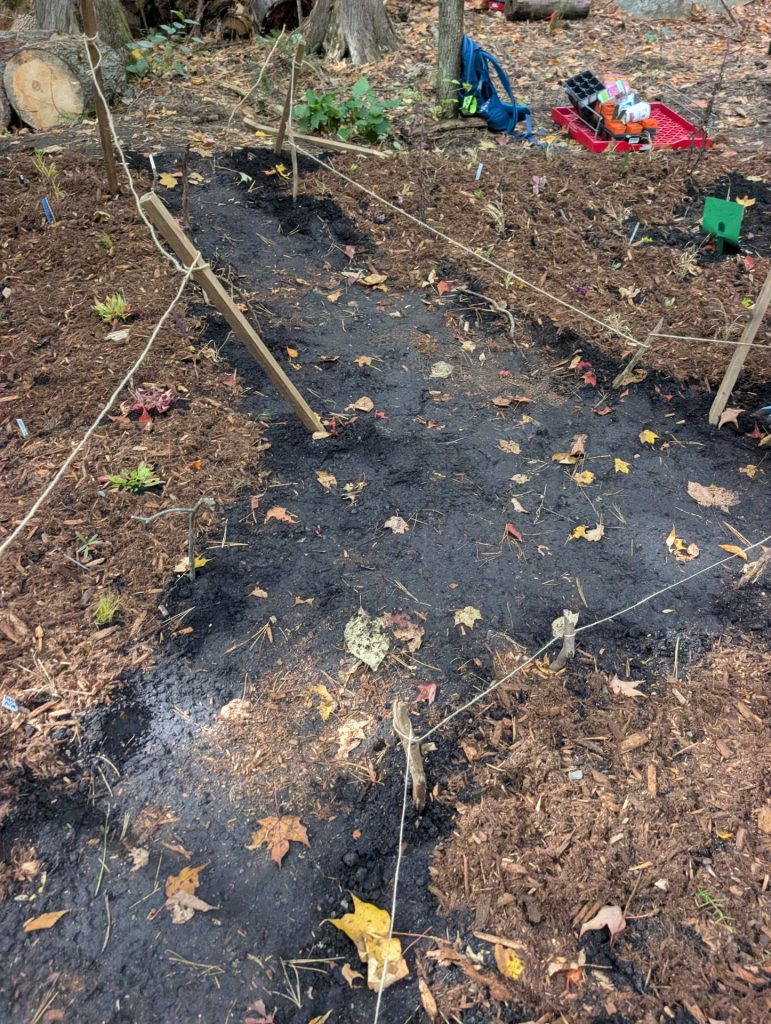
Hugo and his team had cleared the area for planting, and added a generous layer of compost / soil mix on top, to make it easier for little hands to dig into. The morning of the planting, we arrived with some marking sticks and helping little hands. We began by replicating the walking paths from my non-fancy chicken scratches in the dirt, at first by walking the pathways and stomping them down a little, then defining the planting areas with forest sticks and string.
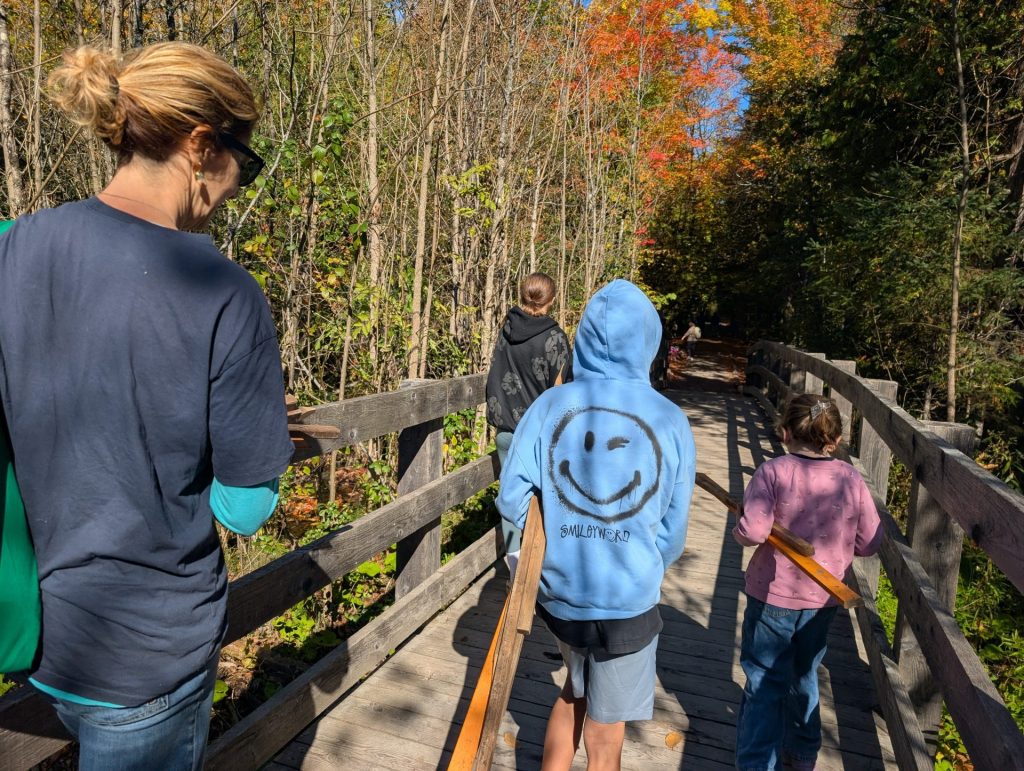
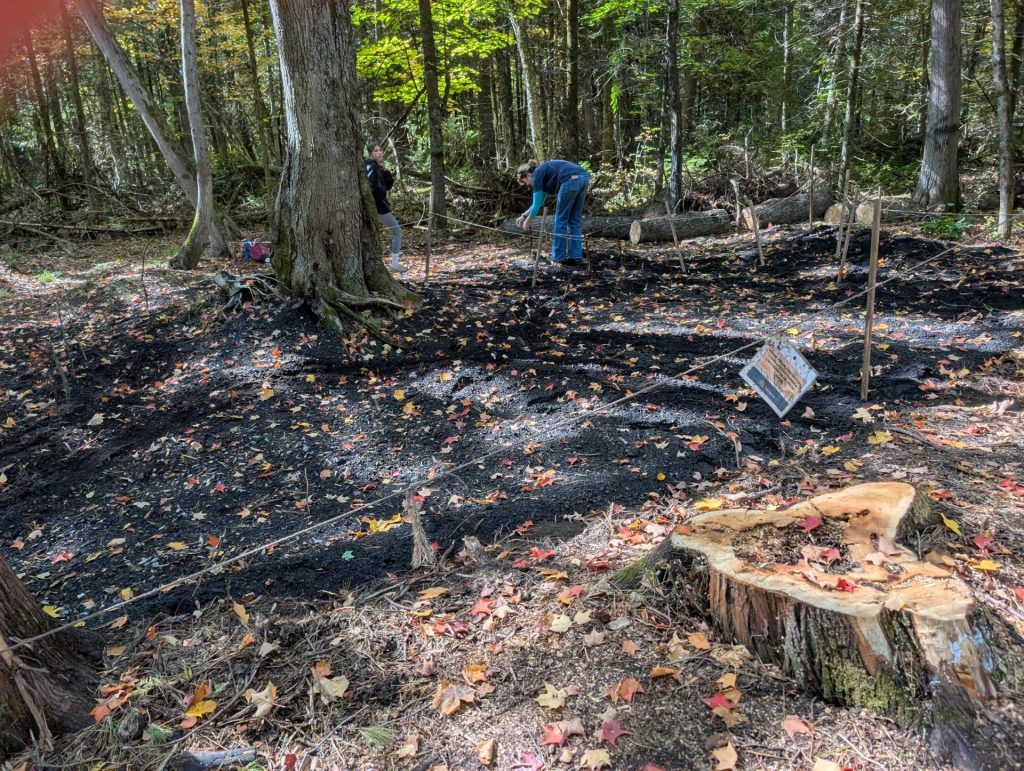
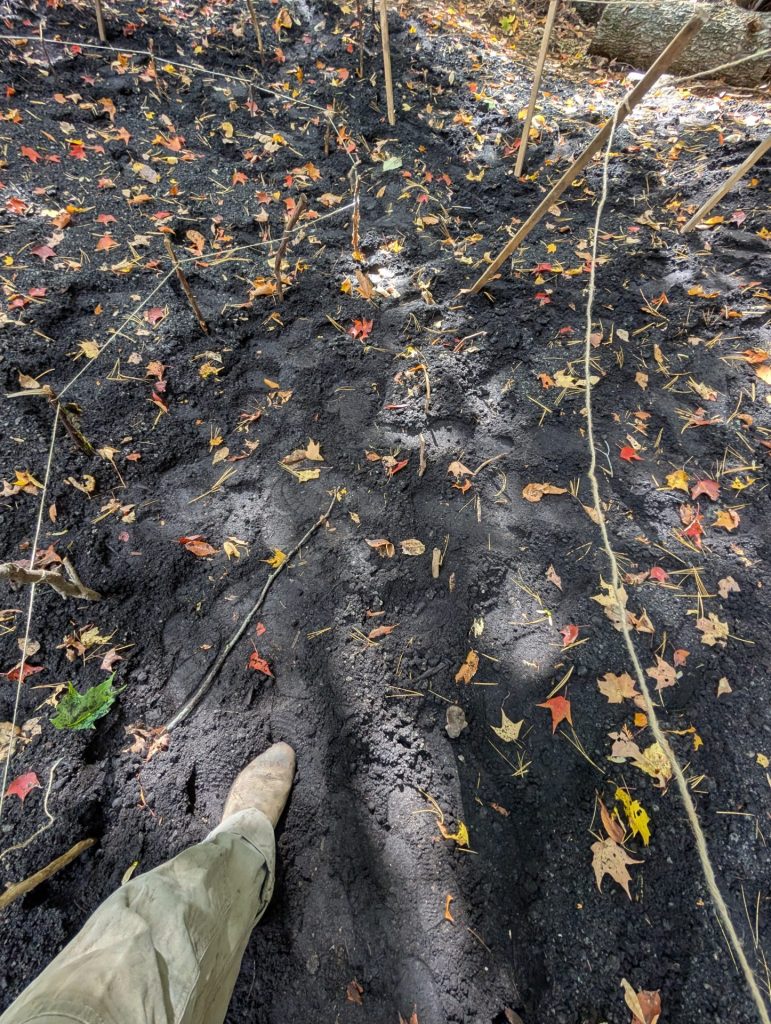
Once ready, each tray was moved to the corresponding planting zone, the plant lists were added to the middle of each section, and we waited for our 12:30 start (truthfully we BARELY finished prepping around 12:28, and by this time we had a little crowd around us, but we were ready).
The planting
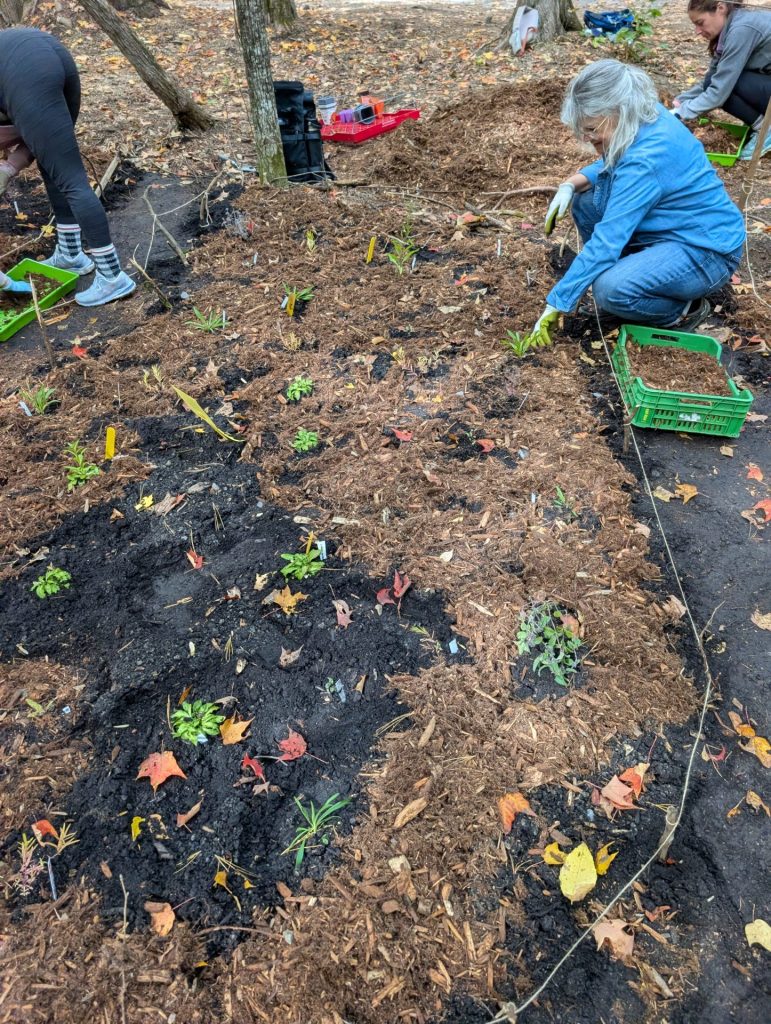
We planted zone by zone, starting with the taller plants in the back, and as more people came and one zone became crowded, we would open up another. People came and went, and we had amazing conversations with most of them. Many were there for the Fête de la Forêt celebration, but many still were regular weekend visitors, coming to that particular area so their kids can play in one of the most unique parks in our region, or passing through on their regular Saturday walking trail.
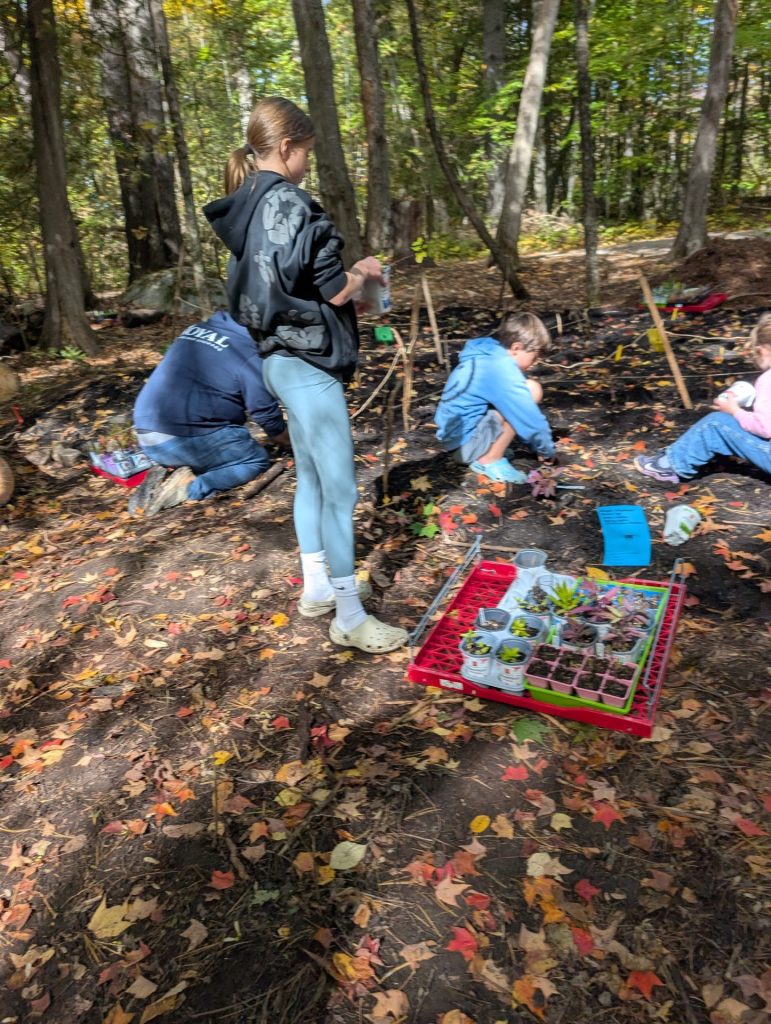
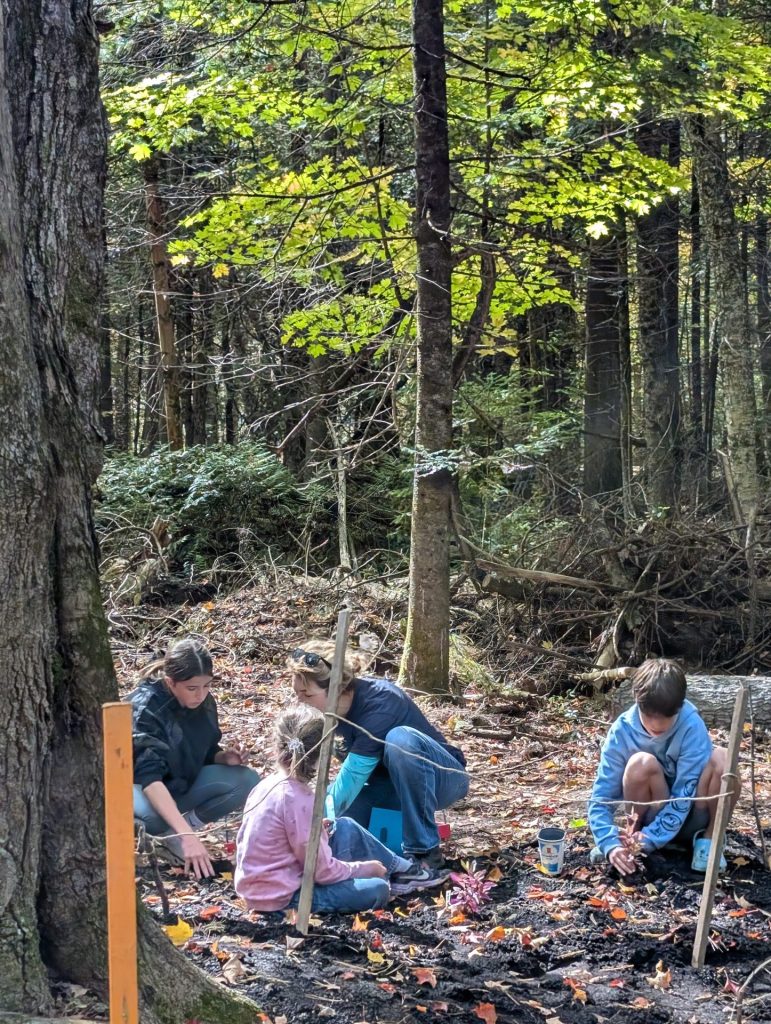
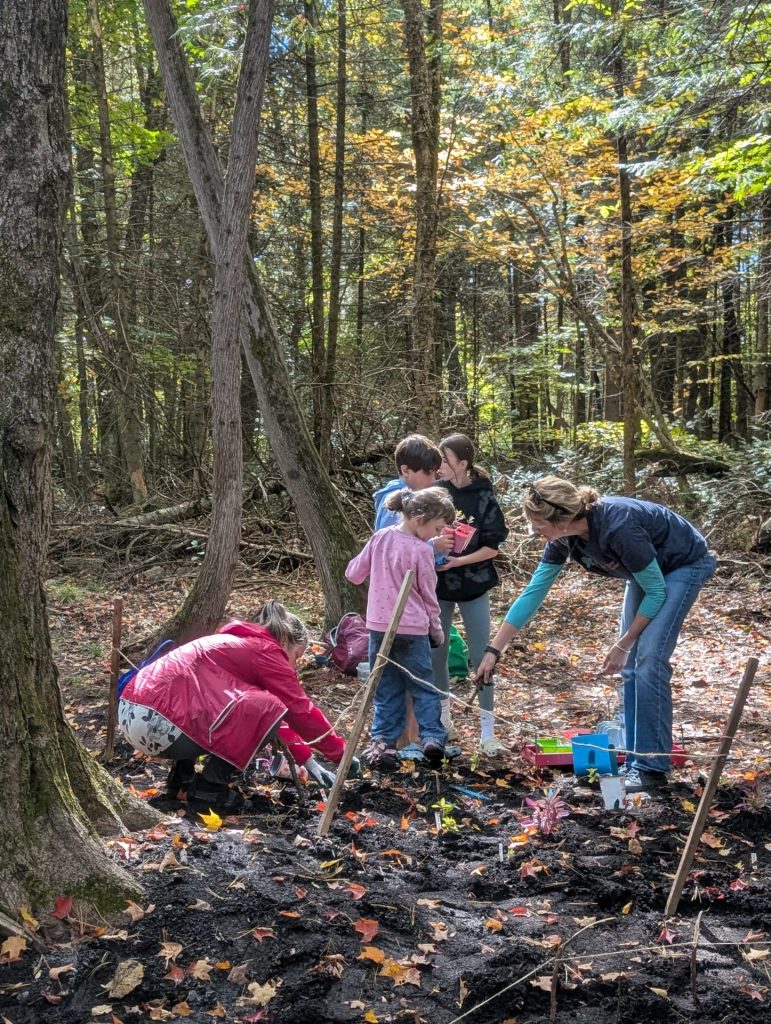
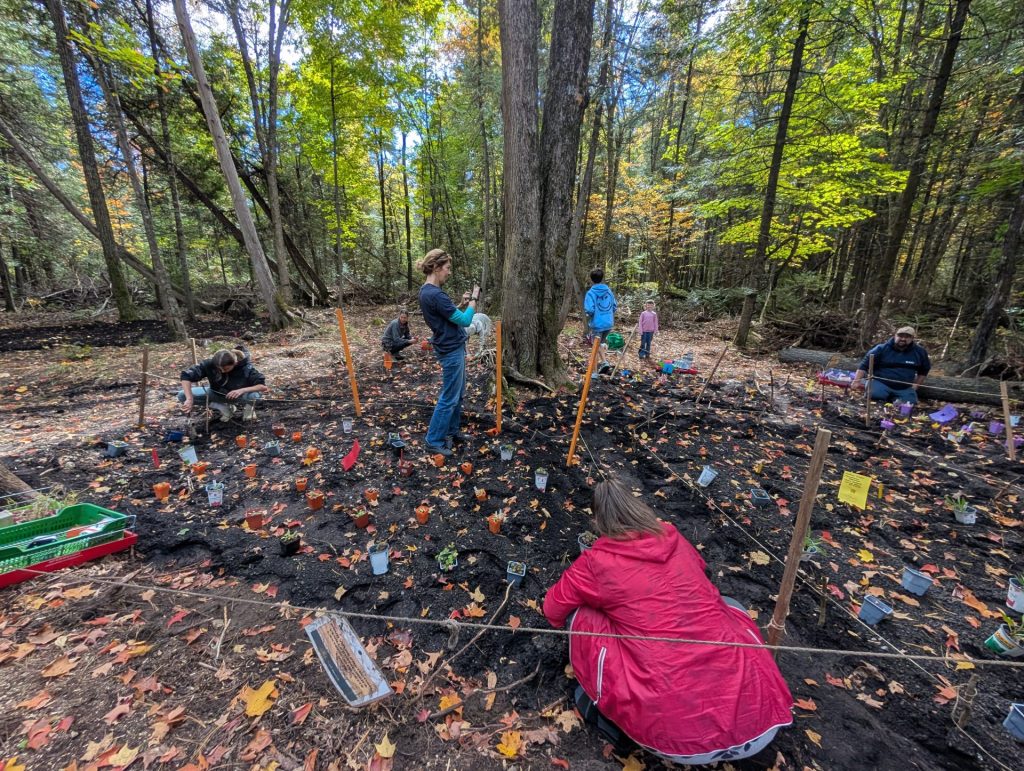
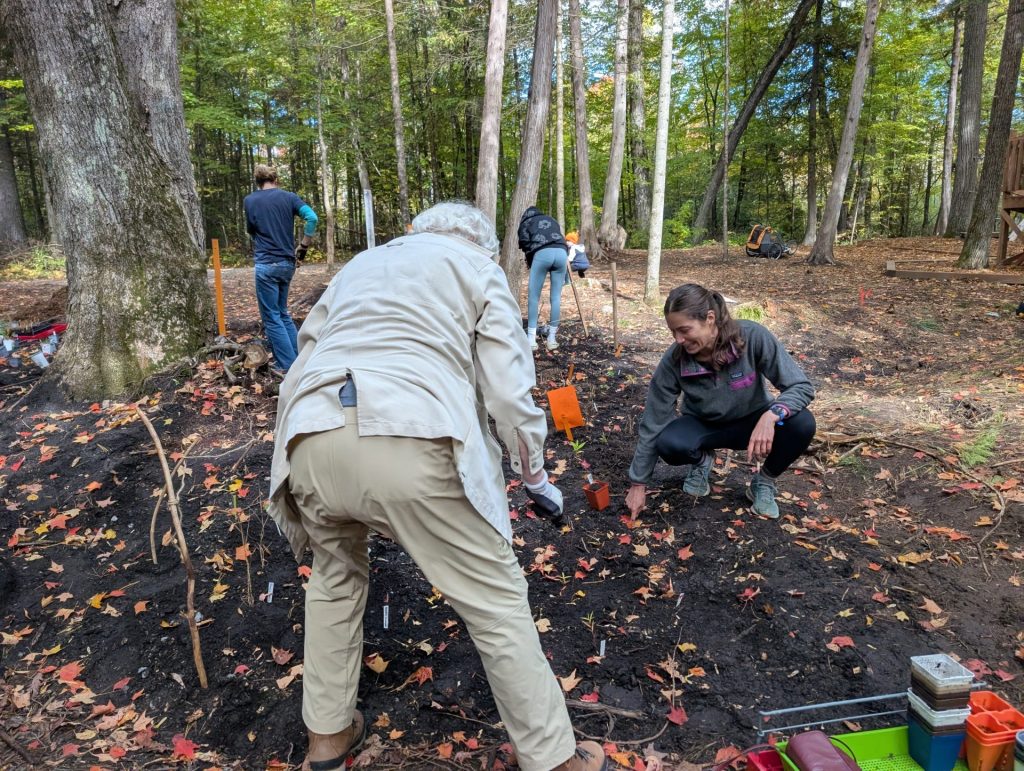
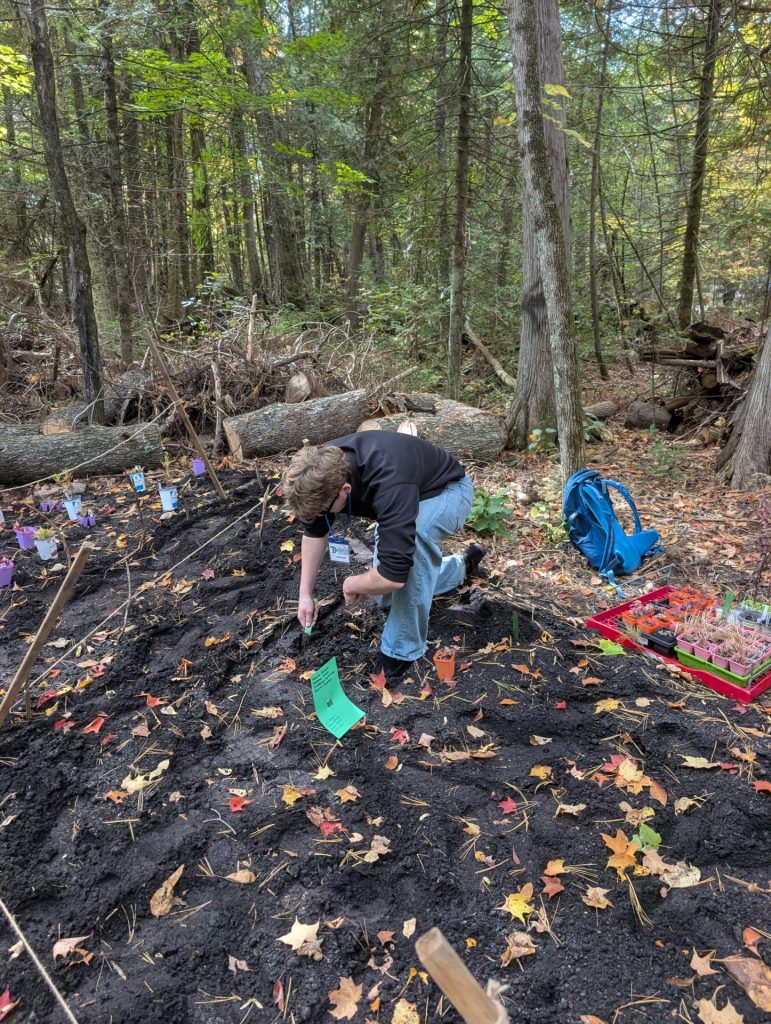
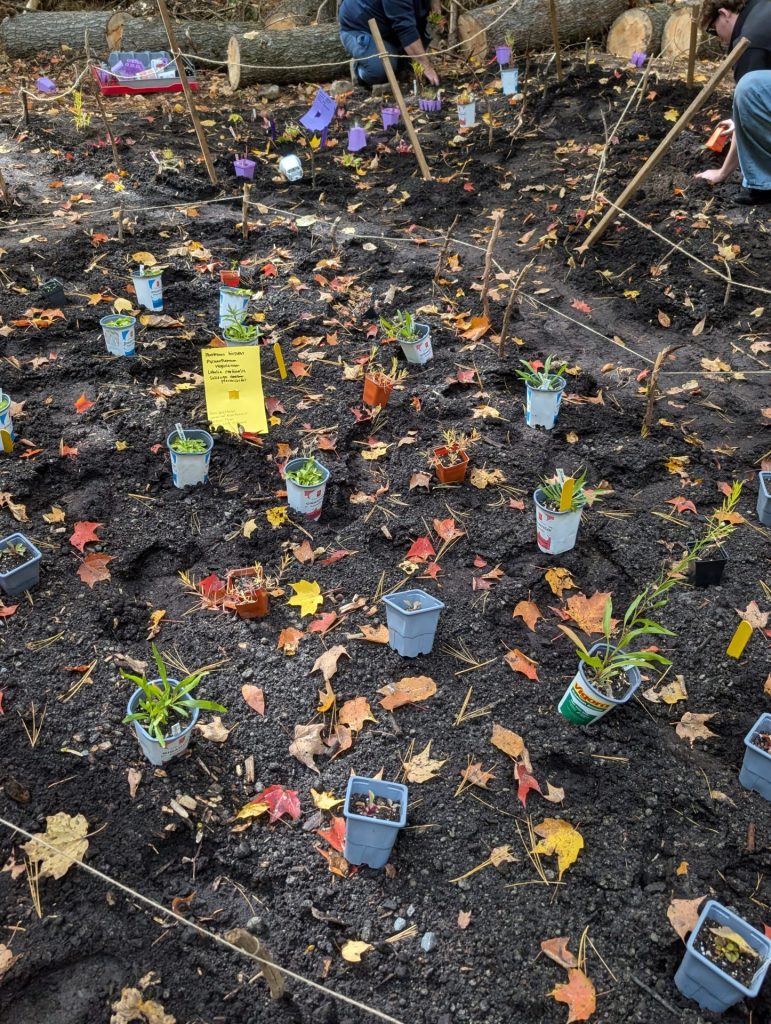
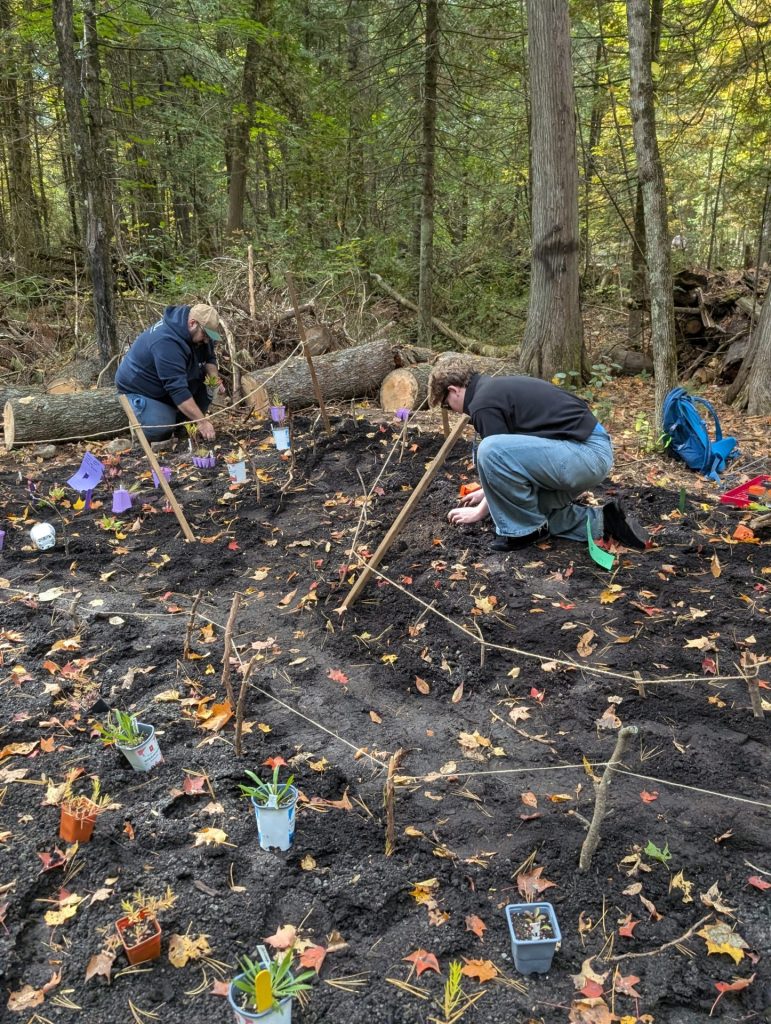
We were so encouraged by the positive comments, and the thoughtful questions, interest, and desire to join our Pollinate Aylmer group of volunteers, and get involved in our community. We had fun.
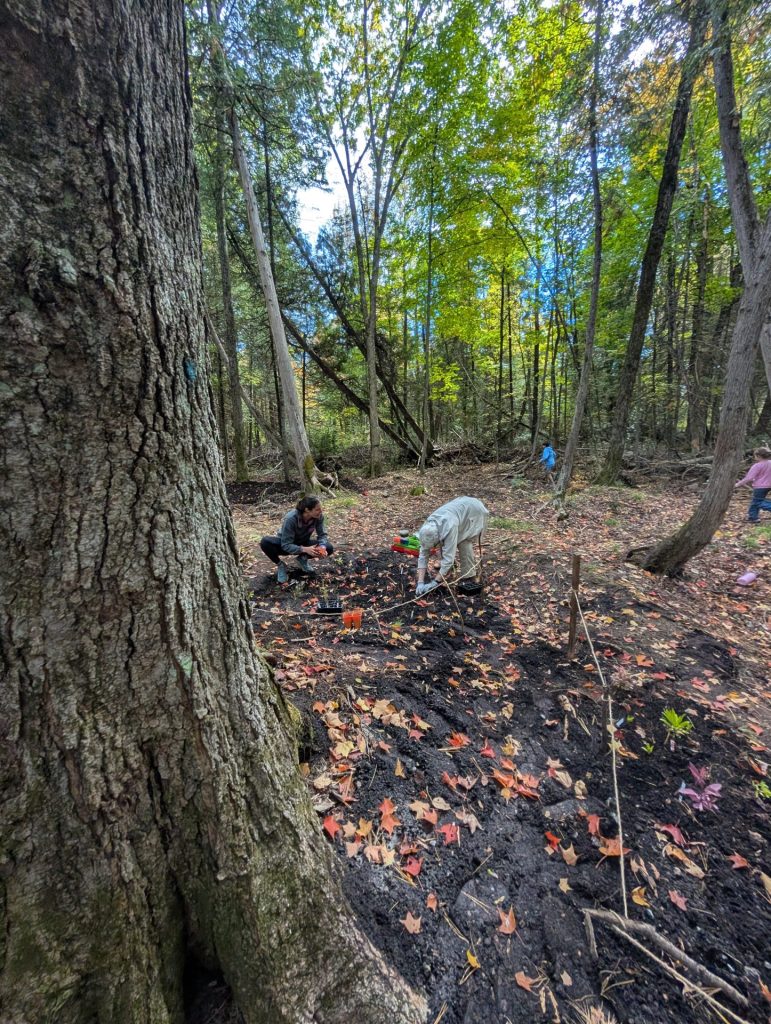
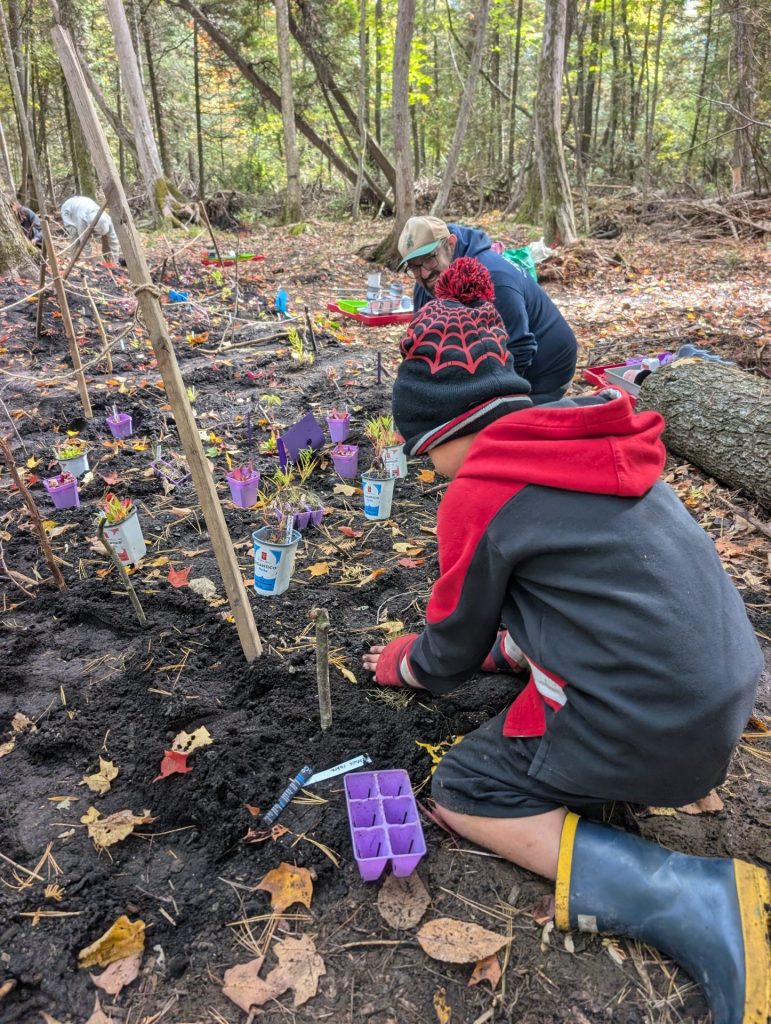
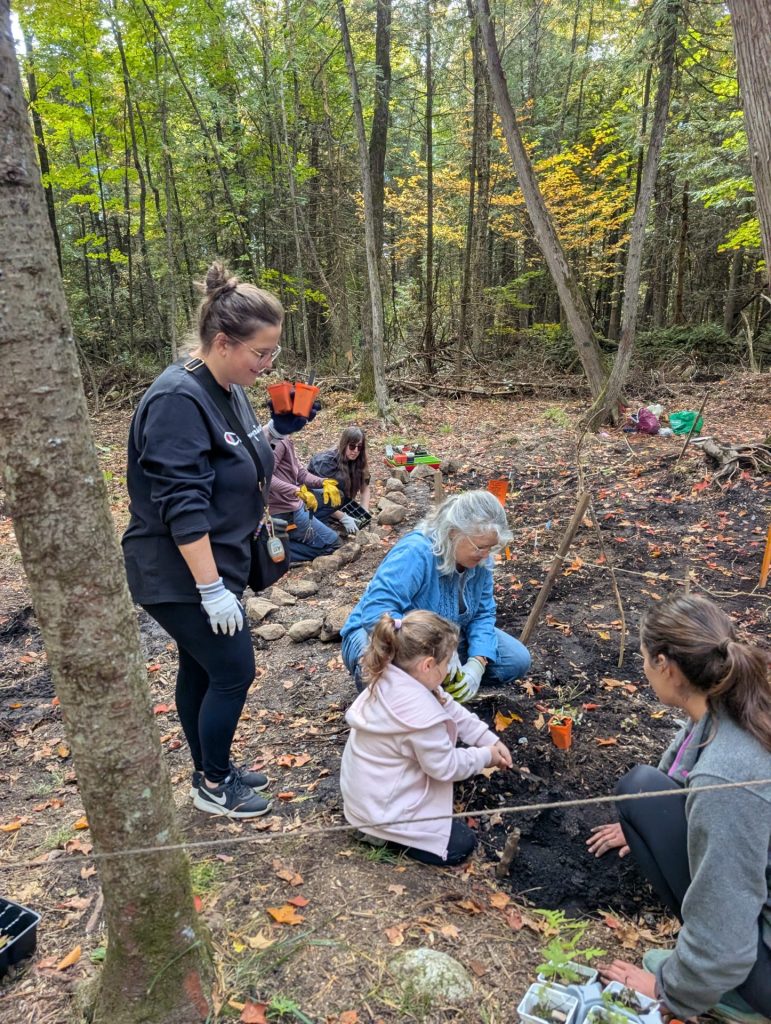
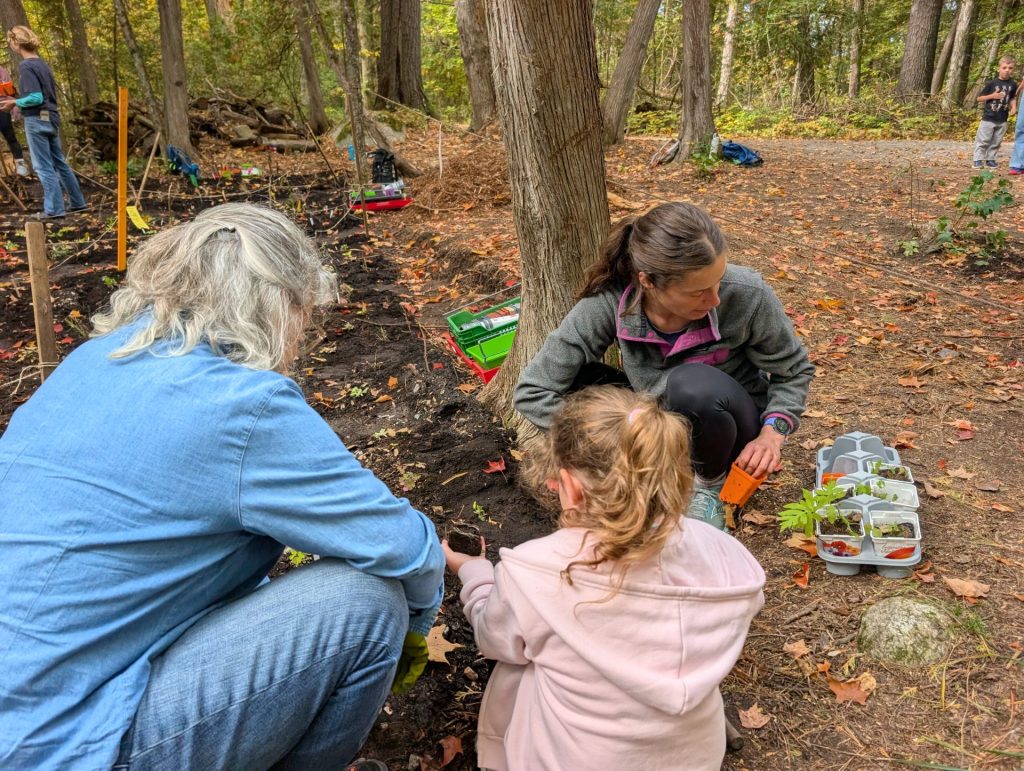
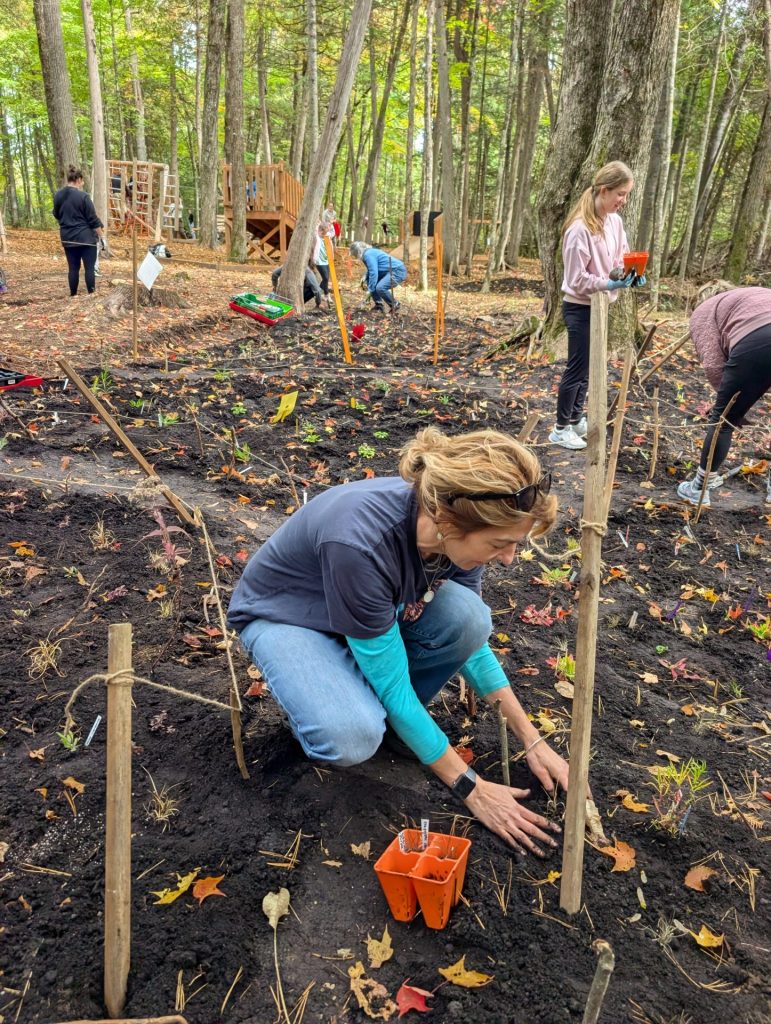
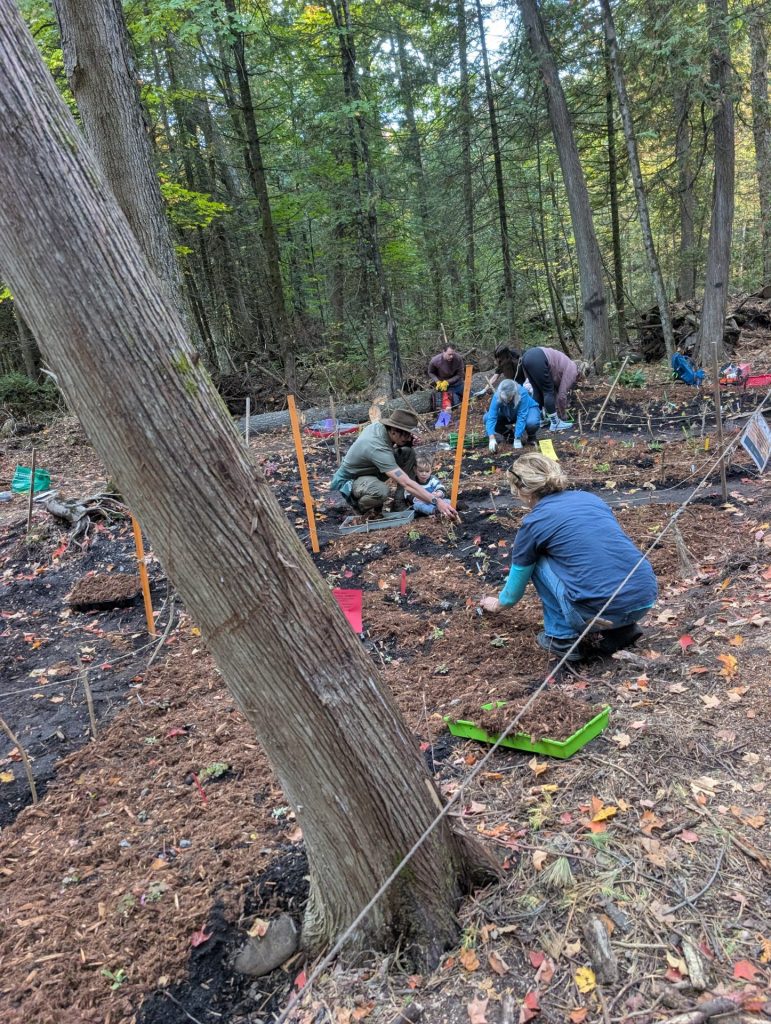
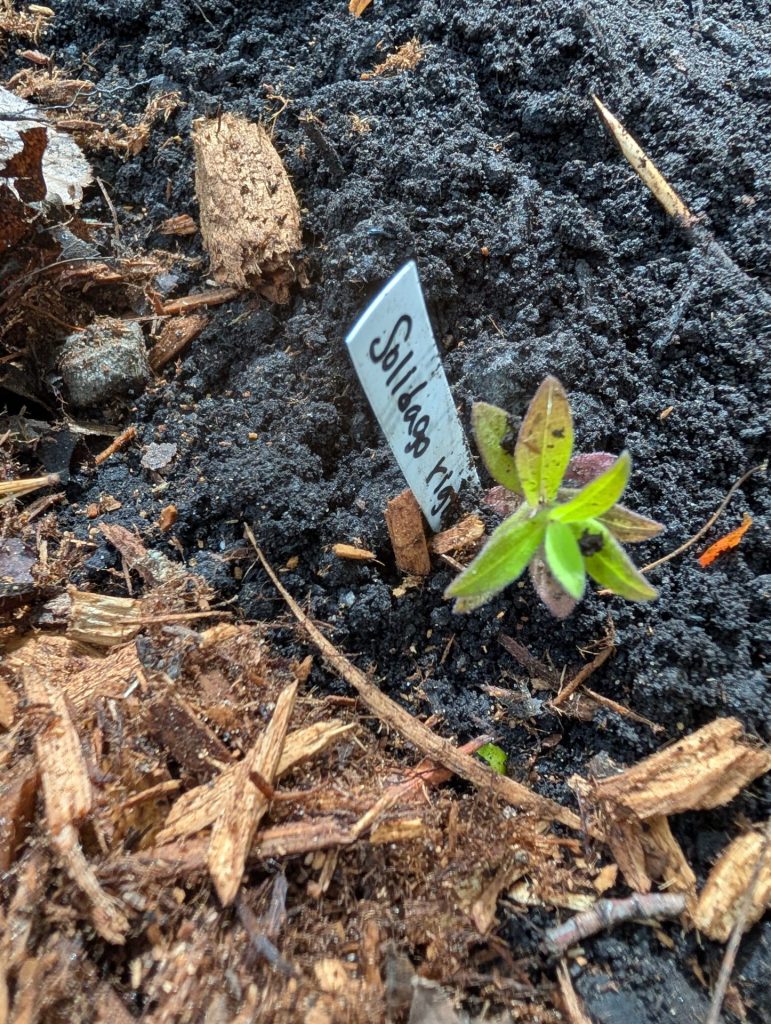
By the time the planting was finished the pathways were thoroughly compacted, and with the help of some very tiny hands, we laid a thin layer of cedar mulch on top, largely hoping the little critters of the forest would leave the roots of our plants untouched long enough for the young plants to establish their own grip.
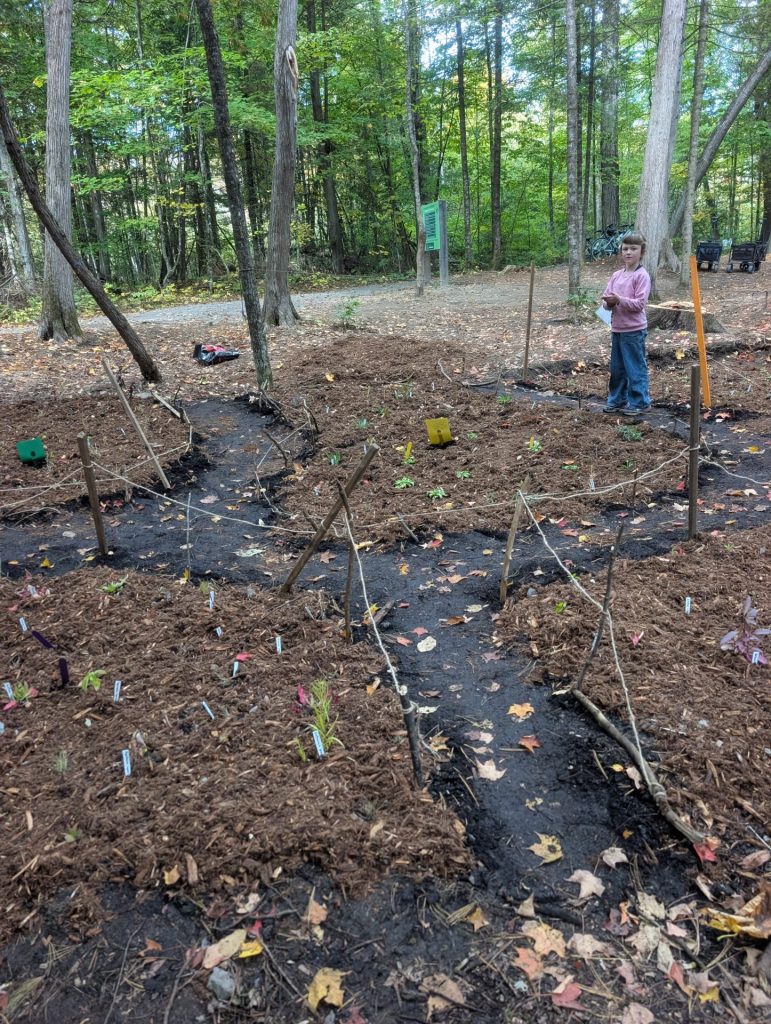
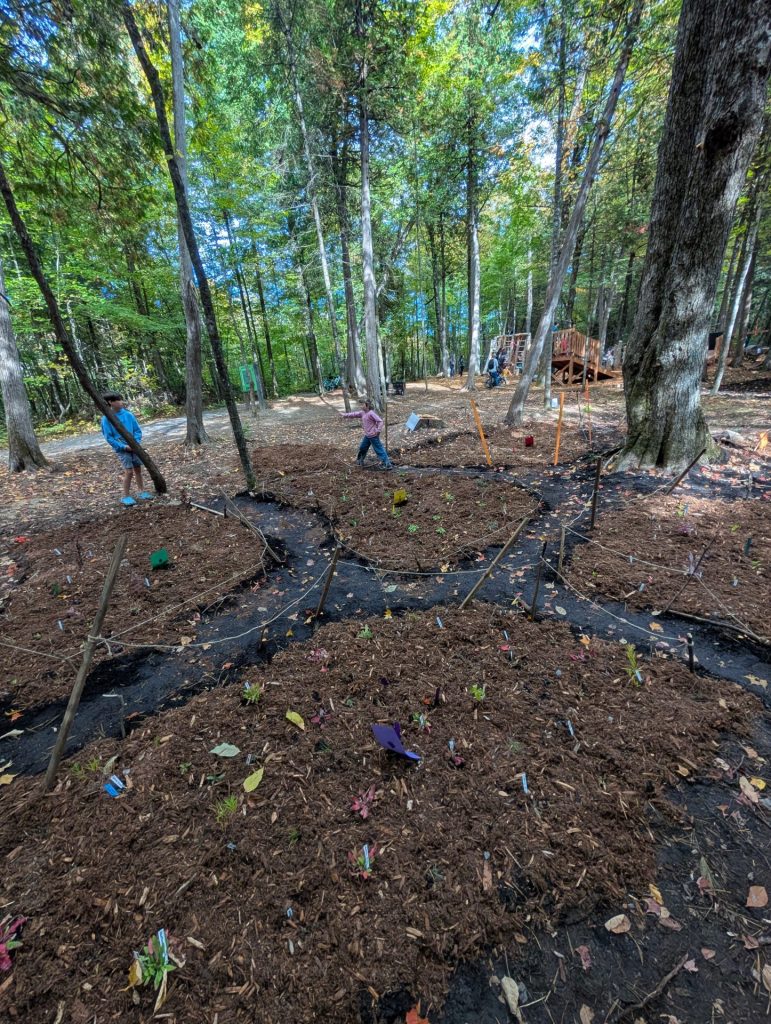
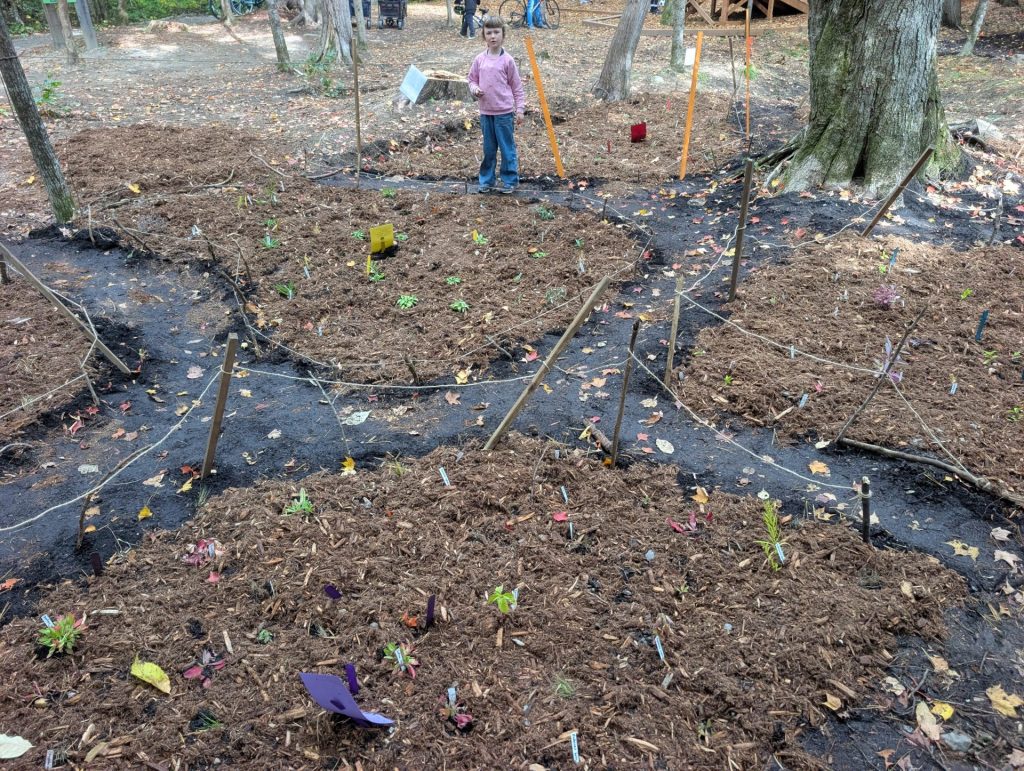
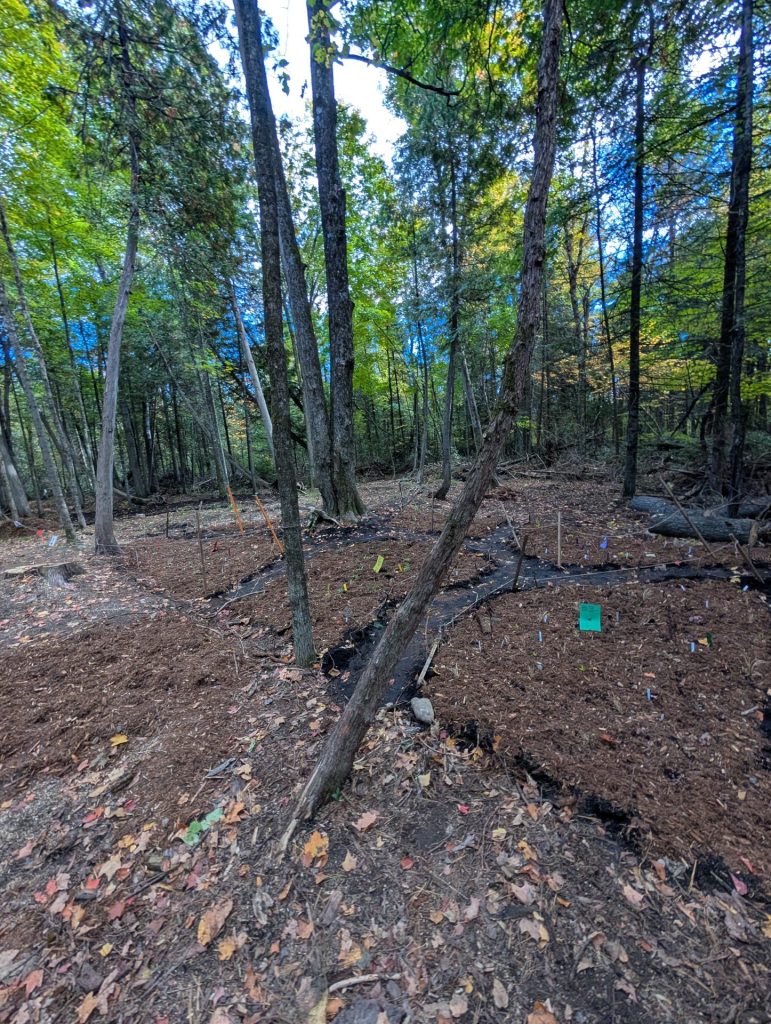
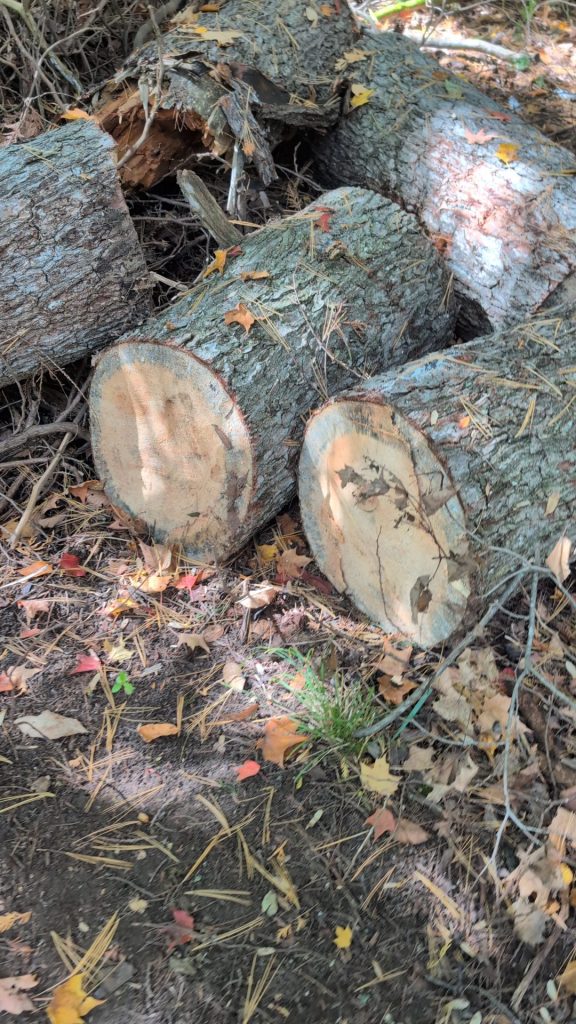
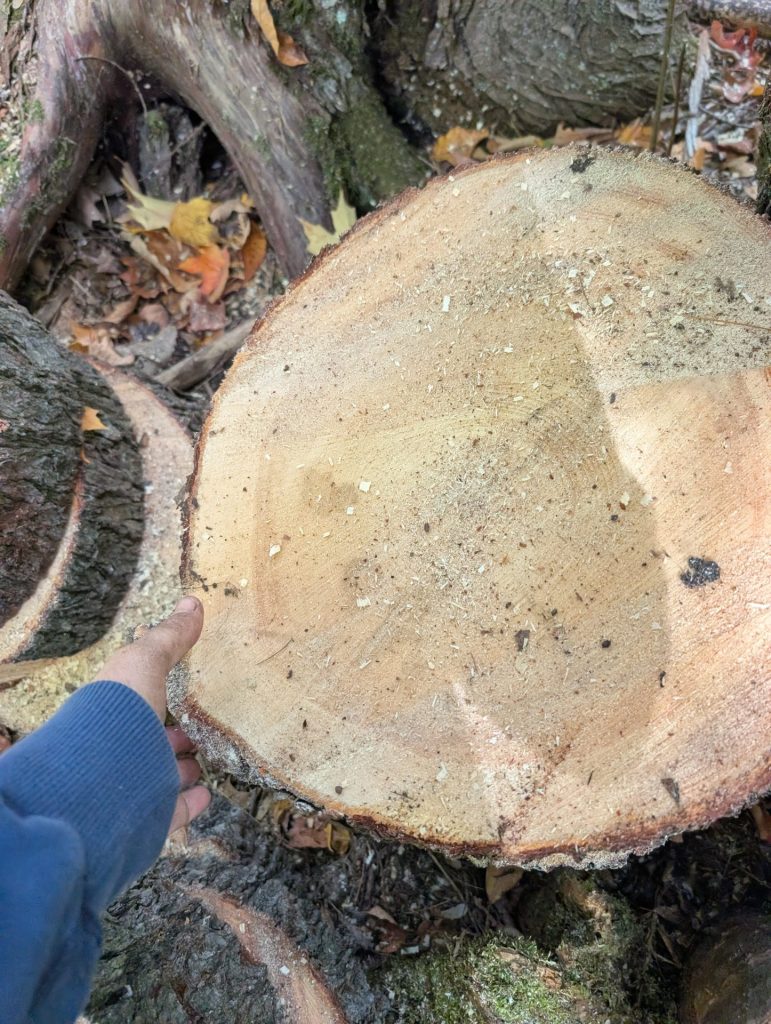
We ended the day on that high note, with plans to return for part 2 the following week, once Nathaniel cut up several of the fallen tree logs into thick slices for us.
PART 2 – pathways, sedges and grasses
Walking Pathways
We returned to the site with our remaining plants, and found just over 50 freshly cut wood disks waiting for us.
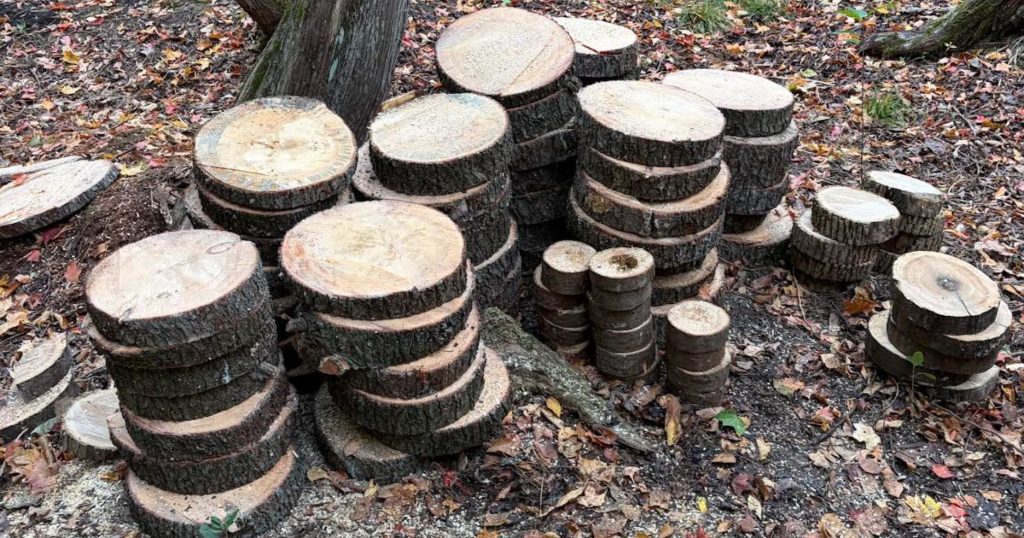
We placed them randomly along the paths, then took our time re-fluffing the beat-down soil, so as to sink the wooden disks a little in it, and give us more space for planting in between. This last part took forever, but once done the walking paths were quite a bit more stable, and we imagine them settling even more with time.
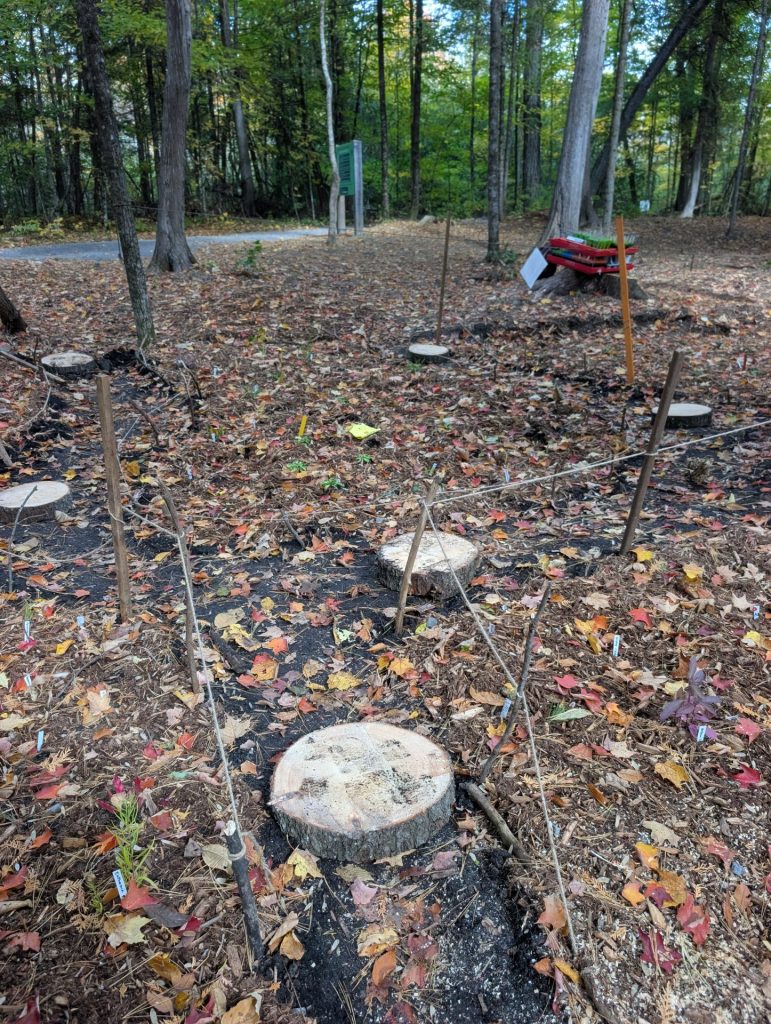
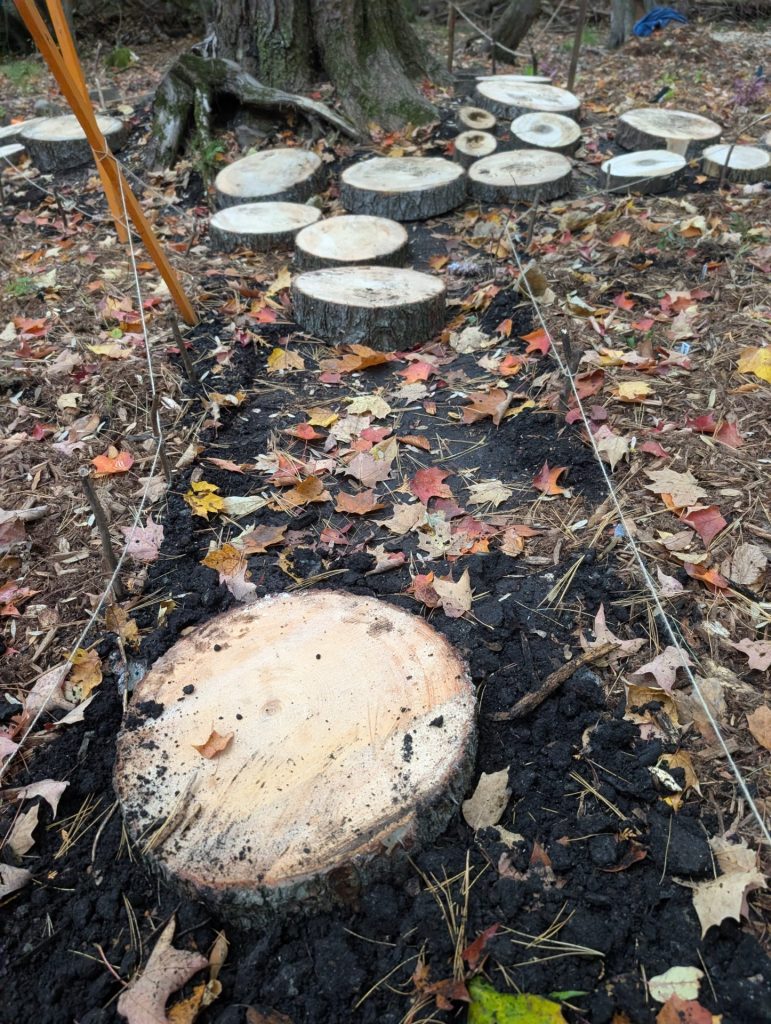
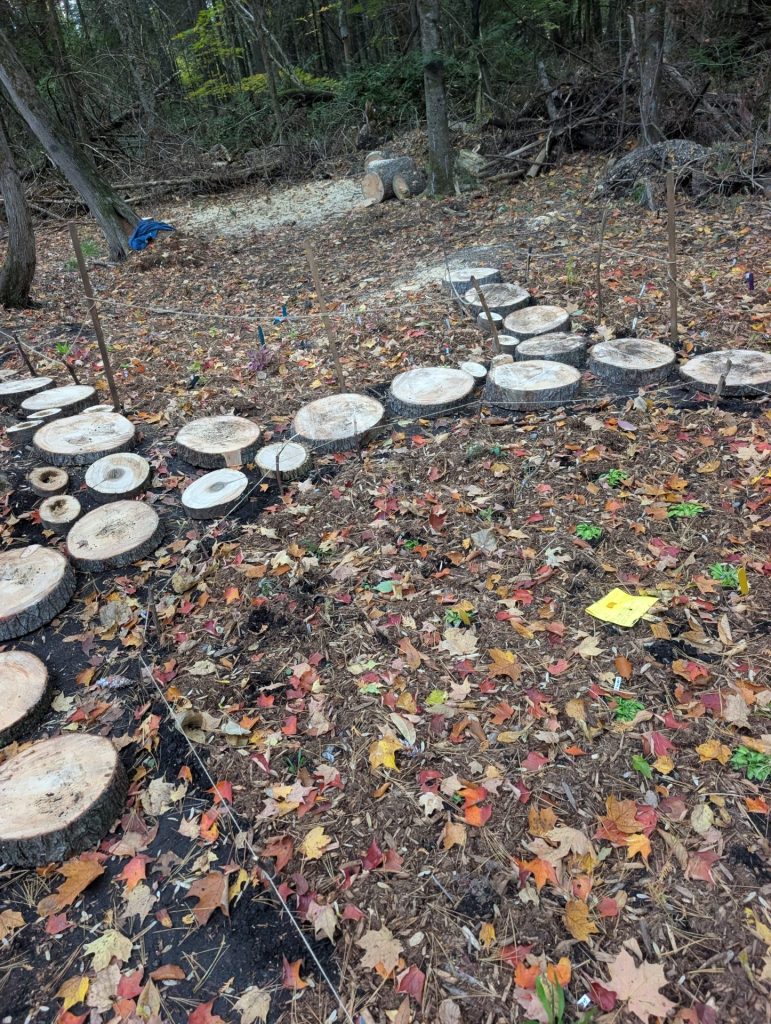
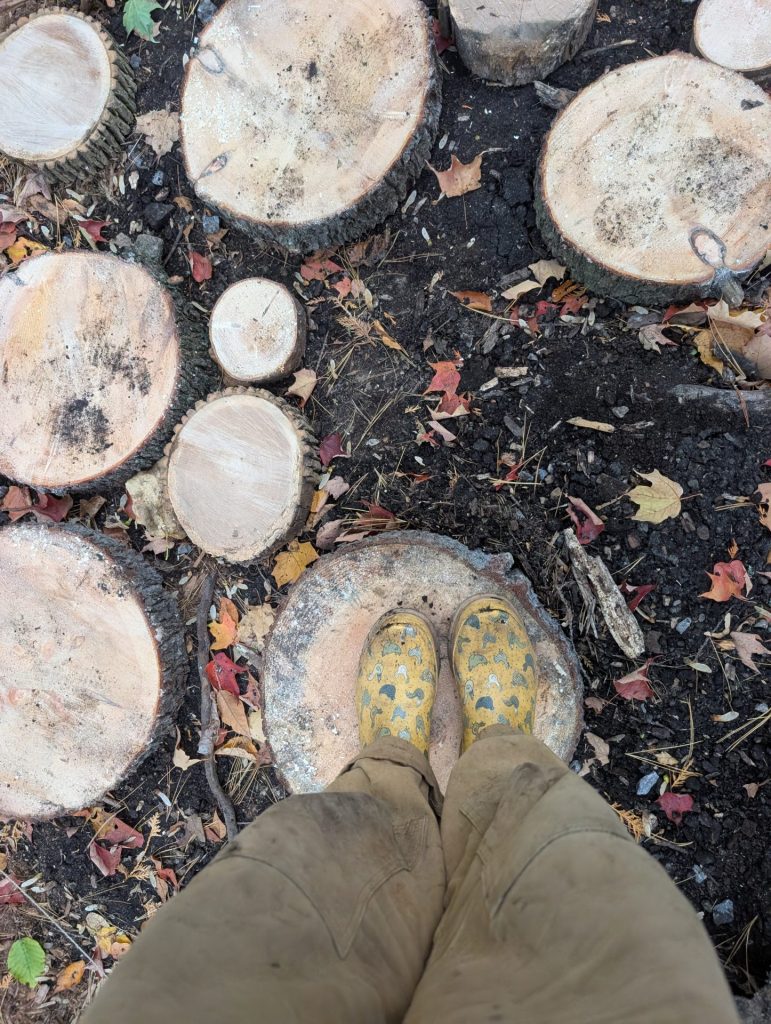
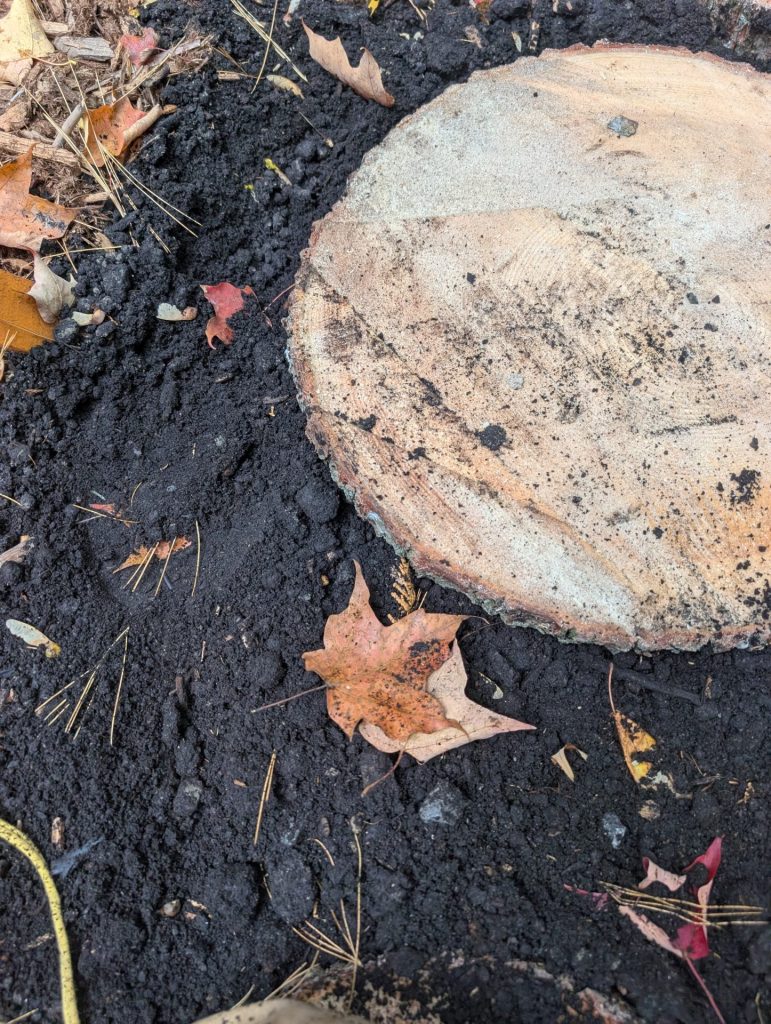
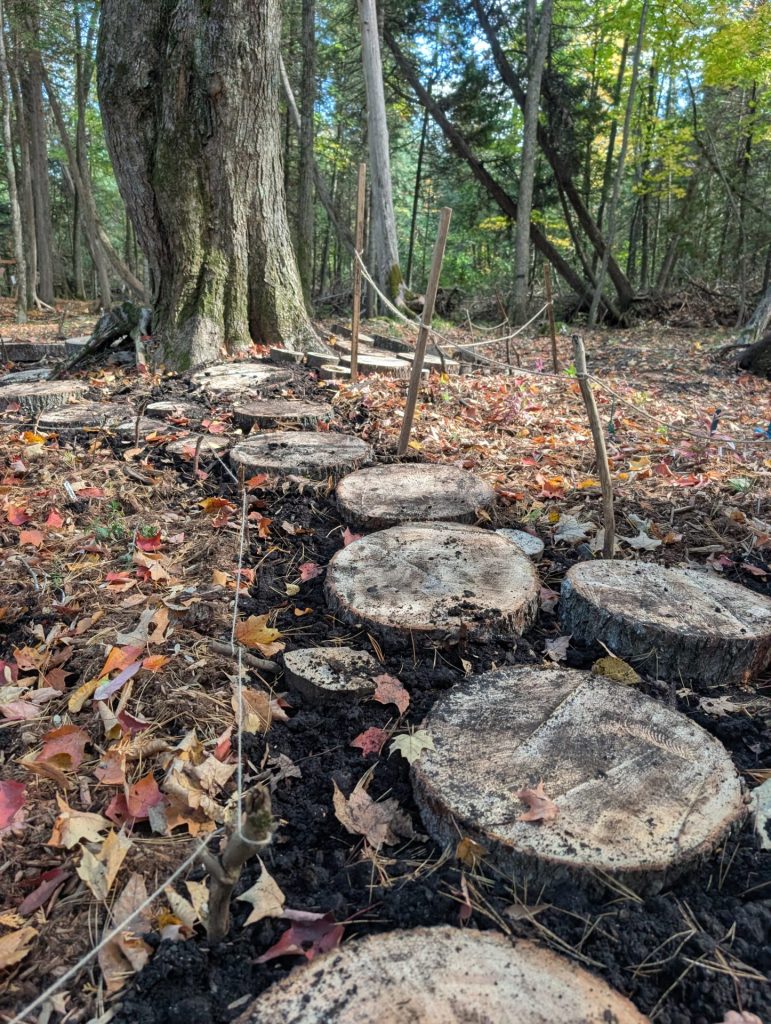
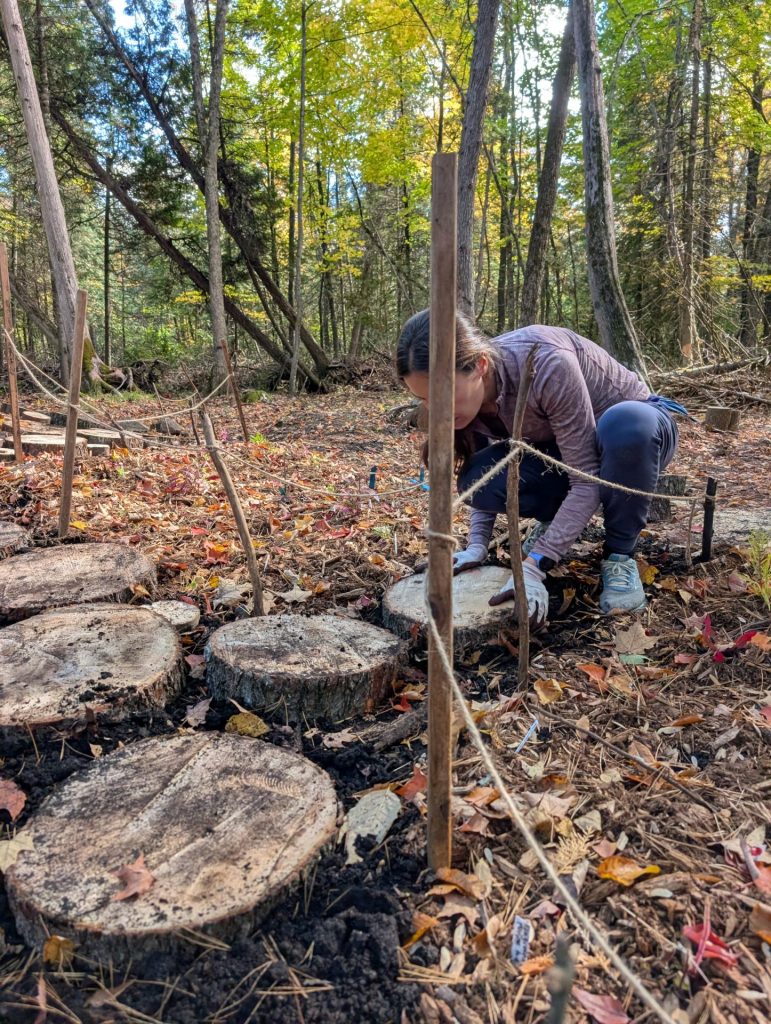
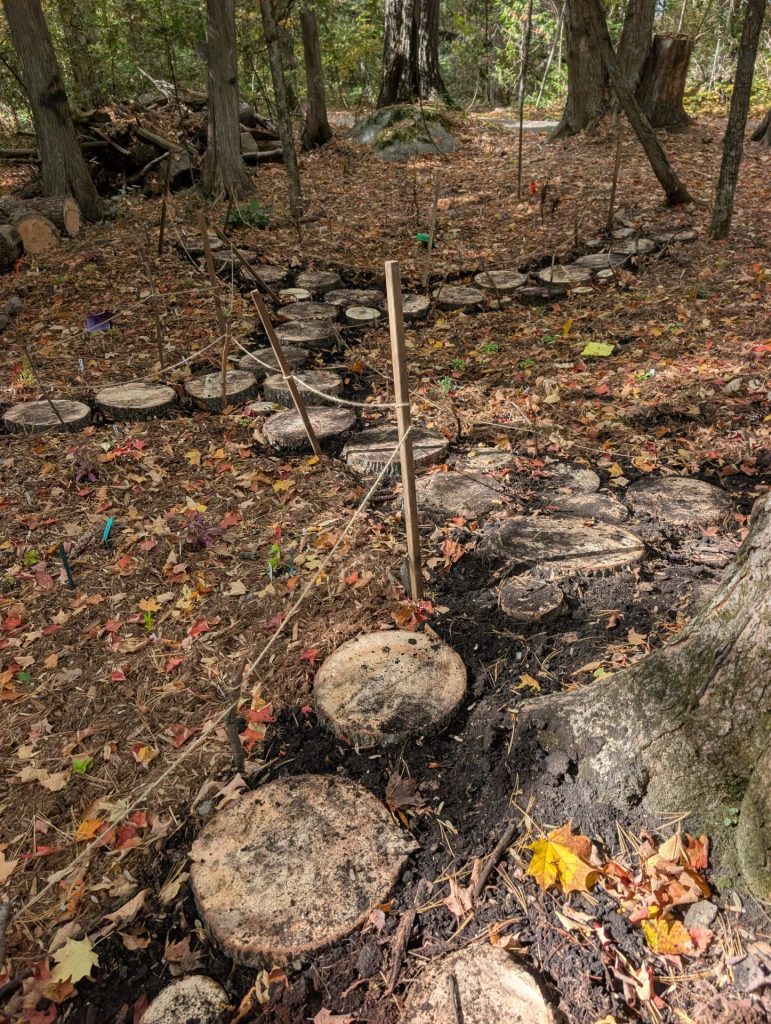
Once finished we mulched between the stepping stones a little as well, and found the contrast suddenly became a subdued, almost as though the forest swallowed them, and make them hers.
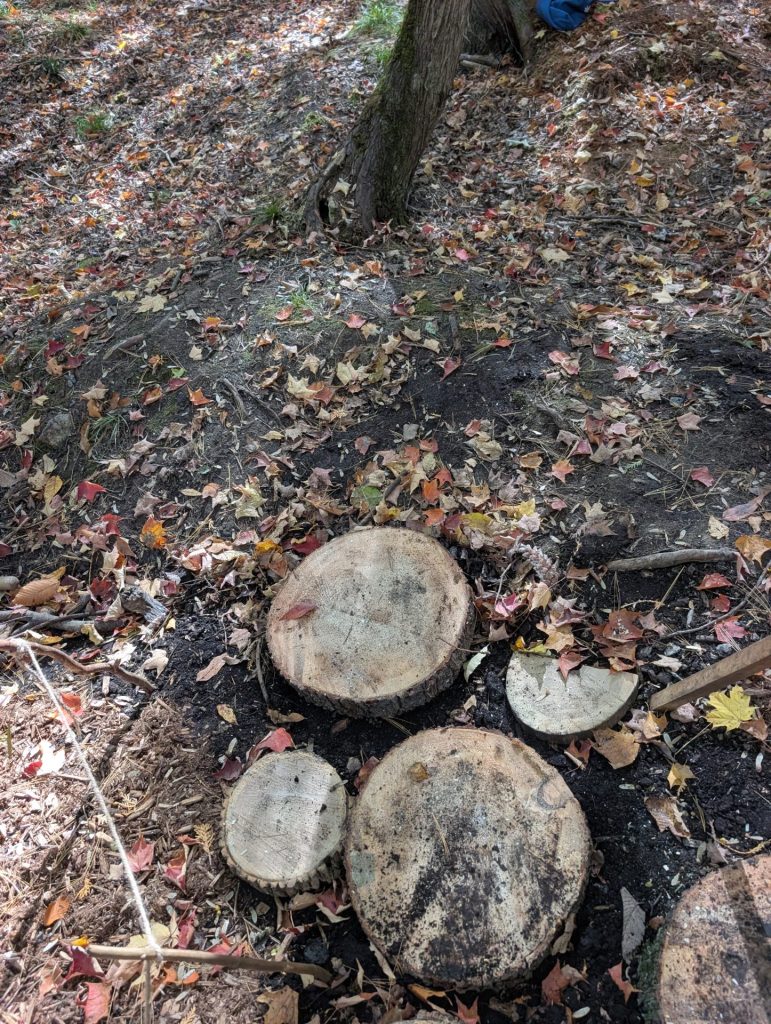
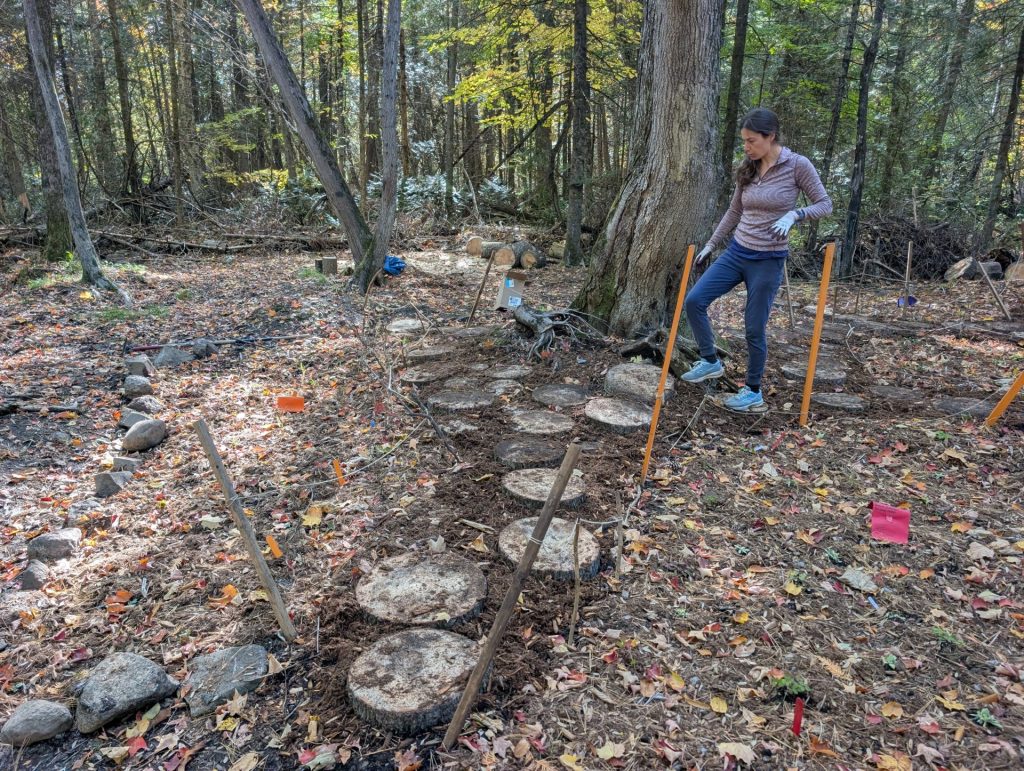
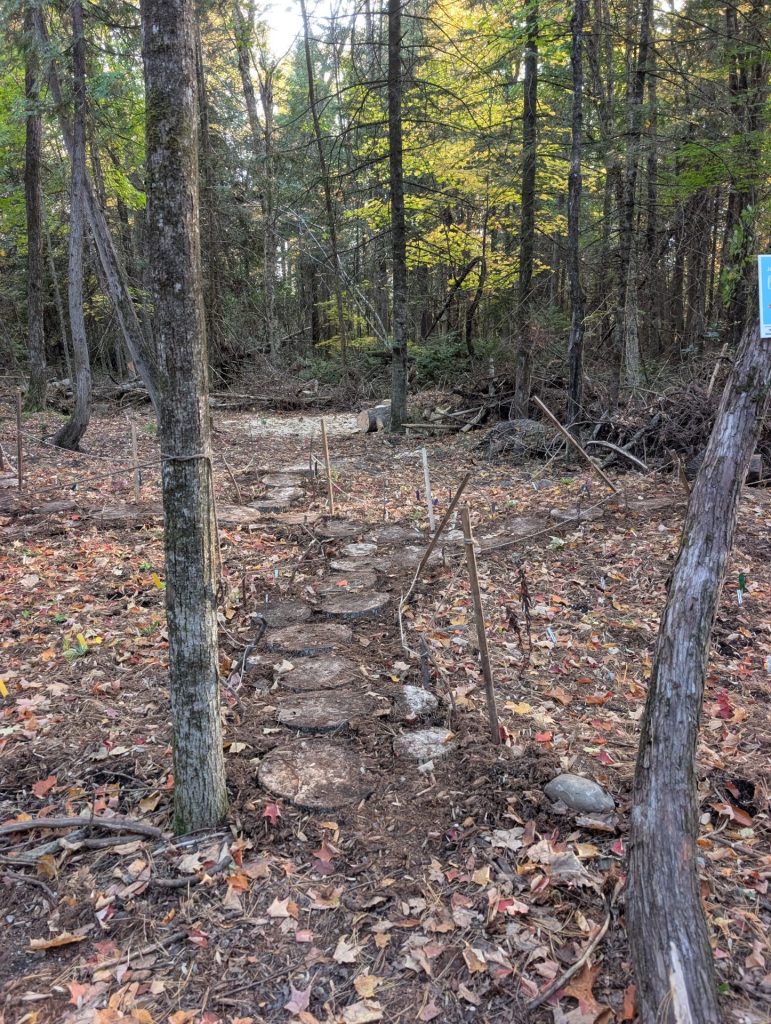
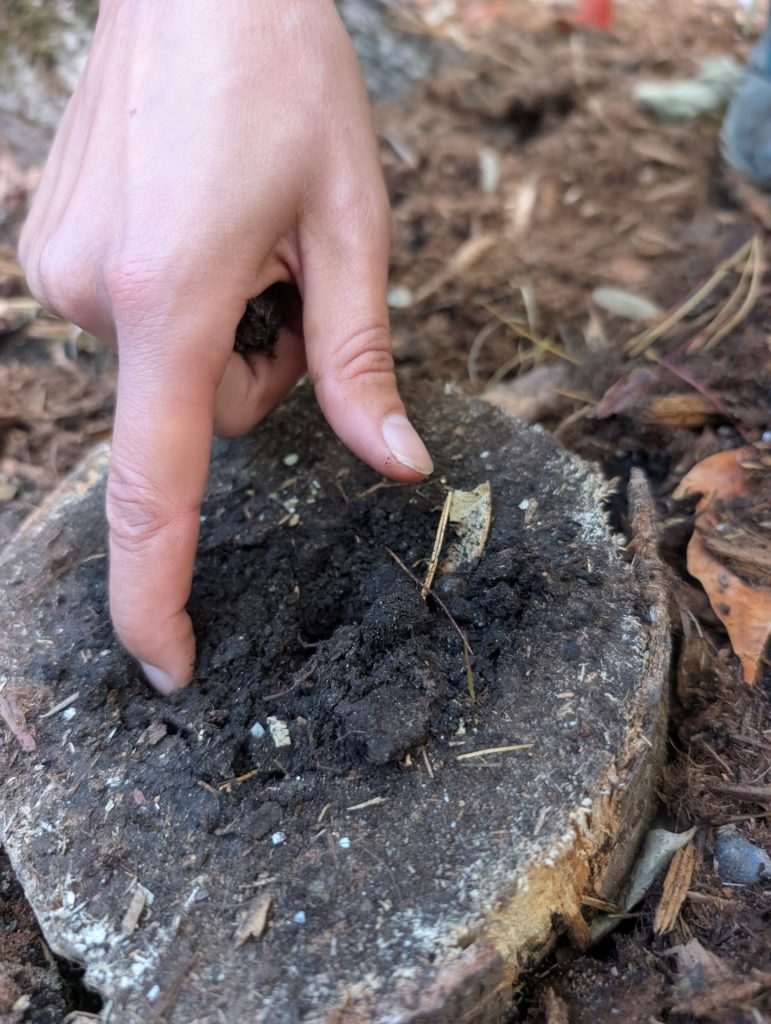
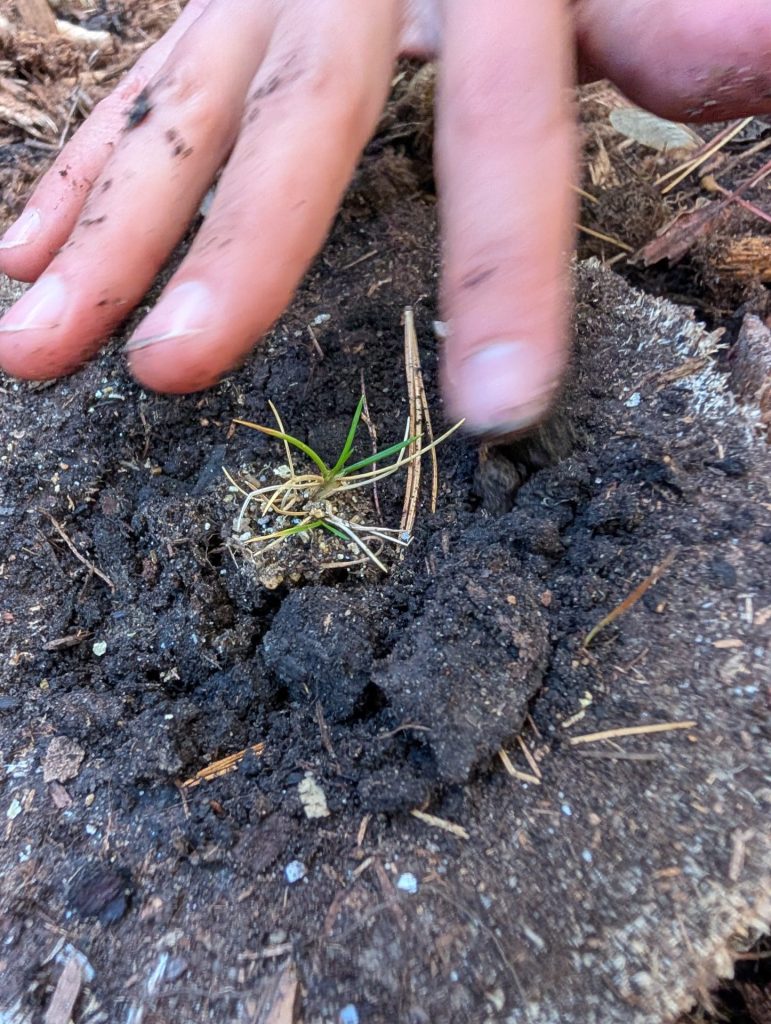
We planted the remaining short grasses to line the borders of the pathways, and added pockets of various sedges near the central tree trunk, as well as between and inside the path pavers themselves.
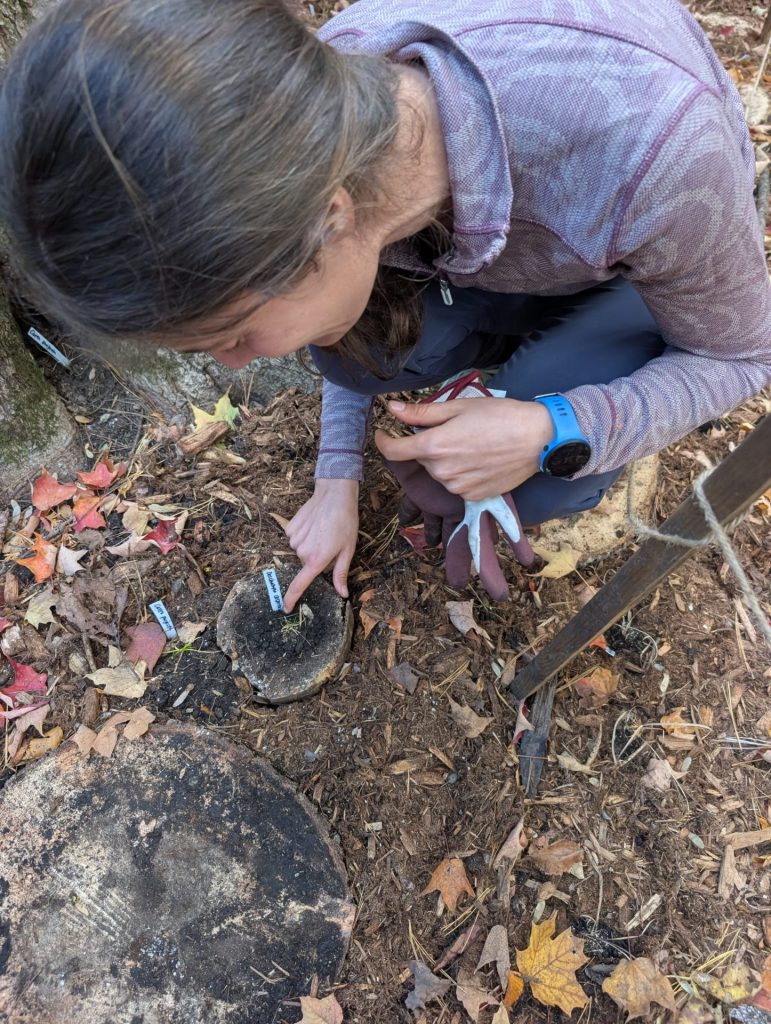
#ButterflywayAylmer stop complete
Finally, planting complete, we hung our Butterflyway Aylmer sign, despite knowing a far more beautiful and permanent sign is coming.
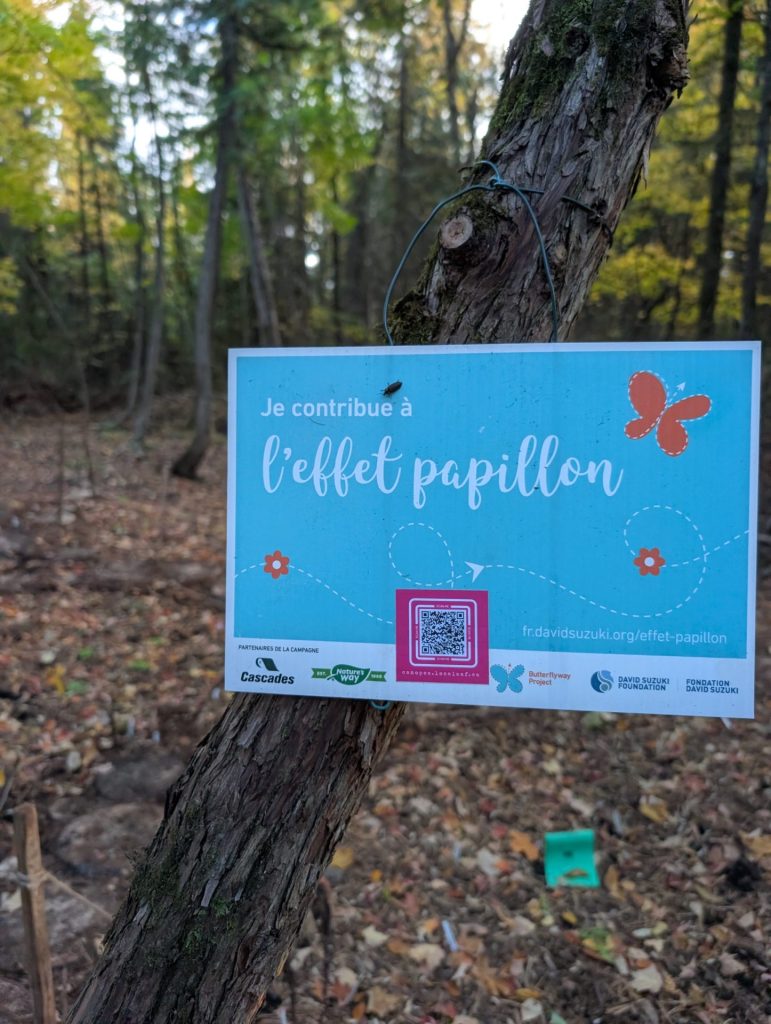
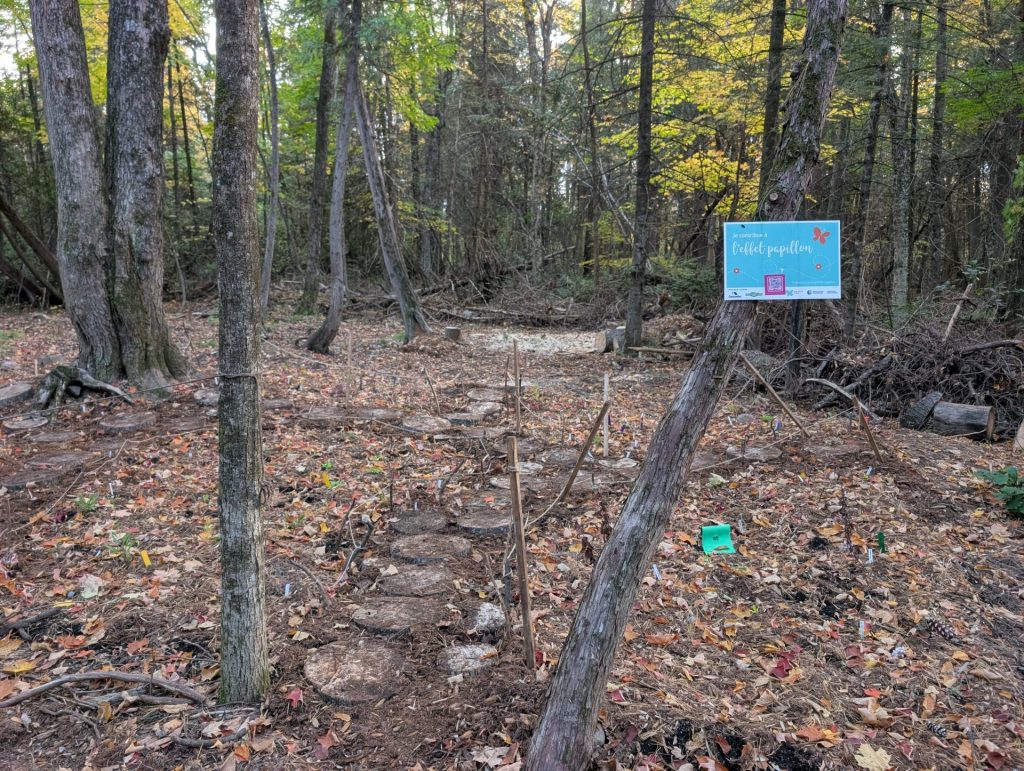
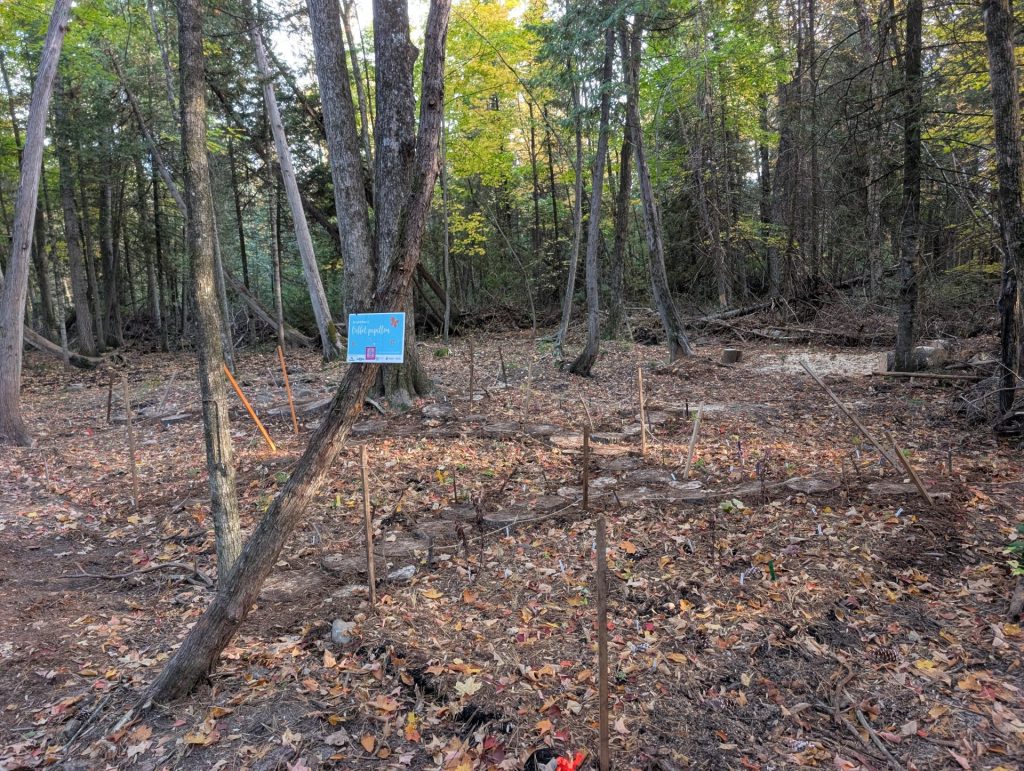
This planting, with the help of so many Aylmerites in our community, constituted the first of several pollinator gardens we are planting in Boucher Forest. The next 4 or 5 will be planted with elementary students from several nearby schools, as part of the Little Steward workshop series that Canopée Localeaf has developed and customized specifically for the Boucher Forest setting. If you want to learn more, check out the Workshops section of our non-profit initiative, Canopée Localeaf, or get in touch.
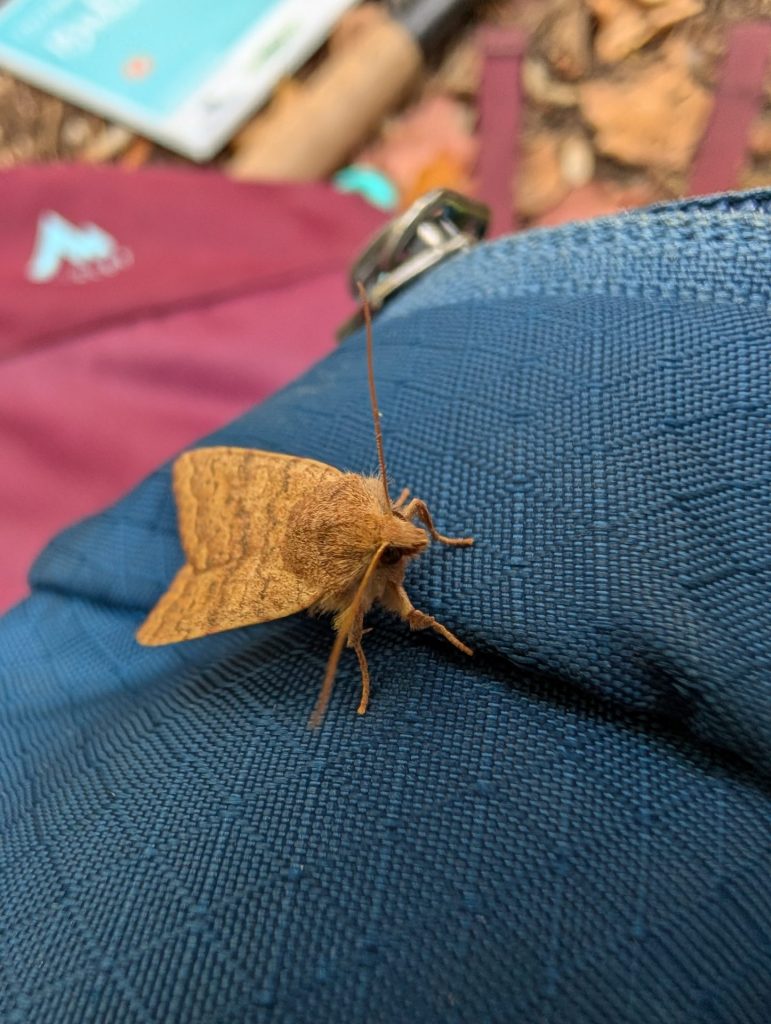
Better yet, go for a walk in Boucher Forest while the leaves are still on fire, stop by the site, and walk through the paths of our pollinator garden, and tell us what you think. We’d love to hear your thoughts.

Leave a Reply