I keep starting blog posts and not finishing them lately, mostly because I get busy, with life, in the garden, or just get distracted, in part by plants, but increasingly more by the critters that visit them, though.
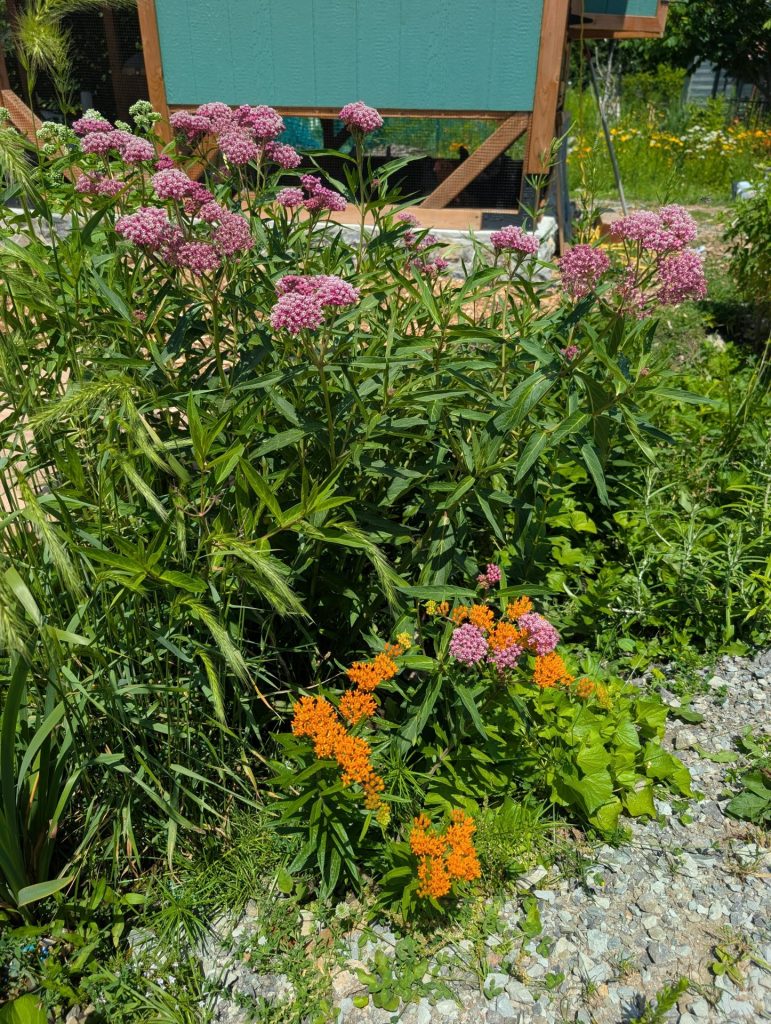
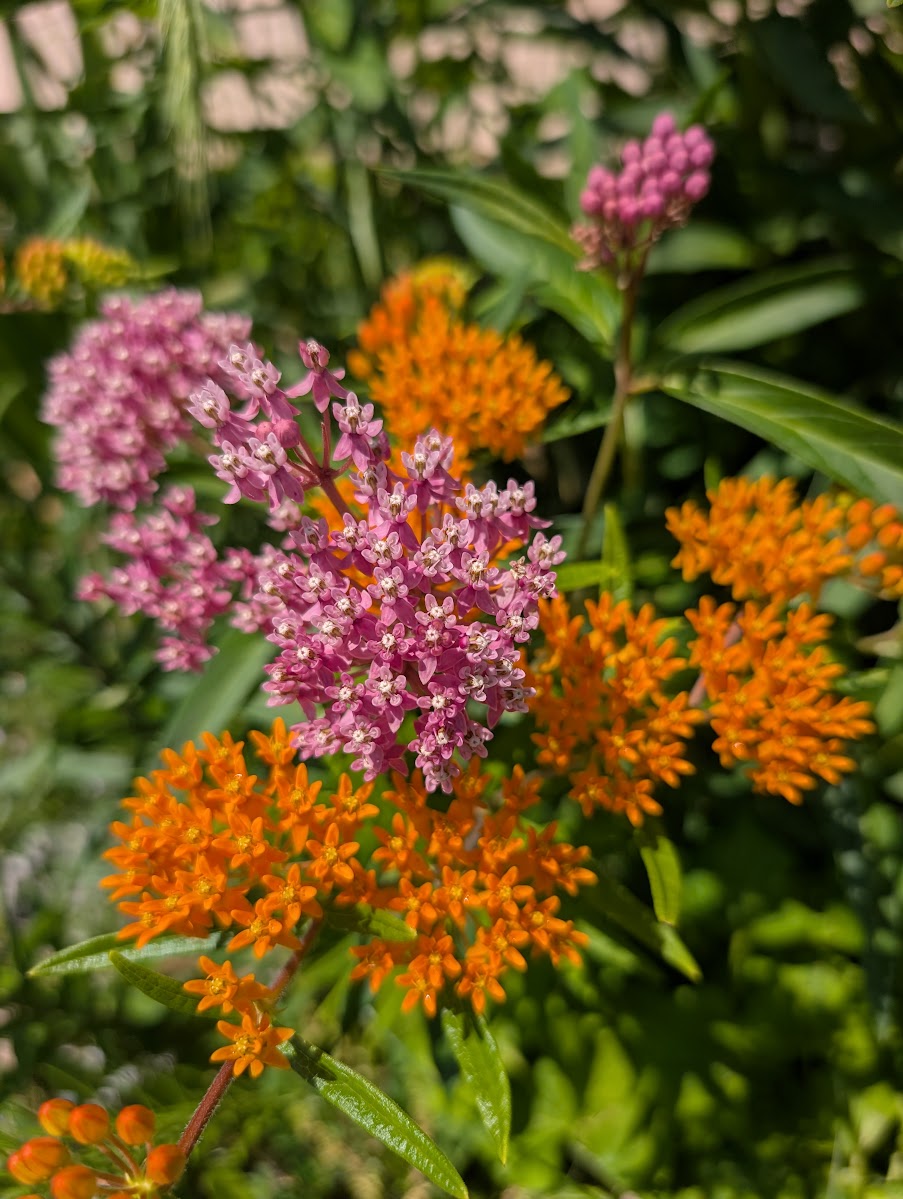
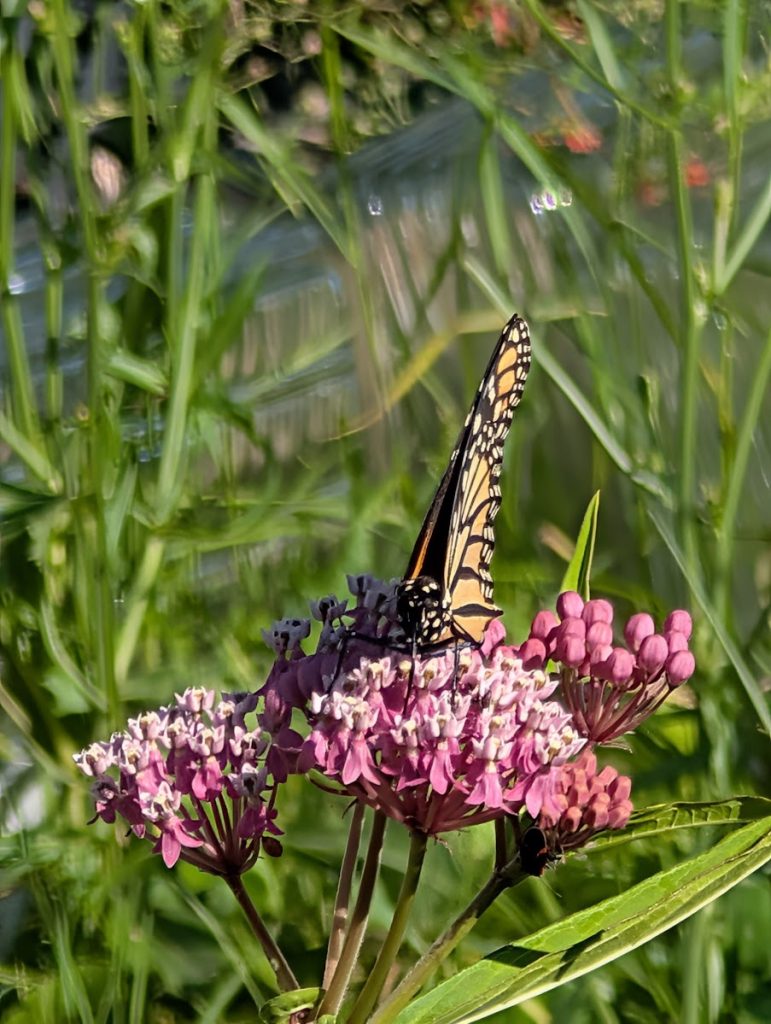
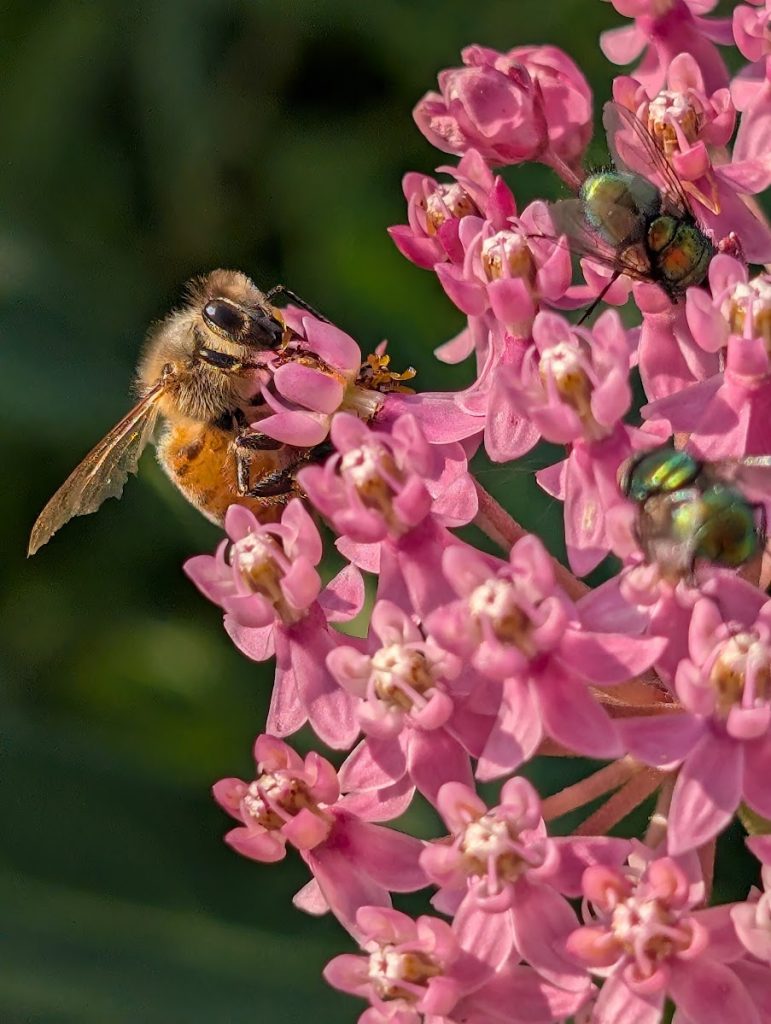
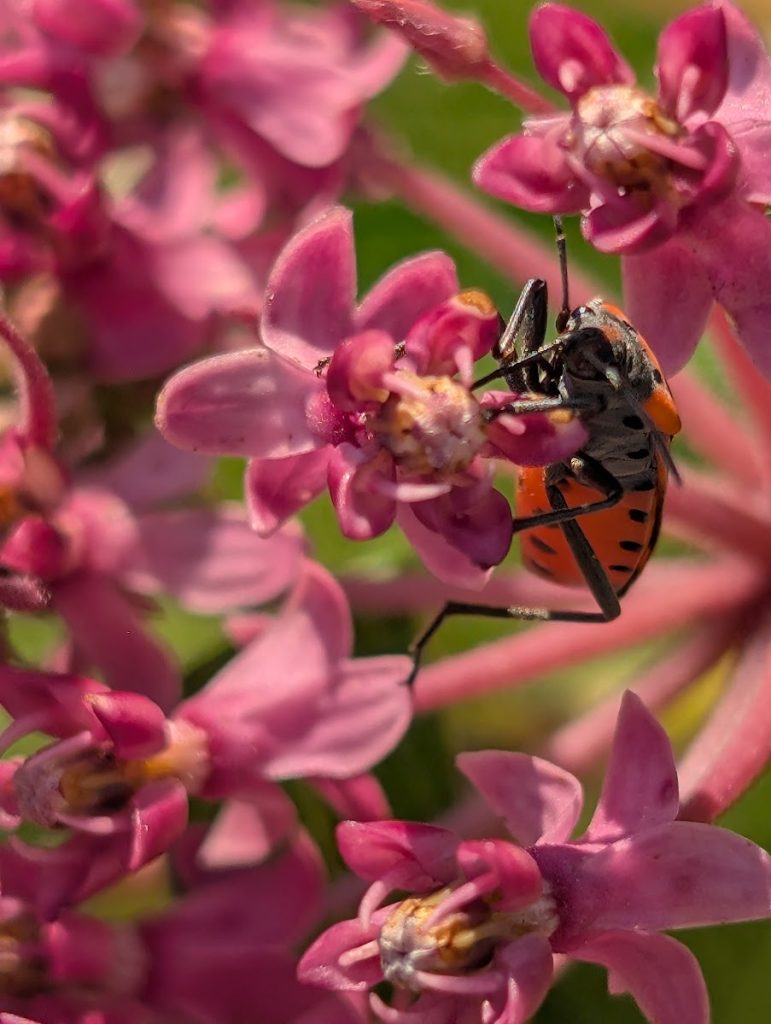
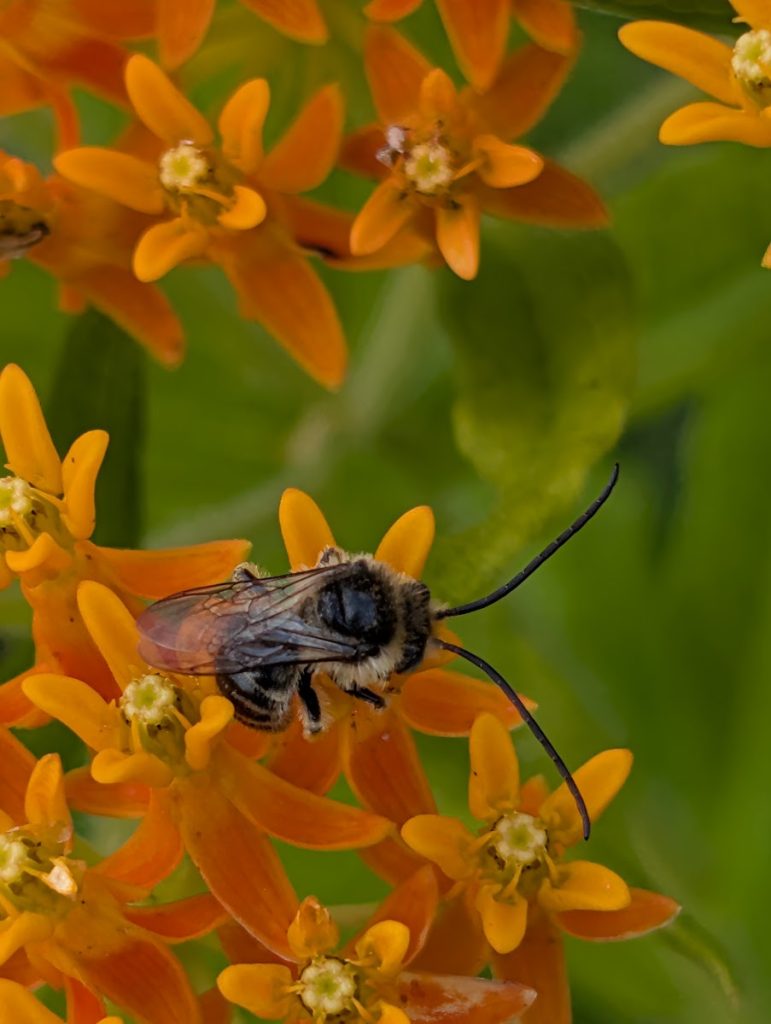
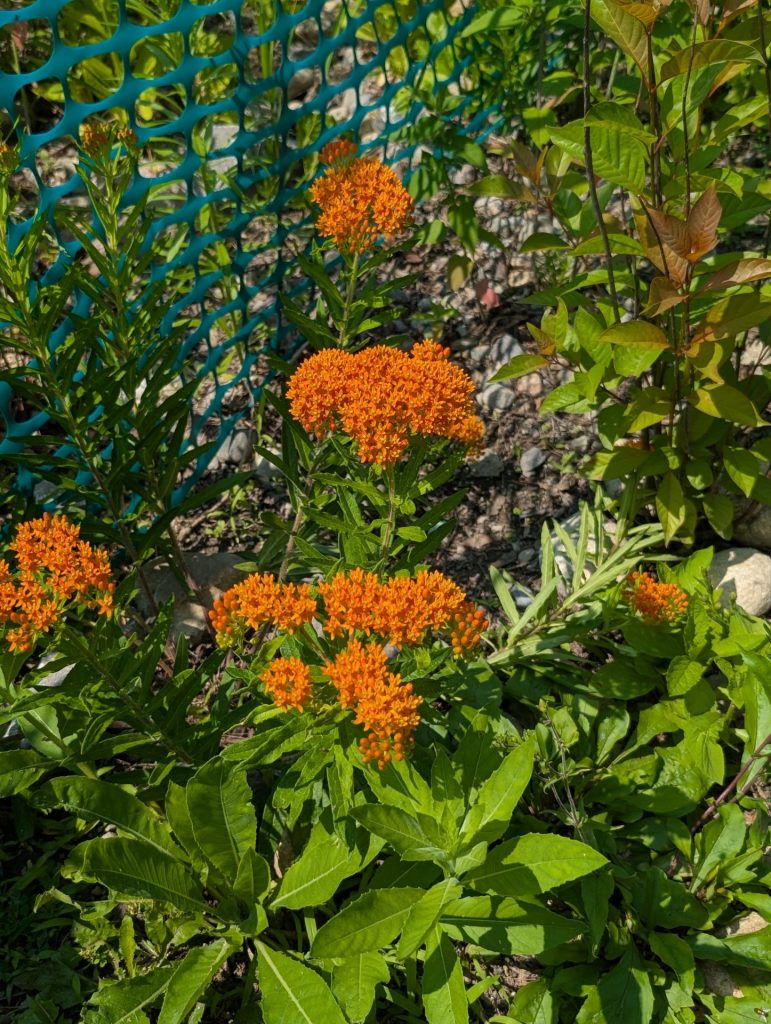
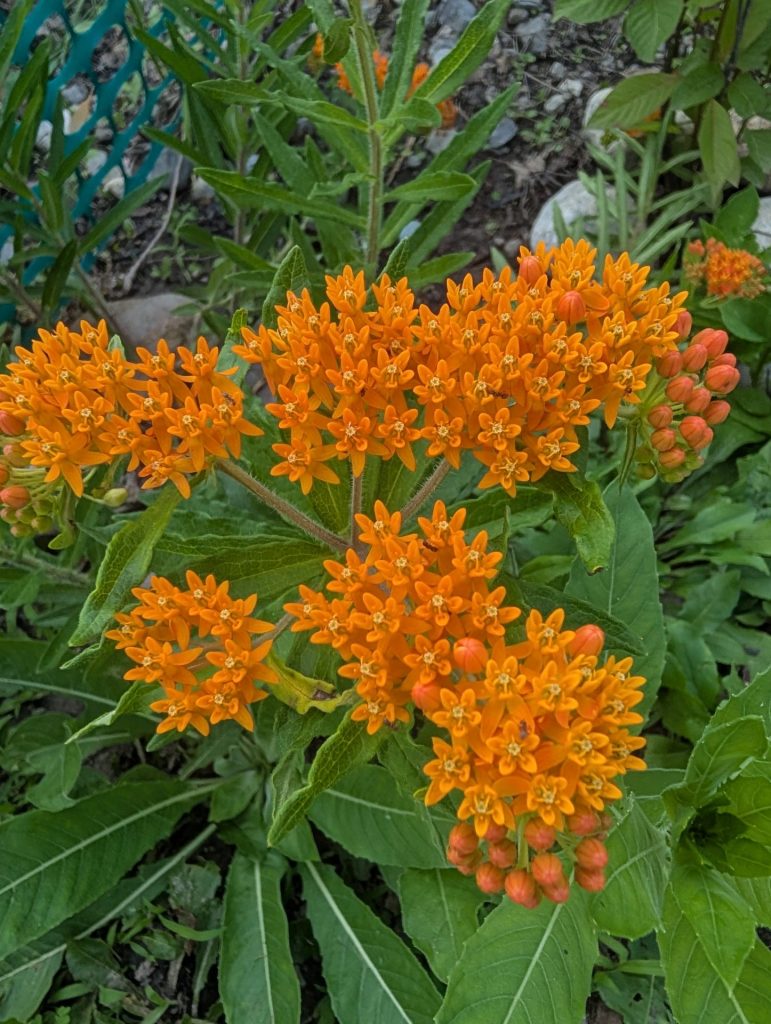
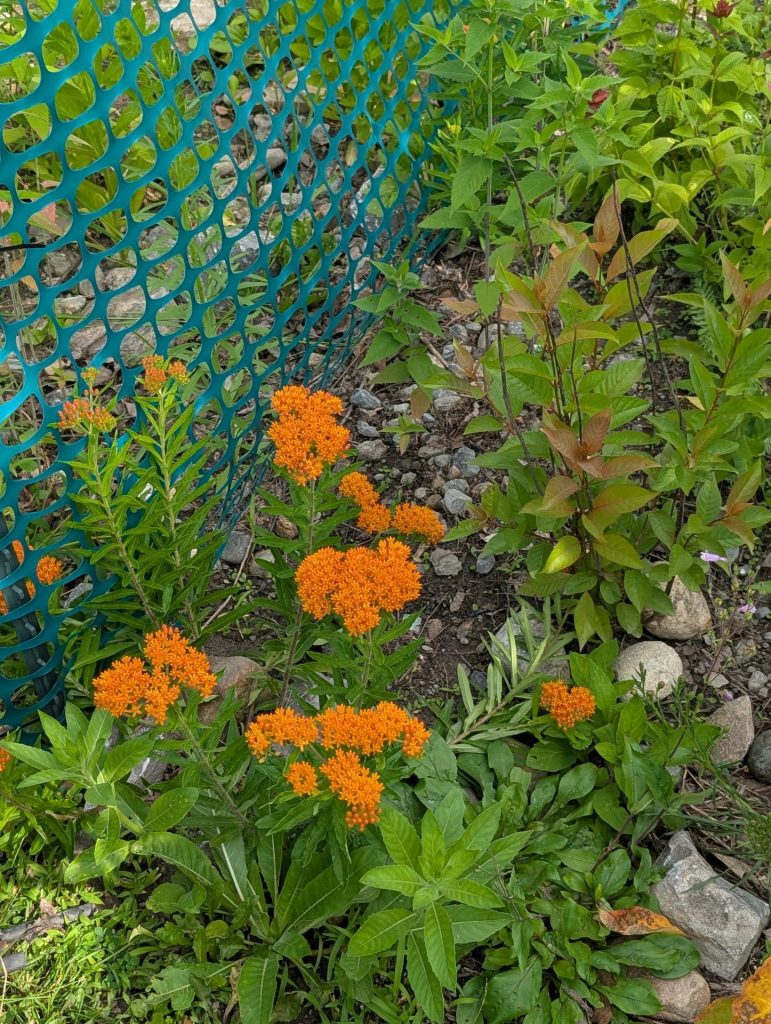
These critters do not disappoint. Monarchs are a daily treat with morning coffee lately, which I expected considering the amount of milkweed I planted around the property last year. What I had not expected or planned for was the level of maturity some of these plants achieved in a single growing season. There were, of course, predictable outcomes, such as swamp milkweed delighting deeply in the rain garden, and butterfly milkweed bushing along the newly created shoreline. The combination of the two, blooming and thriving together, is striking, and monarchs are not the only pollinators enjoying the abundance that is here. Have a look at some recent milkweed visitors, in particular.
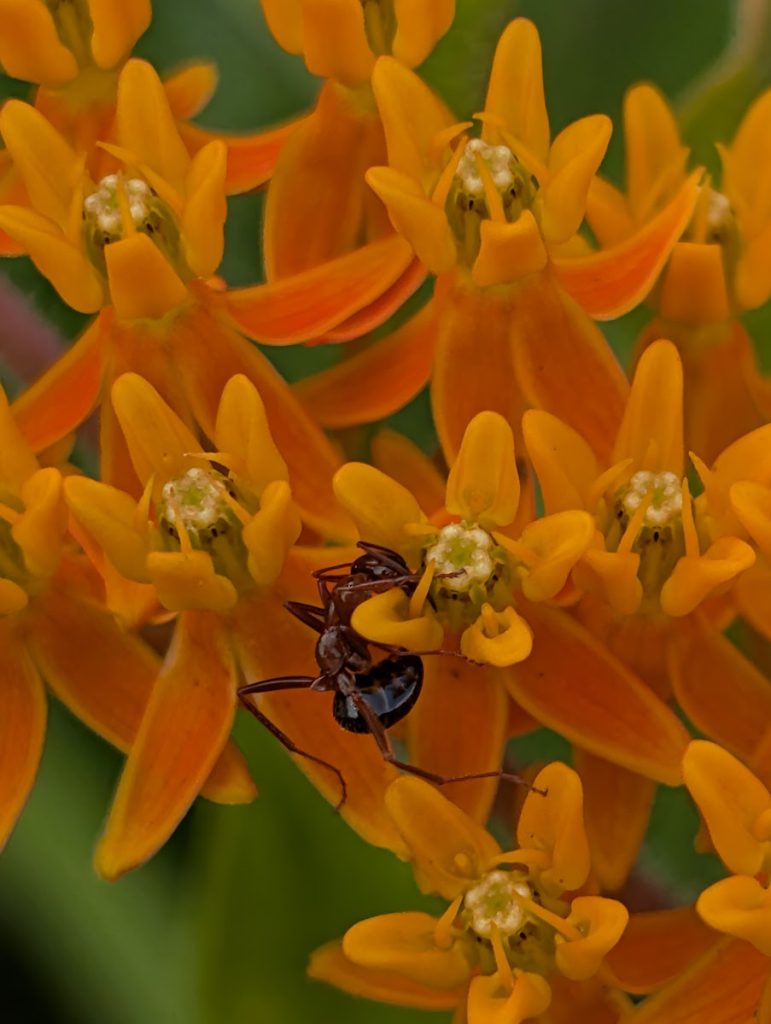
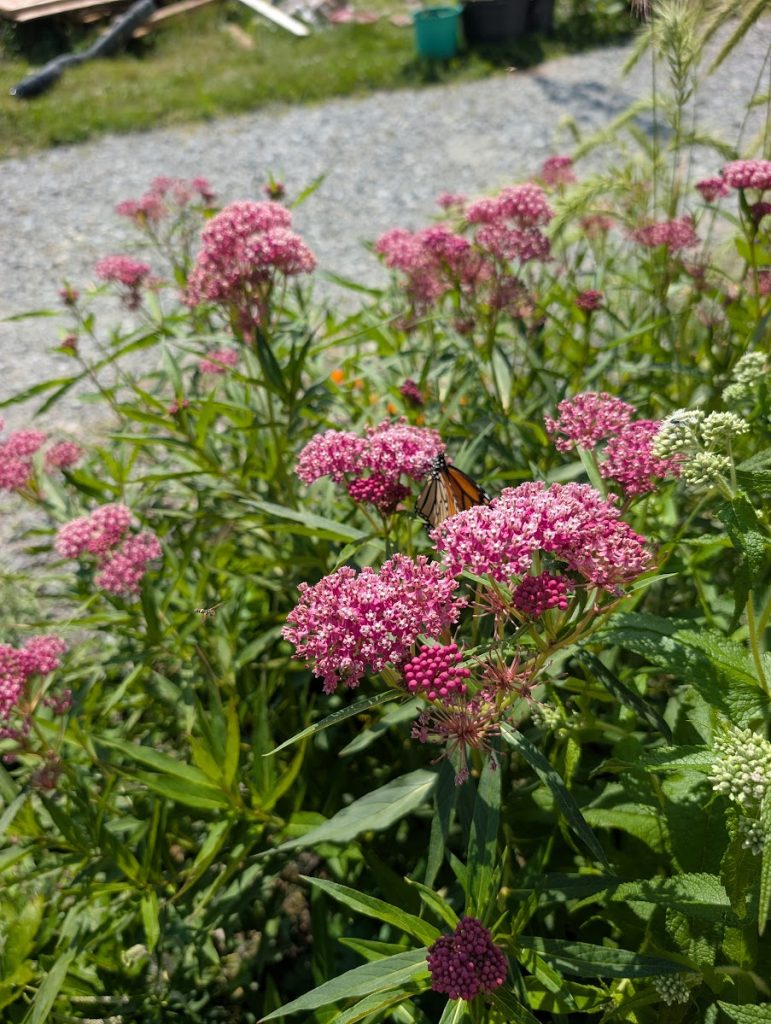
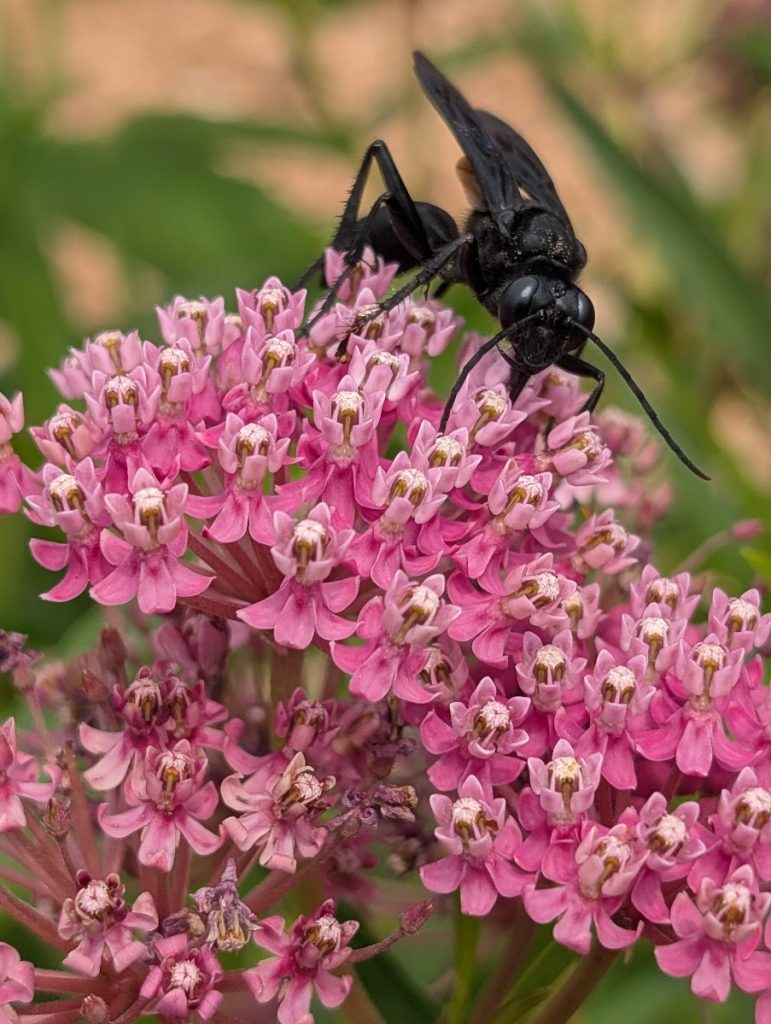
Un-Common Milkweed
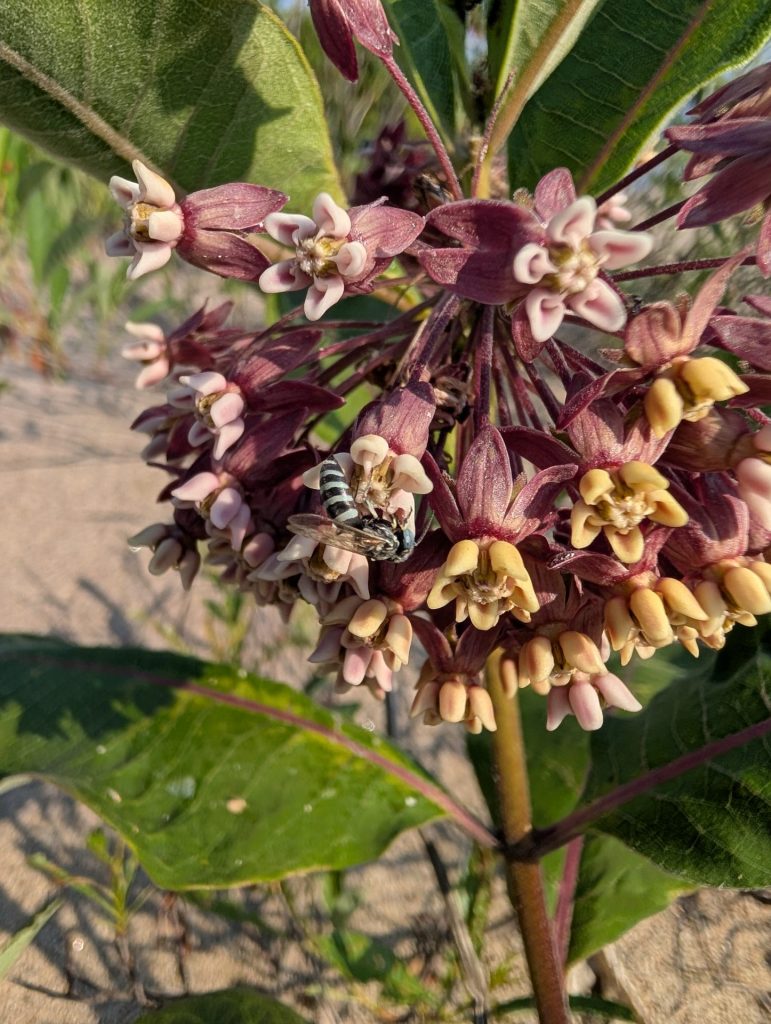
I planted multiple patches and sporadic specimens of some lesser known (to me) varieties of native milkweed last year, such as the shade loving Poke milkweed (my third attempt), whispy and delicate Whorled milkweed (this one successfully bloomed in a few places year 1), as well as some intriguing ‘lets just see what happens’ varieties like Showy milkweed, Purple Milkweed, Prairie Milkweed, and a couple of mystery come-from-away species such as Tall Green Milkweed and Antelope Milkweed, leftover from pre-Trump days where I used to sometimes order from Prairie Moon Seeds south of the border to try growing new varieties and expand the gene pool of some of favourite species.
Milkweed Progress – year 2
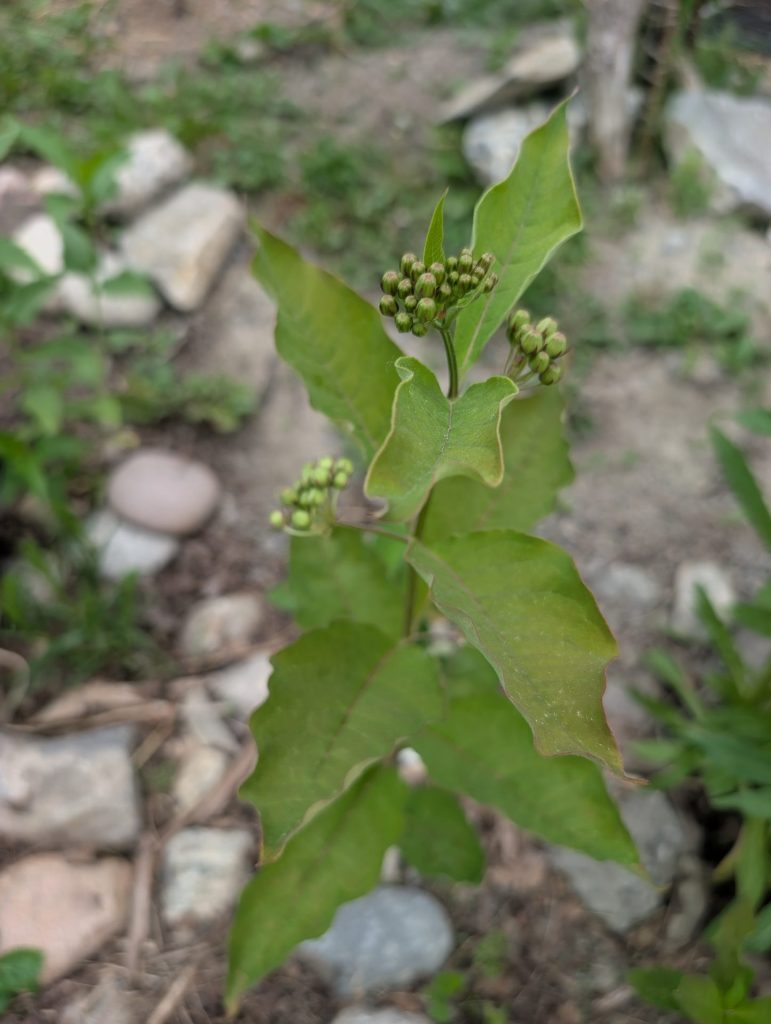
I enjoyed first blooms from a single Poke milkweed plant this year , and that single plant, combined with 4 or 5 others that are maturing at far slower speed, convinced me I need to grow more of this miraculous shade loving species.
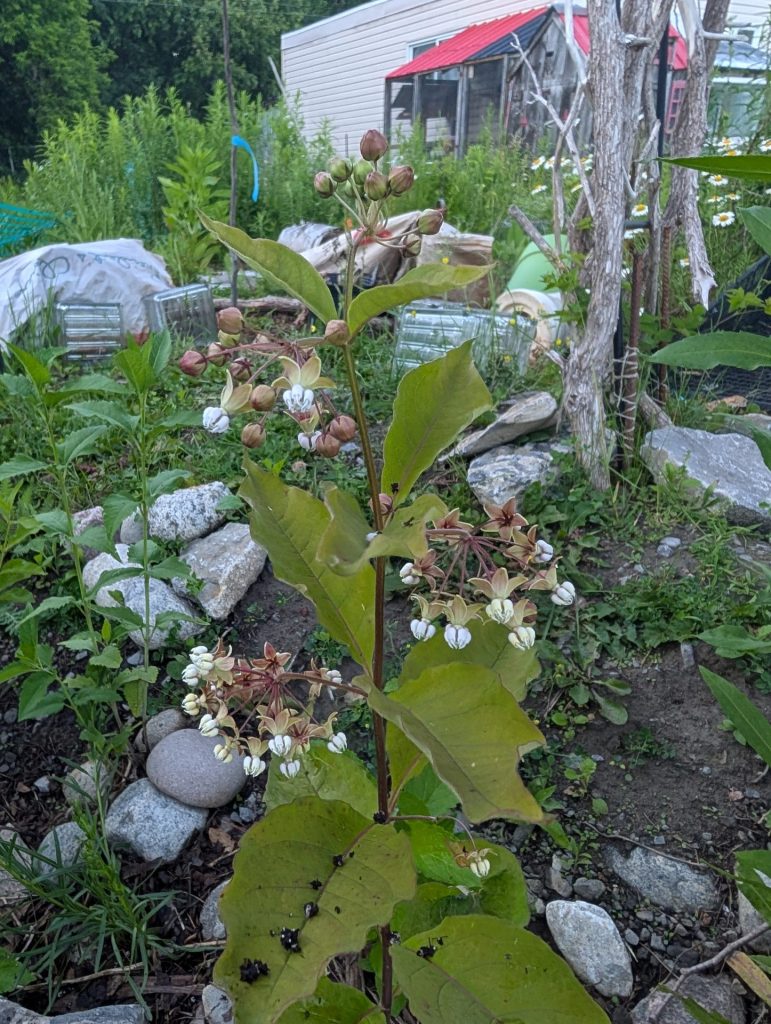
Don’t look to me to sell it any time soon, this year’s attempt, from a 1/2 bag of seeds remaining from Prairie Moon as well, only yielded 4 new plants. It may be that the seeds were old, or (more likely) I forgot to water them. So this single plant above, along with its much smaller siblings, are my best hope for sourcing locally adapted seeds. Realistically, I am at least 2 years away from collecting seeds from this first patch, depending on how they grow out next year. In the meantime, I will continue trying to source seeds from a couple of additional places, as this species is considered critically imperiled in Quebec, and sourcing these seeds in not an easy feat. If you have some from a known and reputable source, please reach out, I would be happy to incorporate them into the genes mixing here at our growing little seed orchard.
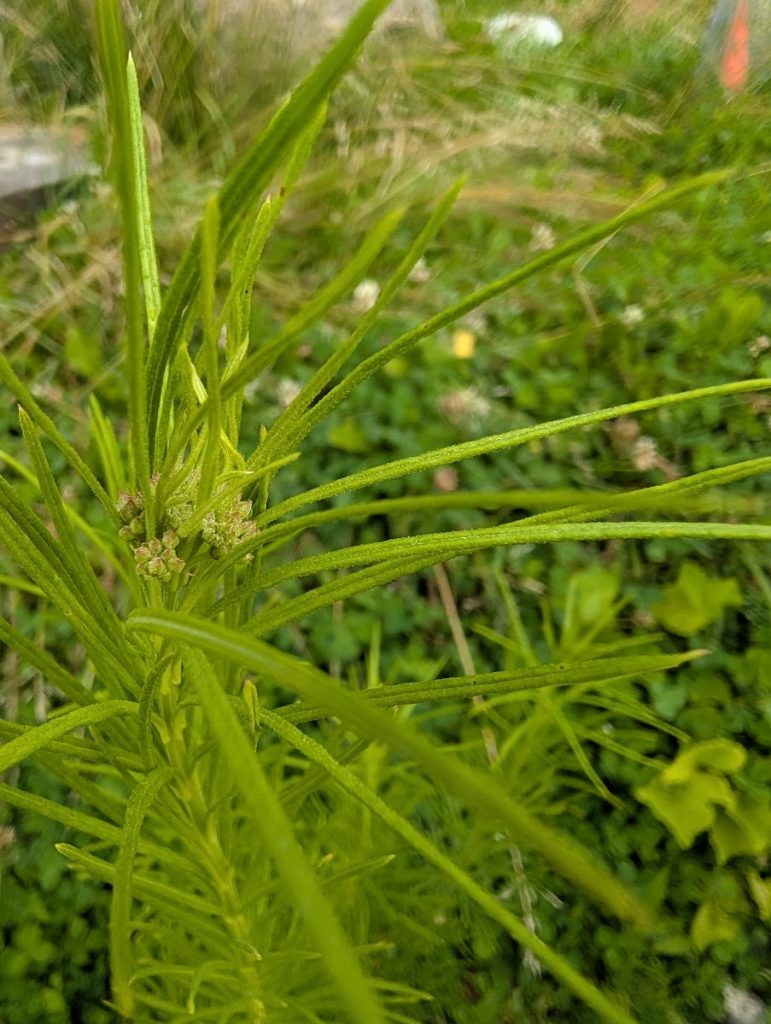
I WILL have a lot of seeds to share of both Butterfly and Swamp milkweed this fall, and currently it seems like at least a few of the many inconspicuous Whorled milkweeds scattered around here are about to bloom, but collecting seeds from this species was more difficult than I expected last year, when I was able to harvest a few from my first blooms. I will add that if you are further along your native plant journey, and looking for a new variety of plant to winter sow, my experience has been that Whorled milkweed would make a lovely candidate.
A few other varieties, like the showy milkweed species, purple milkweed and a couple I can’t even recall the name of, are likely going to make me wait another year to see their blooms and adaptation, but my plants have taught me patience, and I have plenty of milkweeds to discover and keep myself distracted with in the meantime.
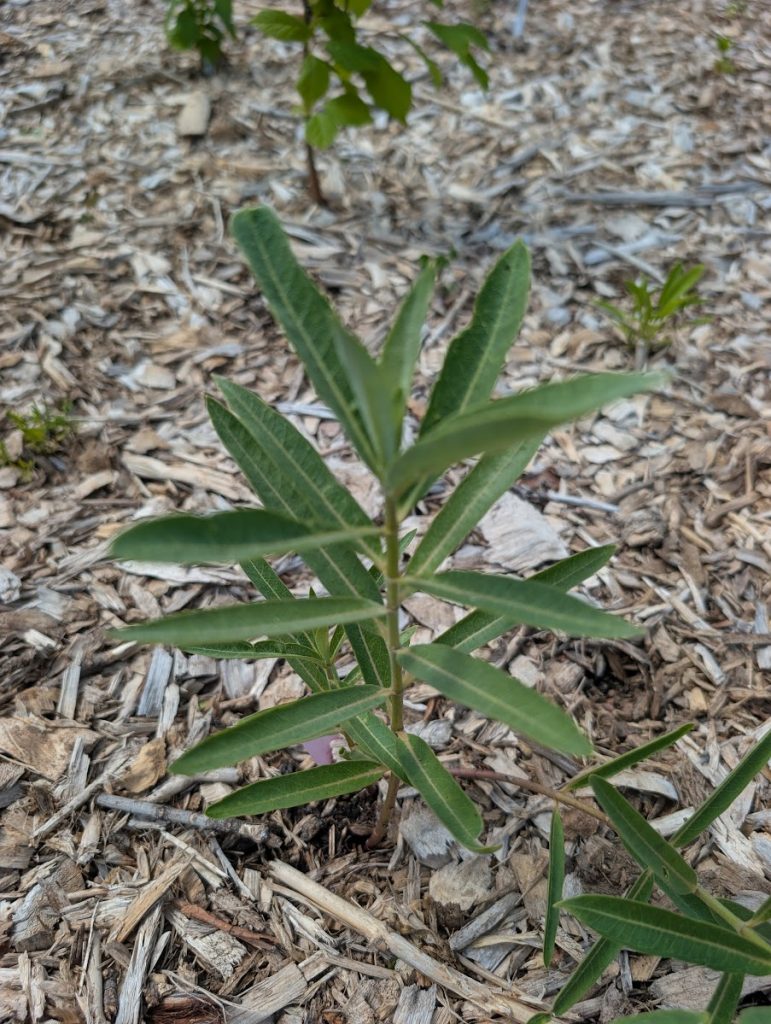
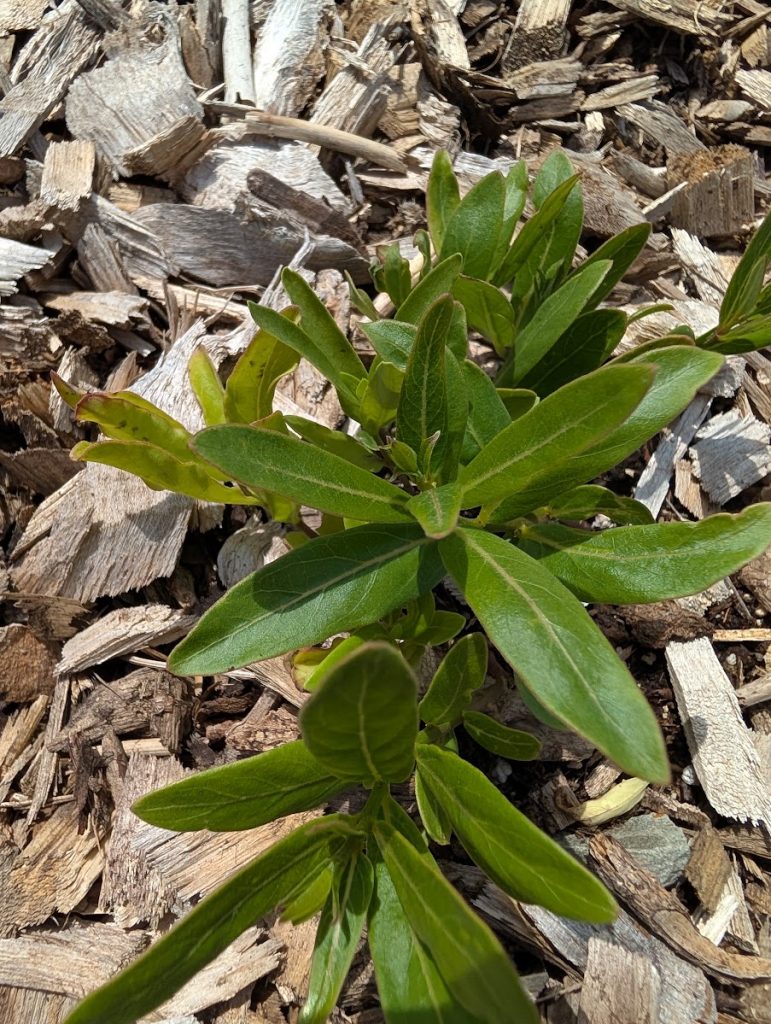
Depending on your knowledge or comfort level with native plants, you might notice two things in my photos and ramblings.
Missing: Common Milkweed (Asclepias syriaca)
First, I never once mentioned Common Milkweed, the beautiful side-of-the-road-growing-wild milkweed that you spot blooming driving most anywhere this time of year. I haven’t, till now, and that’s on purpose. I LOVE common milkweed, and it’s the milkweed so many people assume they need to plant to ‘save the monarchs’. I wouldn’t recommend that plant to most people, in most urban garden settings. I have learned from past experience, it is a wild plant that loves being wild too much to control in a garden for most people. I didn’t even plant it on our 2 acre property (it found its way here, of course, and it will keep expanding its footprint, but doesn’t need my help, beyond me letting it do what it does, where it chooses to pop up).

Last year, when our local pollinator group packaged and shared thousands of seeds from 40ish different native species, we opted not to share the Common milkweed, and limited ourselves to making little Swamp milkweed and Butterfly milkweed seed packages to give away. Why? Those 2 varieties are so much more suited for backyard gardens, and even the habitat gardens we plant around Aylmer.
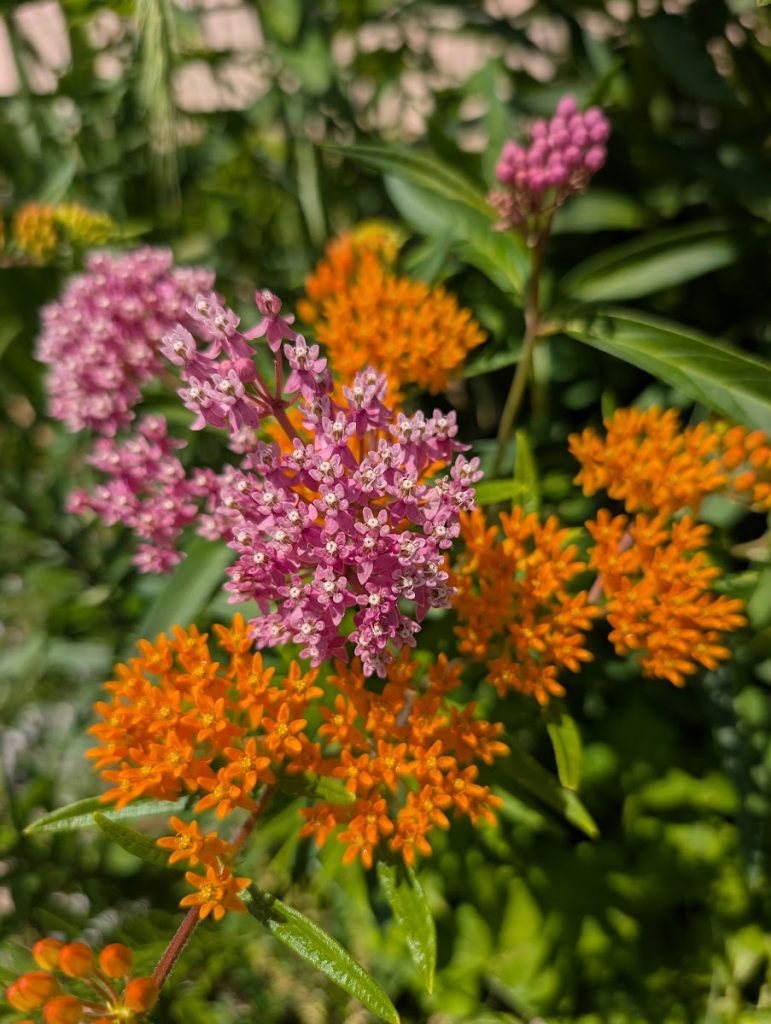
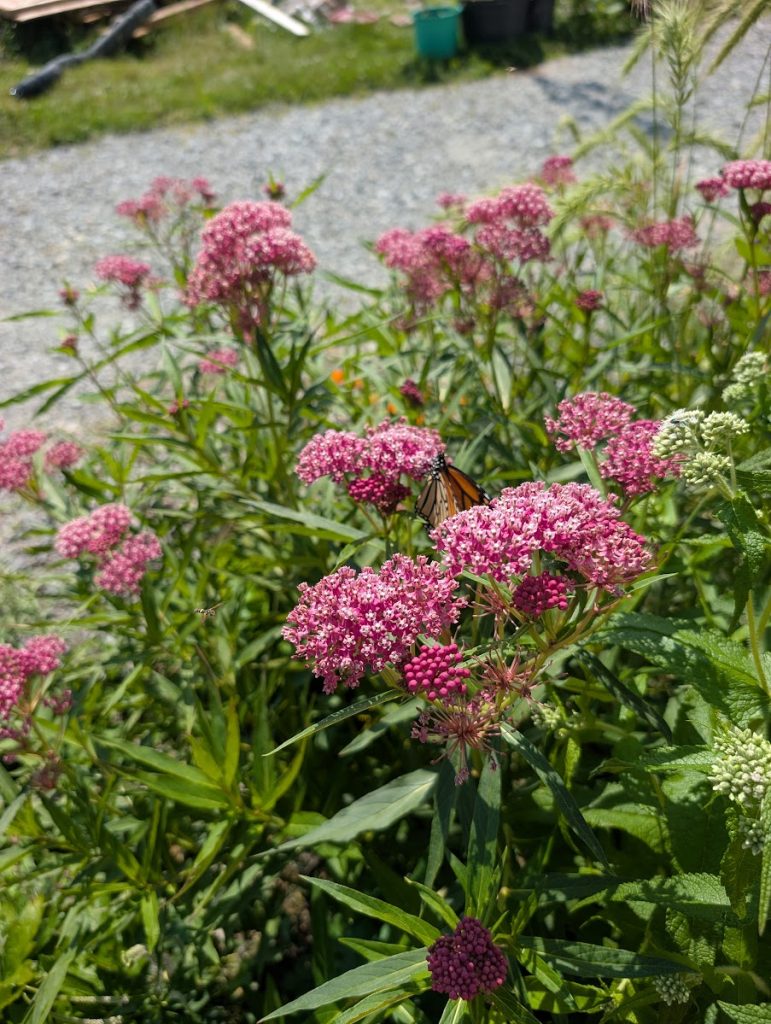
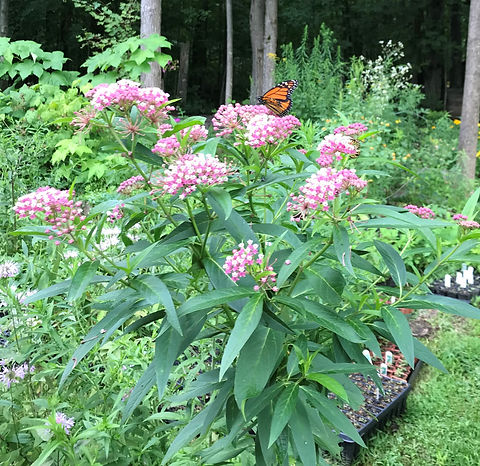
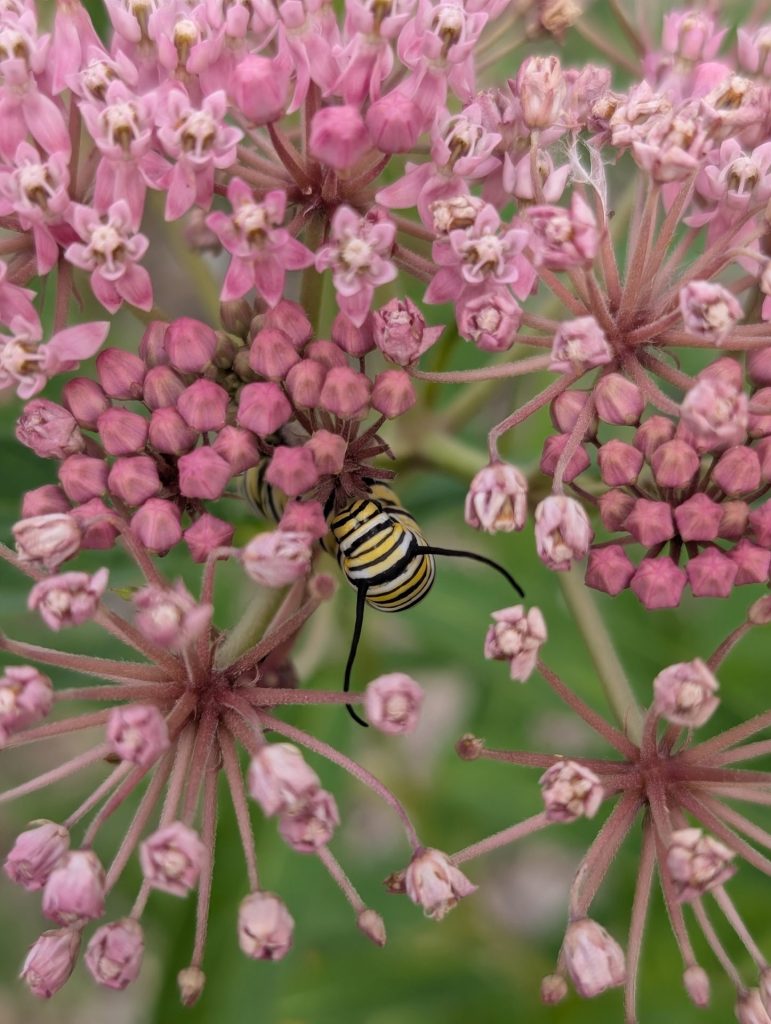
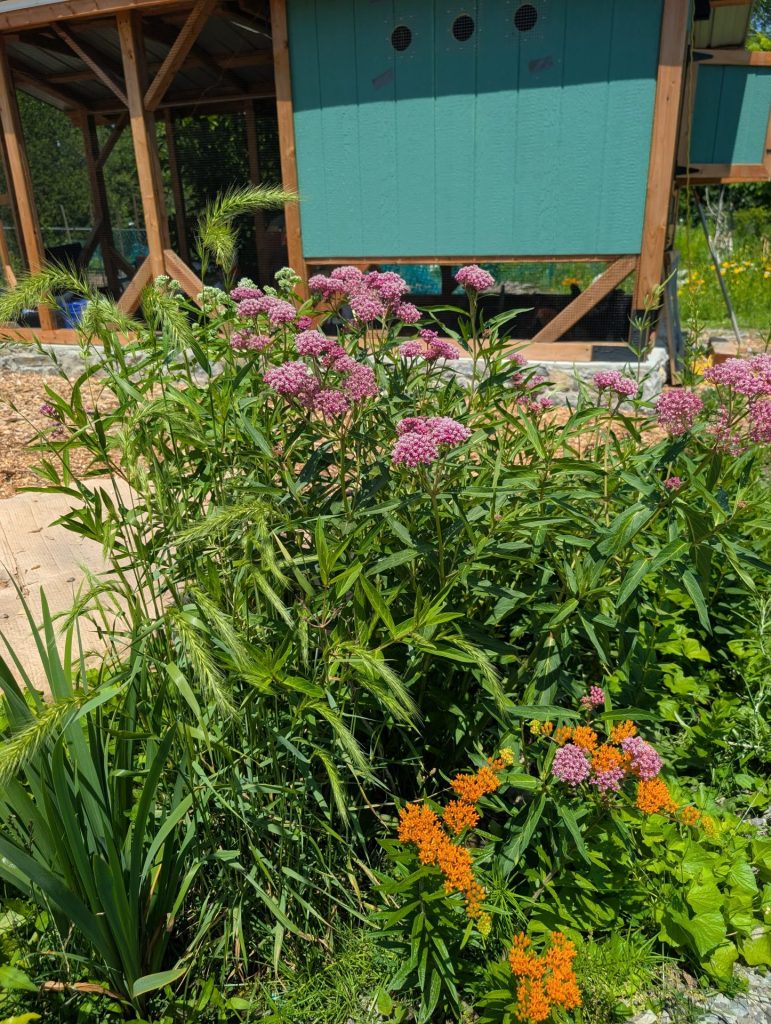
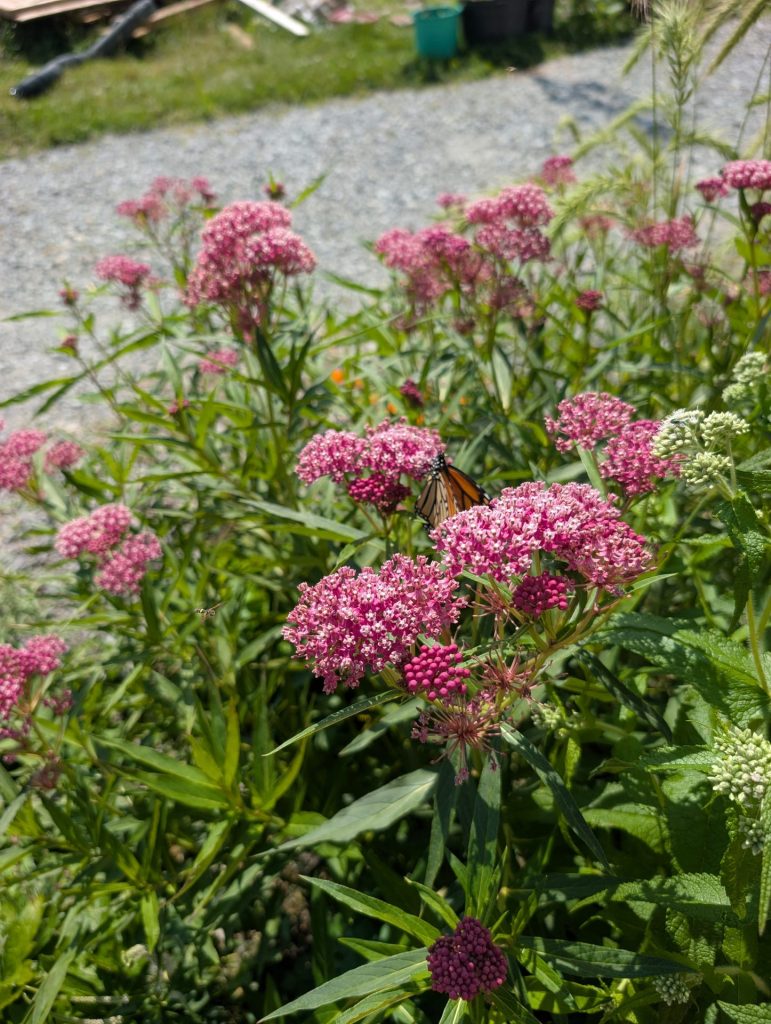
Common milkweed, in most cases, is simply too agresive for most gardeners, and I have found has detrimental effect on our attempts to show people they can slowly introduce native plants into existing spaces without drastically needing to change their entire mindset or preferred gardening aesthetic. I leave the common milkweed to appear on its own. I grew a few this year from local populations for germination comparison, along with a couple of further west and south west varieties that have yet to germinate, but I don’t intend to share them without warning for newer native species gardeners or learners.
Latin vs. Common names
I am using English common names in this post. I use them in my conversations with people, rather than the proper Latin names, despite the fact I sometimes (and often) know the Latin names. I grew up in a country that taught Latin, botany, specimen preservation and botanical drawing to elementary school children. I can’t vouch for what older kids may learn as I was in grade 4 when we left Romania, and I believe a lot has changed in that country and likely school curriculum since. I still have some hazy memories of pressing flowers, little strips of white tape and see through tissue paper, along with family and genus names of plants I have long since forgotten.
These are the memories that first inspired my lino-print botanical carvings, and later the look and feel of the botanical cards we created for our plant database.
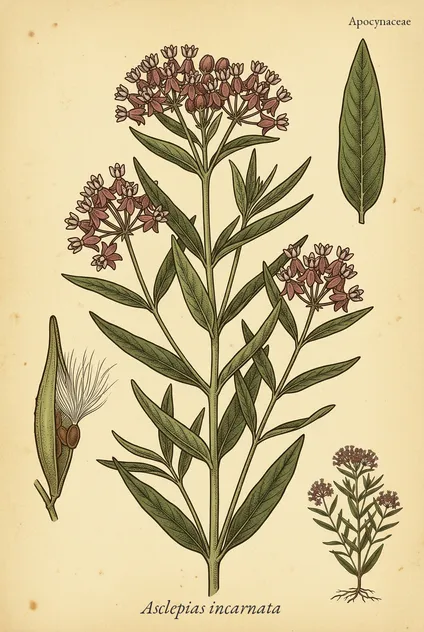

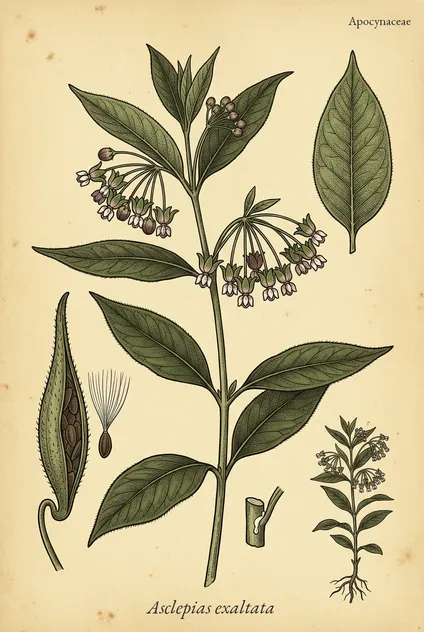
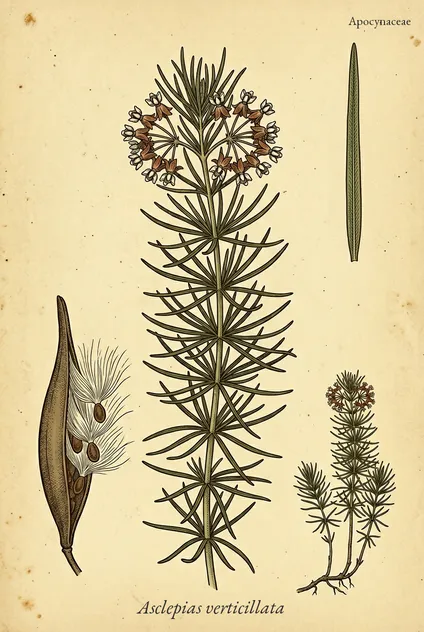
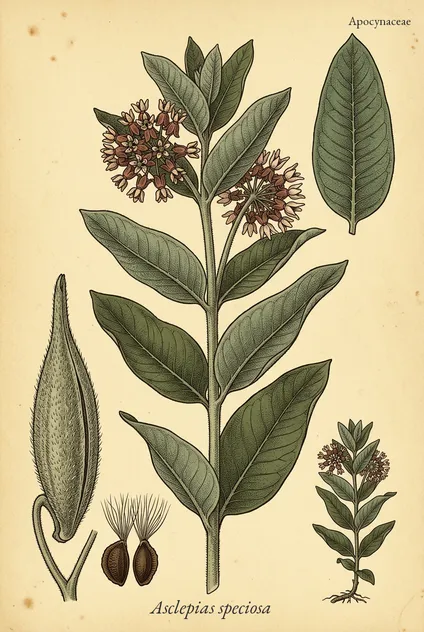

Is any of this important here? Not really, and I perhaps digress, except in trying to explain I truly appreciate and value the language rooted in my ancestry, the remnants of these roots of my mother tongue in the scientific Latin names of plants, and the amusing attempts at translating modern day terms back into latin-ish of species discovered after the fall from glory of the Latin language from modern day academia (Solidago ontarioensis pops to mind).
I love deciphering Latin, and my grade 4 Latin education and Roman linguistic roots are helpful to me in doing that, even where my memory fails me. These days I increasingly struggle to retrieve words like milk and velcro when I need them though, so I reserve my recall powers for important brain functions, like yelling “OMG stop sign!!!!” to our practicing young driver when word retrieval equates survival. Surprisingly, despite my brain challenges, as I am struggling to recall English vocabulary more and more, speaking French is becoming a bit easier with practice. As I observe this, and find myself surrounded by opportunities to practice speaking French lately (a la Marche Vieux-Aylmer, en particulaire), I am content to let the Latin fade further into the recessed pockets of my child brain, until and unless I meet someone who NEEDS me to communicate purely in Latin botanical terms with them, and at that point, if I think they are genuine, I may increase my efforts, unless they are just doing it to sound smart and knowledgeable, in which case, in all honesty, I will likely think they are stuck up and snooty, but probably won’t say that to their face, because I believe I still have reasonable impulse control.
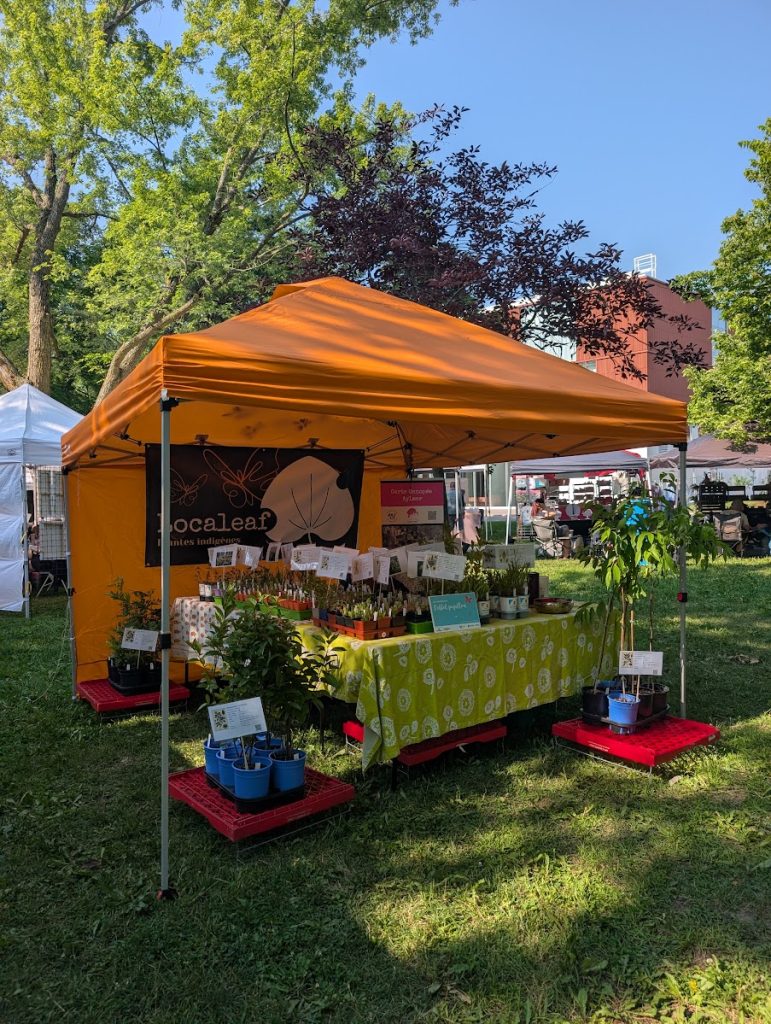
I have met many brilliant people in my life, but most speak English, or French, enough for me to fall back on, and when that fails pointing and pantomime seem to work, on everyone except my children, who love pointing out to me I am not making sense when I lose my words.
My milkweed take aways ( or ‘Ex asclepiade monita magna’ for the purists)
Want to save monarchs? Here are my top, beginner-friendly garden suggestions:
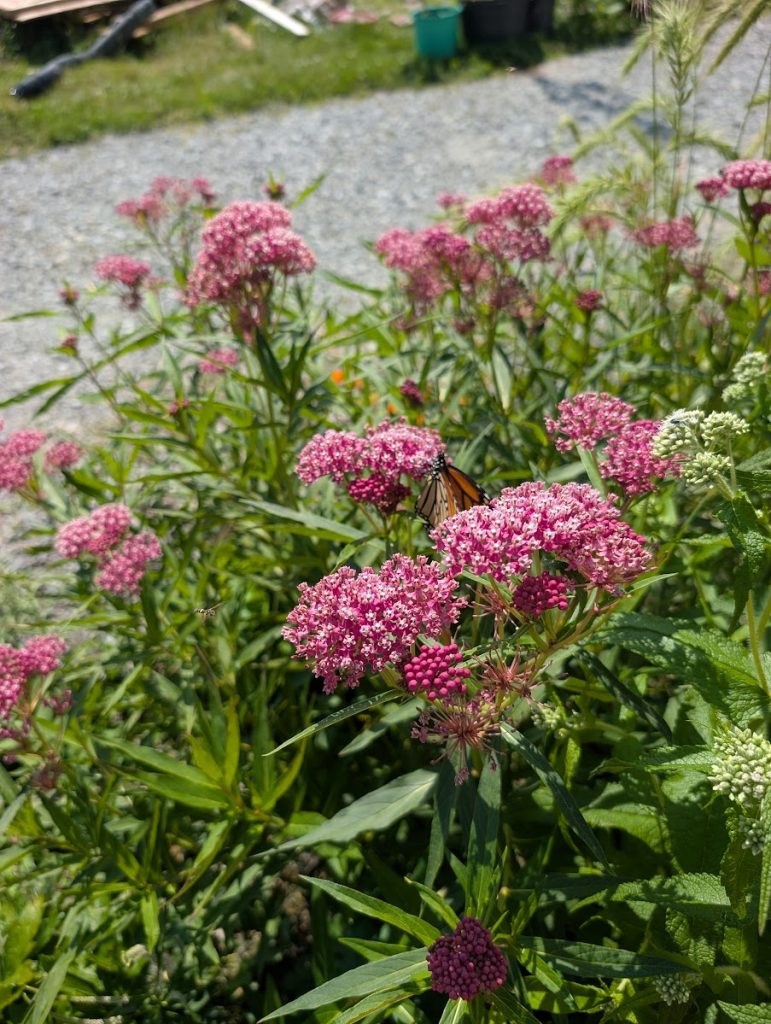
1. Plant Swamp milkweed
Vibrant fuscha and pink blooms, clumping form, very attractive to monarchs looking to lay eggs. Tuck it into a middle or back section of a garden bed if you are not used to taller plants, and watch the monarchs begin to swarm it by year 2. No blooms? No problem. You might be shocked to learn the monarchs actually only need the milkweed to lay eggs on, not to drink the nectar. It’s their caterpillars that NEED the milkweed, not the adults.
2. Try Butterfly milkweed (the bright orange one), but accept defeat if needed
This is many people’s favourite milkweed in a front garden setting, in part because of the breathtaking colour, but also, from what I’m told, the shorter height, making it the most sought after garden milkweed. Many people I talk to are sad their butterfly milkweed was SO beautiful year 1, then fizzled and died out, or lost its glory. Usually, I learn they had planted an established plant, and it never returned to what it has been.
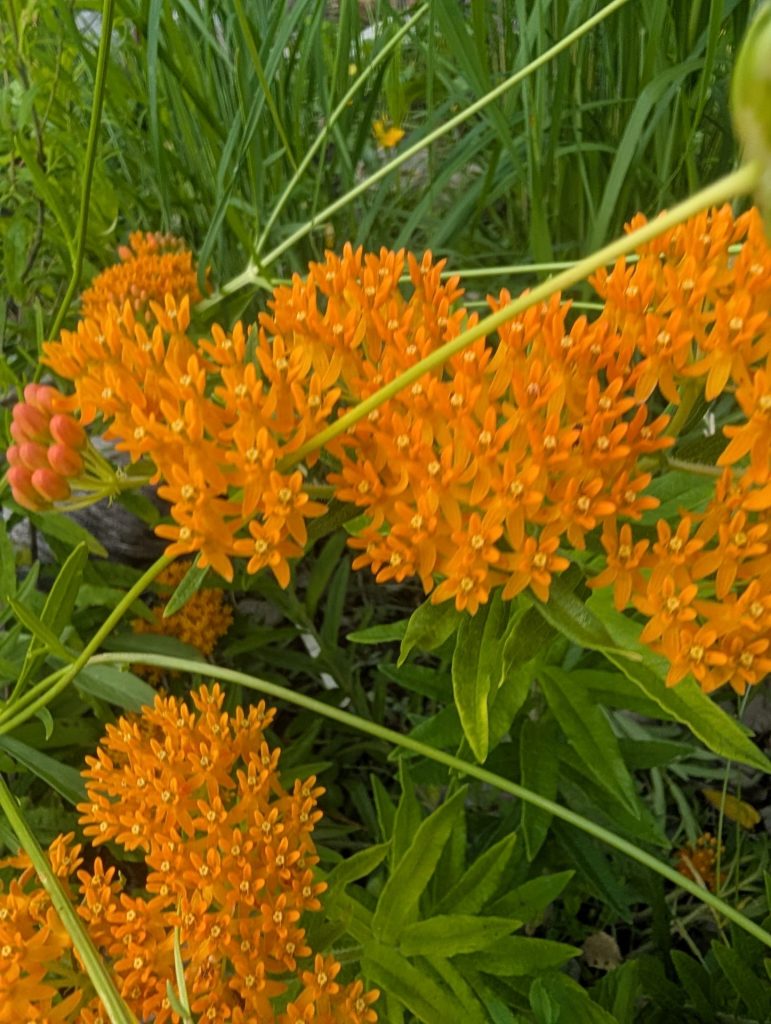
Secret of this species: it is fussy A.F.
it doesn’t like being wet, it only likes full sun, its roots don’t like to be moved, disturbed or dried out before being established, but water it too much and it will drown. Sometimes it defies logic too, like a temperamental toddler, hating the very thing you expect it to love, or throwing a fit over a handful too many grains of sand at the top of a sanddune.
If you try, and don’t succeed, try again, elsewhere, and if that fails too, give up and plant the swamp milkweed. It will reward you with monarch visitors in greater numbers anyway.
3. Don’t buy “tropical milkweed” or “Mellow Yellow” or “Ice Ballet” or other “in quote name” milkweed varieties
I could write a whole blog post about this but plenty of people have, and recall I am preserving fading brain power, so if you are interested in why, I encourage you to do some internet sleuthing, particularly on the impact of tropical milkweed on monarchs when grown and overwintered here, as well as the perils of cultivars or “nativars” of species that larval specialists like Monarchs rely on. And if you read and feel as passionately about it as I do afterward, approach our larger garden centers, and try explaining it to them, and ask them to stop purchasing, carrying and encouraging the sale of these, alongside the invasive species they still choose to carry, knowingly or not.
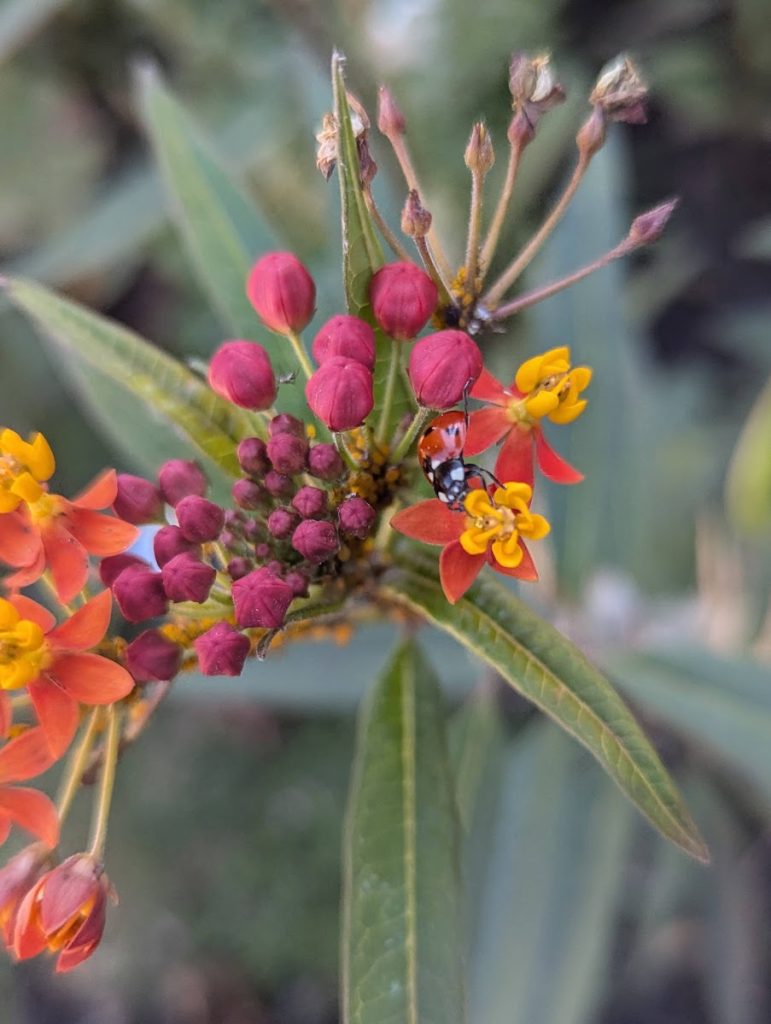
4. Plant other plants for Monarch nectar
Did you know, only the monarch caterpillars NEED the milkweed plant? Adult monarchs drink nectar from a wide variety of plants, particularly those blooming in August and September, as their babies are munching on the milkweed leaves with faded blooms. Favouries I’ve observed in garden settings are Blazing Stars (Liatris), Ironweeds (Vernonia) and Bonesets and Joe Pye Weeds (Eupatorium).
I didn’t mean for this to be a milkweed blog post but it seems that’s what it’s turned into. I hope to have a few young Whorled milkweed plants available this year, along with the Butterfly and Swamp milkweeds that you can expect to find at the market. I have always favoured Butterfly milkweed, and have found surprising places it is thriving, as well as struggling, this year, with plants from mixed populations planted in various settings across the gardens, in various micro-climates and conditions, making me question everything I thought I knew about the plant’s habits.

What I did not expect was to find myself so mesmerized by Poke milkweed, with its stark white flowers, even though my first blooming plant was hardly more than a single flower, in truth. If you got to the end of this, I appreciate you. Writing seems to take a lot more out of me than it used to, or maybe I’m just so busy this summer I’m too tired to write, but I have found myself struggling to return to thoughts I start capturing long enough to finish a thought. I feel like I took milkweed on a journey of everything I never thought I wanted to say about it, but now I have. If you want to come see some of these beauties for yourself, try me next year, toward the end of June. They are all nearing the end of their blooms now, with one waiting to show herself still. Alternately, but less milkweed related, come to:
Drop in Days at the Learning Lab
Our non-profit, Canopee Aylmer, is helping to co-host a drop in day here onsite at the Localeaf Learning Lab, every Wednesday this summer, weather permitting. If you are local to Aylmer, join the Pollinate / Polliniser Aylmer FB group to learn more what it’s all about, but essentially, we are still self-organizing, but have inaugurated a day where our community can drop in, observe plants and their visitors, learn, or help out with various tasks at the nursery, gardens, seed orchard and in the growing mini-forest.
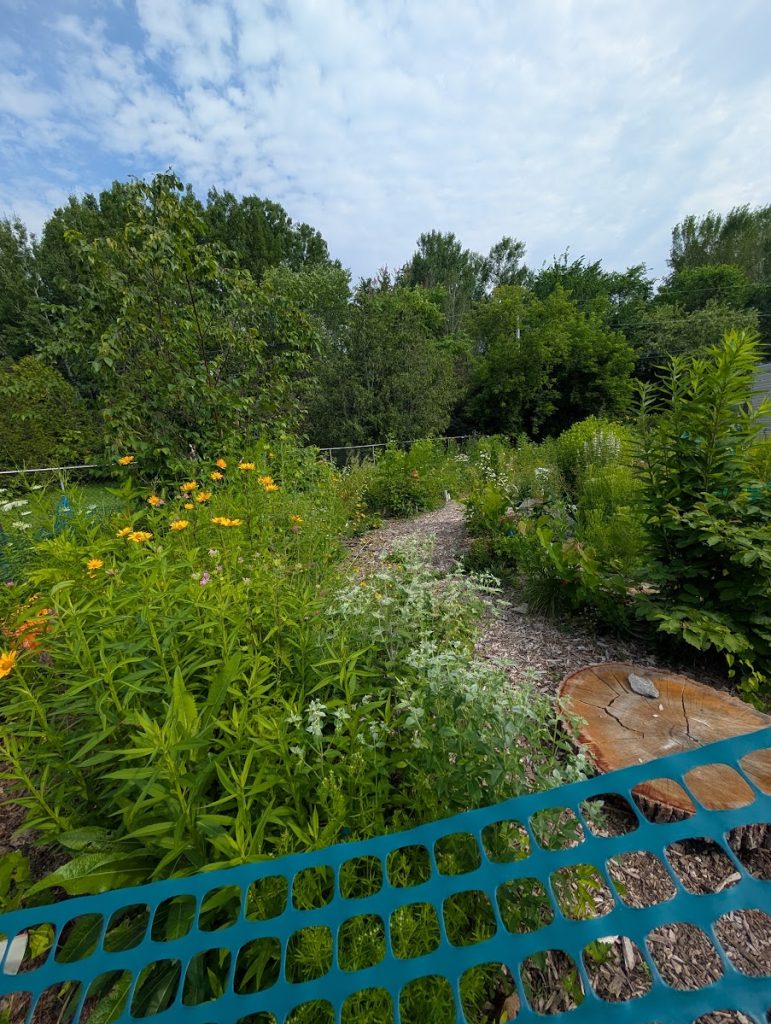
Non Pollinate-Aylmer members are also welcome, though we prioritize the plants we distribute to our volunteers within our local community. Reach out through FB or Instagram for more details, or send us a message through our contact page to learn more.

Leave a Reply